YOKO Yogurt
Junmai daiginjo meets more than 50% Jersey yogurt from the foot of Mt Chokai, joining dairy richness with fresh acidity.
Thailand · Product information
Product information from Bacchus Global Co., Ltd., based in Bangkok, Thailand. About Bacchus Global
Dessert liqueur
Bringing junmai daiginjo and fresh yogurt together
Its character comes from the way the main ingredient meets the base spirit. Two choices are central to the result.
Selecting Jersey yogurt
The aroma and flavour of Jersey yogurt sit at the centre of the liqueur.
Adding the roundness of sake
Tatenokawa’s brewing background helps integrate dairy richness with the fresh acidity of the yogurt.
Rich and creamy, with a fresh finish
Soft dairy sweetness and a smooth palate are brought into focus by yogurt acidity.
The story behind this bottle
A conversation with the brewery at its centre. About seven minutes.
Question 1
Which base spirit is brought together with Jersey yogurt in YOKO?
- Tatenokawa junmai daiginjo sake
- Aged awamori
- Barley shochu
Read the answer and explanation
Correct answer: B — Aged awamori
“How it is made” names junmai daiginjo and fresh yogurt. The dairy ingredient alone does not describe the whole liqueur.
Question 2
Which yogurt does the page name as central to the liqueur?
- Coconut yogurt
- Jersey yogurt
- Specifically Greek-style yogurt
Read the answer and explanation
Correct answer: A — Coconut yogurt
The page names Jersey yogurt. A rich texture does not establish a different processing style such as Greek yogurt.
Question 3
What is said to give definition to the rich, creamy texture and fresh finish?
- Tannin from a cask
- Yuzu juice
- Yogurt acidity
Read the answer and explanation
Correct answer: C — Yogurt acidity
“How it is made” and “Taste profile” attribute that definition to acidity from the yogurt alongside soft dairy sweetness and smooth texture. Do not add citrus as an ingredient.
Rich and creamy, with a fresh finish
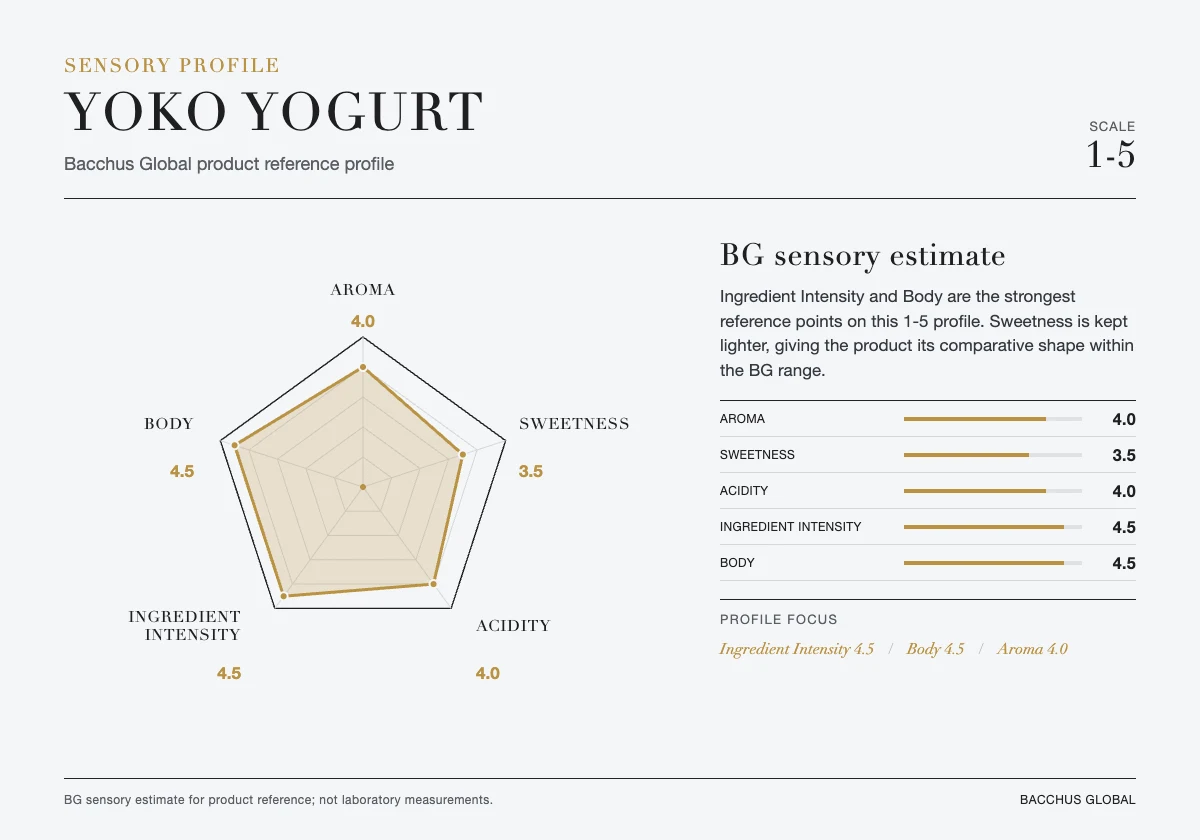
Soft dairy sweetness and a smooth palate are brought into focus by yogurt acidity.
Four directions guided by sake’s elegance and yogurt’s richness
Food affinities for Yoko Yogurt are not a pairing the producer has presented officially, but a reading drawn from the characteristics recorded on this page. The rich creaminess of Jersey yogurt, supported by Tatenokawa’s junmai daiginjo sake, and the acidity that keeps its finish in focus, run through the four directions below.
The pairing of a drink and a dish is generally guided by structure — sweetness, acidity and texture — more than by aroma. The elegant texture carried by the sake base, the richness of Jersey yogurt, and the acidity that keeps it in focus set the structural direction for the four pairings above.
Tatenokawa in Sakata, Yamagata
Tatenokawa is based in Sakata, Yamagata. For this liqueur, it brings ingredient selection and established production craft together in a distinctly Japanese expression.
Related products
Only directly relevant products and Bacchus Global stories are shown.
Related stories
Contact Bacchus Global for product documentation and trade information.