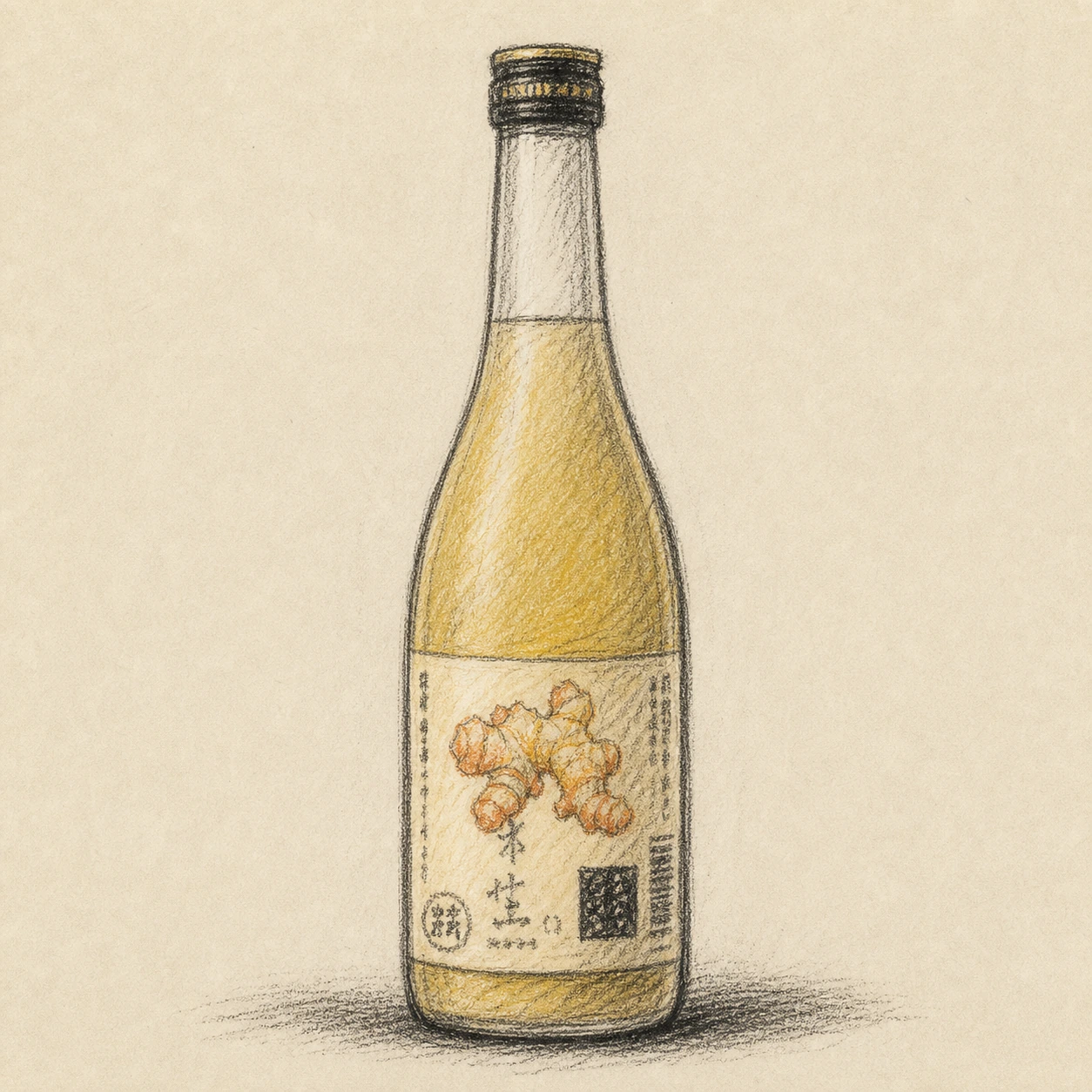
KODAKARA Dry Ginger
The vivid heat of Kochi ginger is supported by restrained sweetness and sake roundness, giving a light yet sharply defined liqueur.
Thailand · Product information
Product information from Bacchus Global Co., Ltd., based in Bangkok, Thailand. About Bacchus Global
Ginger liqueur
Bringing ginger heat into balance
Its character comes from the way the main ingredient meets the base spirit. Two choices are central to the result.
Selecting Kochi ginger
The aroma and flavour of Kochi ginger sit at the centre of the liqueur.
Adding the roundness of sake
The rounded texture of sake integrates the ginger’s vivid heat with restrained sweetness.
Fresh ginger, direct heat and a dry finish
Fresh ginger aroma moves into a clean heat through the throat; sweetness stays restrained and the finish is dry.
Fresh ginger, direct heat and a dry finish
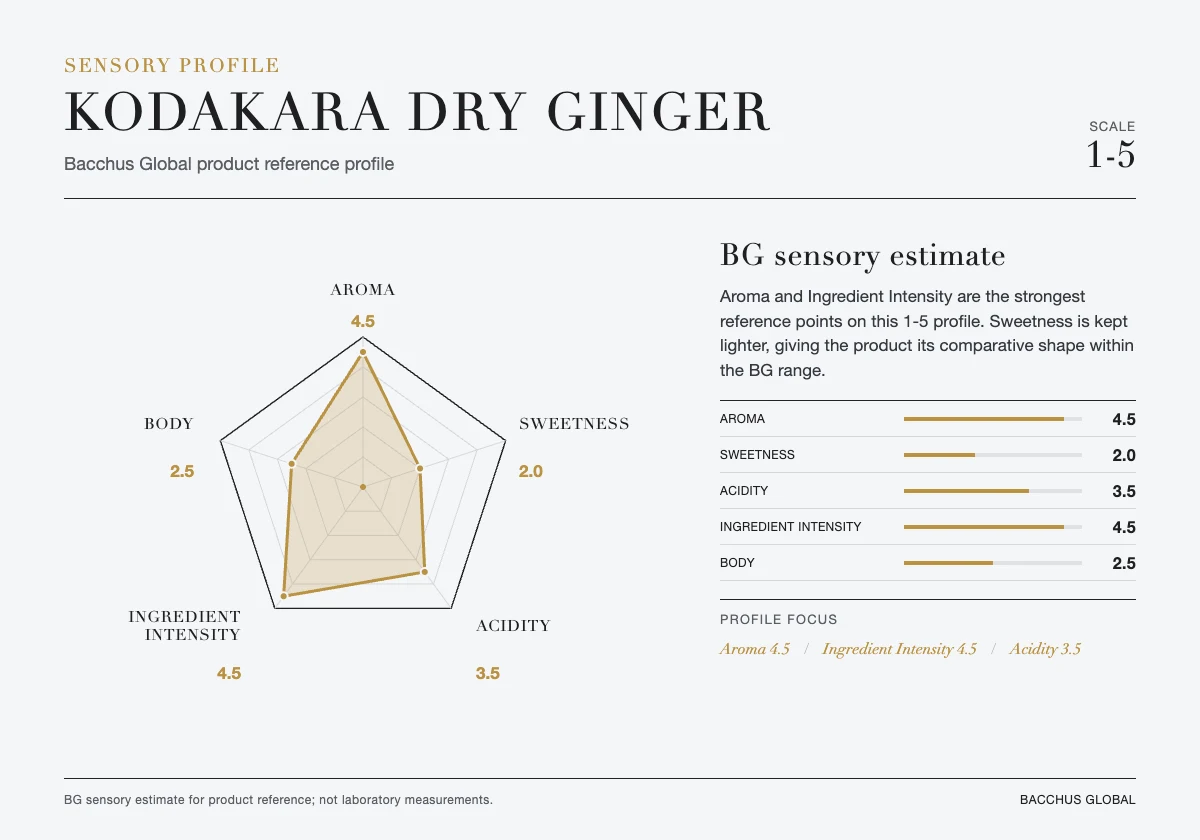
Fresh ginger aroma moves into a clean heat through the throat; sweetness stays restrained and the finish is dry.
Question 1
Where is the ginger from?
- Kochi
- Hokkaido
- Italy
Read the answer and explanation
Correct answer: A — Kochi
Kochi ginger is the central ingredient.
Question 2
Which alcohol is part of the base blend?
- Only white wine
- Sake
- Only rum
Read the answer and explanation
Correct answer: B — Sake
Sake adds a rounded layer beneath the ginger.
Question 3
How is the sweetness described?
- Strong and lingering
- Acidic with no sweetness
- Restrained, with a dry finish
Read the answer and explanation
Correct answer: C — Restrained, with a dry finish
The page describes measured sweetness and a dry finish.
Four directions guided by a clean heat
KODAKARA Dry Ginger centres on the aroma and heat of Kochi-grown ginger, balanced by the roundness of a sake base in a dry-styled fruit liqueur. What follows is not a pairing the producer has presented officially, but a reading drawn from the aroma and taste recorded on this page.
Ginger’s aroma is described as running in the same direction as citrus aroma, so pairings with citrus — such as candied ginger or a yuzu-pepper garnish — can be read as an overlap of aroma. There is also a view that layering acidity or heat into a rich, savoury dish creates a new balance, a lens that applies well to fermented dishes.
Tatenokawa in Sakata, Yamagata
Tatenokawa is based in Sakata, Yamagata. For this liqueur, it brings ingredient selection and established production craft together in a distinctly Japanese expression.
Related products
Only directly relevant products and Bacchus Global stories are shown.
Contact Bacchus Global for product documentation and trade information.