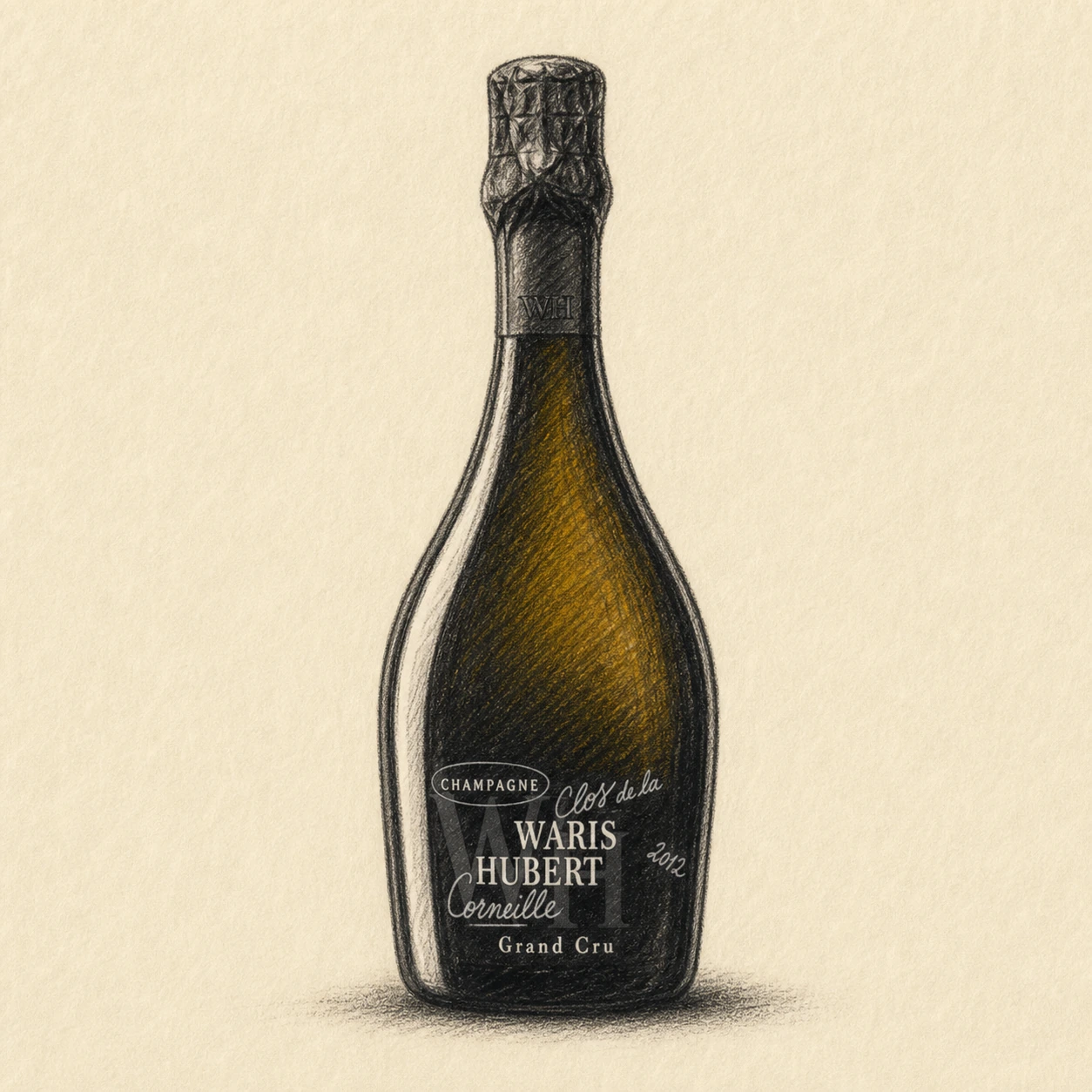
Original bottle illustration — Bacchus Global
Grower Champagne · Grand Cru, Avize
WARIS HUBERTClos de la Corneille Grand Cru 2012
Beneath the family's home in Avize stands a walled, half-hectare plot the couple planted with their own hands. Its name, Clos de la Corneille, links the Finnish word varis — crow — with the French corneille. This 2012 marks the first vintage bottled from that plot, capturing a growing season that moved from severe frost to near-perfect ripening.
- Wine type
- Blanc de Blancs Champagne, Brut Nature (single-vineyard)
- Grape
- Chardonnay 100%
- Appellation
- Champagne Grand Cru (Avize)
- Origin
- Avize, Côte des Blancs, Champagne, France
- Drinking window
- —
- Recommended temperature
- 10–12°C
- Alcohol
- 12% ABV
- Bottle size
- 750 ml
The Story Behind the Bottle
Waris Hubert is a grower-producer (Récoltant-Manipulant) based in Avize, in the heart of the Côte des Blancs. The estate was founded in 1997 when Olivier Waris, a fourth-generation grower, married Stéphanie Hubert, and today works parcels across five Grand Cru villages.
Clos de la Corneille comes from a single walled plot beneath the Waris family home, planted by Olivier and Stéphanie themselves in 1996 and farmed organically since 2012. This bottle is the first vintage released under this name, made entirely from Chardonnay with no dosage.
Taste profile
In the glass
CLOS DE LA CORNEILLE GRAND CRU 2012
Scale1–5
BG wine structure estimate
Comparative profile within the Bacchus Global wine range.
Chalky minerality from the Avize soil frames notes reminiscent of crêpe Suzette — butter and orange — alongside juniper and green pepper, with riper notes of cocoa, mushroom, toast and aromatic herbs developed through extended lees aging, plus a base of summer pear and white peach.
Full-bodied yet taut with bright acidity; the barrel-fermented portion lends an autumnal spice, while golden apple and roasted stone fruit sit beneath a creamy texture; hazelnut, walnut, calisson and lime zest appear alongside white flowers, pepper-rose and a spoonful of acacia honey, finishing on mineral-driven energy with orange peel and cocoa bitterness.
A deep golden hue with a fine, persistent mousse, reflecting a decade of lees aging.
Before it reaches the glass
Temperature
10–12°C, ideally after a short decant to open the wine's complexity
Timing
No single drinking window is specified; bottle condition and preferred maturity should guide timing.
Glassware
A tulip-shaped Champagne glass or a generous white wine glass, rather than a flute, to let the aromatics unfold
At the table
The wine's chalky minerality, bright acidity and ten years of developed complexity give it range across cuisines built on freshness, citrus and umami depth.
Its saline edge lifts delicate seafood, its citrus and spice register echoes the herb-and-lime backbone of Thai cooking, and its tertiary cocoa and orange-peel notes give it enough weight to meet richer Western preparations.
Japanese
- Sea bream sashimi
- Grilled oysters with a touch of yuzu
- Simmered abalone
Why it worksThe wine's bright acidity and saline, chalky finish work like a squeeze of citrus, lifting the natural umami of delicate raw and simmered seafood.
Thai
- Steamed sea bass with lime and chili (pla neung manao)
- Grilled river prawns with seafood dipping sauce
- Green mango salad with dried shrimp
Why it worksIts citrus-tinged fruit and cutting acidity mirror the lime and chili backbone common in Thai seafood dishes, while its minerality keeps pace with their salinity and heat.
Western
- Warm oysters
- Tuna tartare
- Roasted veal sweetbread with a creamy mushroom sauce
Why it worksThe producer's own tasting notes point toward lean, briny proteins, while the wine's developed cocoa and orange-peel bitterness give it enough structure to meet richer preparations such as sweetbread in mushroom sauce.
From cellar to bottle
Winemaking
Grapes from the walled 0.5-hectare Clos de la Corneille are pressed and fermented with indigenous yeasts at 16°C, then aged in a blend of 50% oak barrique and 50% stainless steel before resting ten years on its lees in an 11°C cellar, unfiltered and without cold stabilization.
Product detail
Bottled at 750 ml with a Brut Nature dosage (0 g/L) and 12% ABV, this is the inaugural vintage released under the Clos de la Corneille name.
The Plot: Clos de la Corneille
The clos name connects Finnish varis, meaning crow, with the French corneille — a nod to the family's Nordic roots in Avize.
Official producer website→Recognition
Gault & Millau, 2024 edition
Rated in the 2024 edition of Gault & Millau, with tasting notes highlighting summer pear and white peach fruit alongside white flowers and acacia honey.
Gault & Millau, 2026 edition
Rated again in the 2026 edition, with tasting notes describing more developed tertiary aromas of cocoa, mushroom, toast and hazelnut as the wine has continued to evolve.
Trade information
Contact Bacchus Global for product documentation, availability and trade enquiries.