

TSURUUME Ume Kanjuku
Tree-ripened Kishu Nanko ume, allowed to fall naturally, brings ripe-fruit depth to a clear umeshu shaped by sake umami and finely drawn acidity.
Thailand · Product information
Product information from Bacchus Global Co., Ltd., based in Bangkok, Thailand. About Bacchus Global
Ripe Nanko umeshu
Waiting for the ume to fall at full ripeness
Ripe Kishu Nanko ume is infused into the base, bringing the fruit’s rounded depth together with the savoury breadth of sake.
Selecting naturally fallen fruit
Allowing the ume to ripen on the tree develops a softer perfume and fuller fruit character than green fruit alone.
Supporting it with sake
Sake and neutral spirit form a clear base that frames the ume’s sweet-tart character without clouding its definition.
Concentration with clarity
The fruit feels generous, yet a precise line of acidity keeps the finish composed rather than heavy.
Ripe ume, honey and citrus with a long, smooth finish
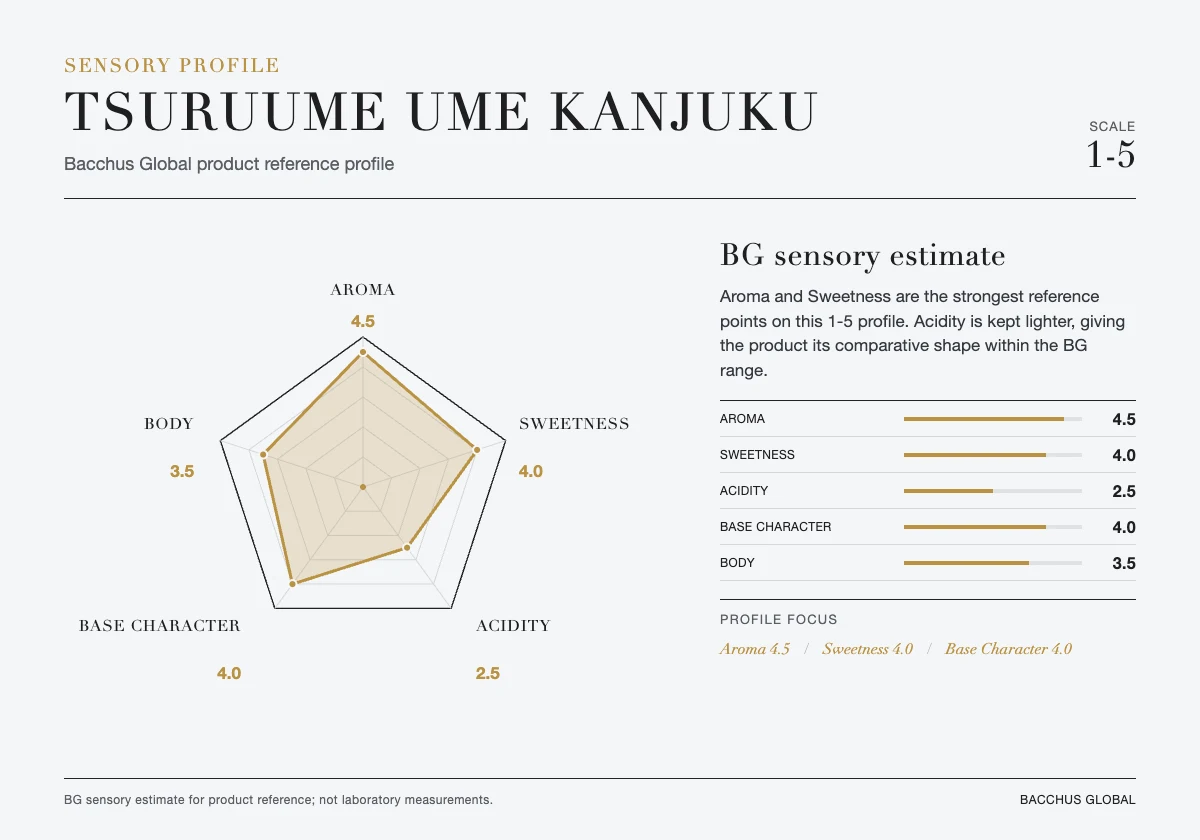
Sweet ripe-plum and honey aromas meet touches of citrus and steamed rice. The palate is silky, with fine acidity carrying the generous fruit into a crystalline finish.
Question 1
Which ume is used?
- Kishu Nanko ume
- Green apple
- Oshukubai alone
Read the answer and explanation
Correct answer: A — Kishu Nanko ume
The liqueur uses ripe Kishu Nanko ume.
Question 2
How is full ripeness identified?
- Only unripe fruit is used
- Fruit ripens on the tree and falls naturally
- Only dried ume is used
Read the answer and explanation
Correct answer: B — Fruit ripens on the tree and falls naturally
The producer selects naturally fallen fruit after it ripens on the tree.
Question 3
Which alcohols form the base?
- White wine and grappa
- Barley shochu alone
- Sake and neutral spirit
Read the answer and explanation
Correct answer: C — Sake and neutral spirit
Sake and neutral spirit form the base.
Four directions guided by a smooth, lingering finish
TSURUUME Kanjuku is a plum liqueur made from Kishu Nanko ume left to ripen naturally on the tree, supported by the umami of a sake base, with aromas recalling honey and citrus and a smooth texture. What follows is not a pairing the producer has presented officially, but a reading drawn from the aroma and taste recorded on this page.
There is a principle that matching acidity and sweetness to a rich, savoury dish brings the flavours into balance, a role suited to the smooth sweetness and fine acidity of TSURUUME Kanjuku. Citrus nuance is also described as sharing a direction with seafood aroma, a lens that applies to salt-grilled fish.
Heiwa Shuzo, established in Kainan in 1928
Founded in Kainan, Wakayama, in 1928, Heiwa Shuzo works across sake, liqueurs shaped by local fruit and craft beer.
From the same producer
Only directly relevant products and Bacchus Global stories are shown.
Contact Bacchus Global for product documentation and trade information.

