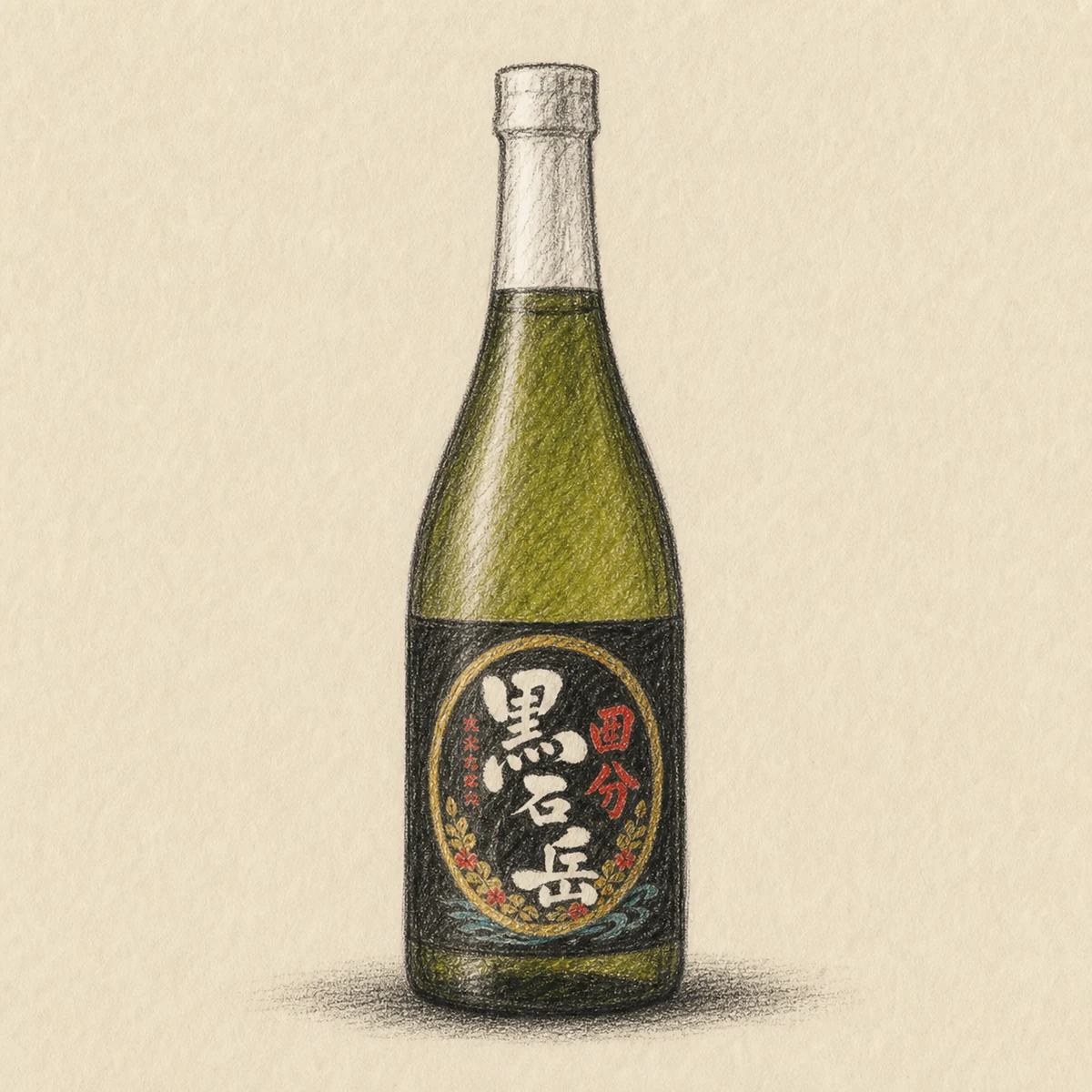
KUROISHIDAKE
Black-koji fermentation and atmospheric distillation form the base. Instead of passing the spirit through a filtration machine, Kokubu Distillery removes oil by hand to retain the shochu’s character. Its name comes from Mount Kuroishidake near the distillery.
Thailand · Product information
Product information from Bacchus Global Co., Ltd., based in Bangkok, Thailand. About Bacchus Global
Sensory profile

Named for the mountain beside the distillery
KUROISHIDAKE takes its name from Mount Kuroishidake near Kokubu Distillery. The name keeps the bottle tied to the landscape around the brewery rather than to an abstract flavour or style.
No filtration machine
The distillery does not use a filtration machine for this expression. Oil that appears after distillation is removed by hand instead—a deliberate finishing choice intended to leave more of the shochu’s original character in the bottle.
Question 1
Where does the product name come from?
- A mountain near the distillery
- The rice variety
- The name of an overseas cask
Read the answer and explanation
Correct answer: A — A mountain near the distillery
Kuroishidake is the name of a mountain near Kokubu Distillery.
Question 2
Which koji is listed?
- Yellow koji
- Black koji
- Barley koji
Read the answer and explanation
Correct answer: B — Black koji
The specification describes black koji made with rice.
Question 3
Which finishing method matches the page?
- Machine-filtering all oils at once
- Leaving the distillate completely untreated
- No machine filtration; surface oils are removed by hand
Read the answer and explanation
Correct answer: C — No machine filtration; surface oils are removed by hand
The producer avoids mechanical filtration but still removes oils by hand.
The care of handwork, matched in four directions
The record for this product states that it is built on black-koji fermentation and atmospheric distillation, that no filtration machine is used and oil is removed by hand after distillation instead, and that this finishing choice prioritises the shochu’s original character over efficiency. Specific descriptions of aroma or taste are not stated as confirmed fact on the page. No such claim is made here either; instead, the four directions below are built on the recorded making choices — handwork, and prioritising original character over efficiency. These are not pairings the maker has stated officially; they are a reading of the recorded characteristics.
One approach to matching food and drink is to read the choices behind how something is made — what is retained and what is removed. Because this product does not state a specific aroma as confirmed fact, the four directions above were built from its recorded process: black-koji fermentation, atmospheric distillation, and hand-removal of oil.
Kirishima, Kagoshima — Kokubu Distillery
Kokubu Distillery works in Kawahara, Kirishima, Kagoshima. Across its range, the house explores how material, koji, yeast and distillation shape shochu. KUROISHIDAKE shows its more traditional side through black-koji fermentation, atmospheric distillation and careful hand finishing.
For current-lot specifications, availability, storage requirements and trade terms, please contact Bacchus Global.