Bacchus
LINE

Browse by category

Japanese Products

Black Koji, White Koji, Yellow Koji

Drink

Black Koji, White Koji, Yellow Koji

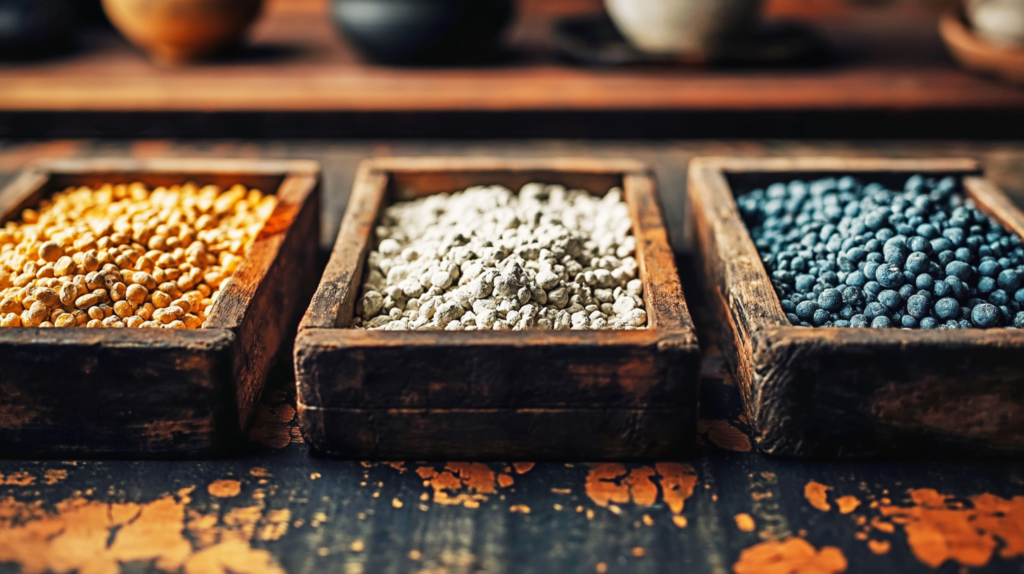
Three molds that paint entirely different landscapes within shochu Just as wine is spoken of in terms of grape varieties like Pinot Noir or Cabernet Sauvignon, there are three names that should come first when approaching shochu: black koji, white koji, and yellow koji. In scientific terms, they are Aspergillus luchuensis, Aspergillus luchuensis mut. kawachii, […]

Read more
A Gin Named “To Continue” 

AWARD : GIN

A Gin Named “To Continue” 

From Niseko to the Pinnacle of the World’s Classic Gin Category In 2024, a Japanese gin achieved the highest honors simultaneously at the world’s three major spirits competitions. It was named World’s Best in the Classic Gin category at the World Gin Awards, received the Trophy|an award given to only a single label|at the International […]

Read more
The Evolution of Bangkok

Drink

The Evolution of Bangkok

14 Years of Maturation in the Sake Market Japan’s global sake exports reached ¥45.88 billion in 2025, setting a record high for the second consecutive year. Beyond the steady increases in both value and volume, a deeper shift is quietly unfolding: export destinations now span 81 regions, and the average unit price per liter has […]

Read more
Craft Sake Week 2026

Drink

Craft Sake Week 2026

The Tenth Anniversary and the Evolution of Sparkling Sake On April 17, 2026, Craft Sake Week 2026 opened at Roppongi Hills Arena in Tokyo. Over 13 days, 130 carefully selected breweries from across Japan present under daily themes, while 20 top restaurants offer exclusive menus. Since its debut in 2016, the event has welcomed more […]

Read more
Shochu Used to Be the “Odd Duck Out”

Bar

Shochu Used to Be the “Odd Duck Out”

Reading a Self-Taught New York Mixologist’s Method Through a Shelf in Bangkok In New York, there is a self-taught mixologist who studies cocktails on his own while balancing work as a tour guide and life as a father. In a piece he contributed to an industry publication, he captured the reality surrounding shochu with striking […]

Read more
The Day Sake Stands Beside Wine

Drink

The Day Sake Stands Beside Wine

London, Bangkok, and the Work of Translation In Bermondsey, London, there’s a two-Michelin-star restaurant called Trivet, led by chef Jonny Lake and master sommelier Isa Bal. Bal is known as one of the few sommeliers who, early on, began treating sake on equal footing with wine. In February 2026, these two became the starting point […]

Read more
An Orchard in a Glass

Drink

An Orchard in a Glass

Nara Kasugayama’s Umeshu You Can Eat Umeshu is often perceived simply as a sweet, approachable liqueur. For many, it remains a casual staple, a reliable choice ordered without much deliberation. Yet, the first pour of Nara Kasugayama Shuzo’s Torotoro no Umeshu challenges this preconception entirely. As the glass is tilted, the amber-orange liquid glides slowly […]

Read more
Beyond the Dry Era

Drink

Beyond the Dry Era

Three Movements Reshaping the Sake Landscape in 2026 “Dry, please.” Many appreciators of sake have likely placed an order with just those two words. Since the 1980s, karakuchi|dry sake|has remained the defining shorthand for modern sake. Crisp finish, clean profile, no muddiness. For roughly 40 years, that ideal has shaped brewing itself, serving as the benchmark […]

Read more
When Five Citrus Fruits Converge

Drink

When Five Citrus Fruits Converge

The Terroir Expressed by Sakurao Distillery’s Gin in Hiroshima Hiroshima Prefecture produces more lemons than anywhere else in Japan. Yet, this agricultural heritage remains a quietly kept secret. Along the warm hills facing the Seto Inland Sea grow lemons, navel oranges, natsumikan, yuzu, and daidai bitter oranges. Each tree bears only one kind of fruit. […]

Read more
From Sweet Potato

DAIYAME, SEKITOBA

From Sweet Potato

The Aroma of Lychee In the world of imo shochu, there is an unspoken rule. Sweet potatoes are all about freshness. Once harvested, they should be steamed and processed as quickly as possible. Leave them too long, and they begin to deteriorate. Damaged potatoes create off-odors. So everything moves fast. In imo shochu production, that […]

Read more
Why Juyondai Quietly Remains at the Top

Drink

Juyondai: A Consistent Aim, Evolving Methods

A dancyu visit to Takagi Shuzo in March 2026 documented changes to rice steaming and cooling. Its interview with the brewer describes an approach that preserves the aim of expressing rice-derived umami while revisiting processes and equipment.

Read more
The Day Sake Reached Bangkok’s Table

Drink

The Day Sake Reached Bangkok’s Table

Double-Digit Growth in Three Southeast Asian Markets Numbers tell us one thing for certain: a door has opened. Ever since humanity first learned to ferment grain several thousand years before the Common Era, alcohol has reflected both culture and place. Sake is a drink that was quietly refined within the confines of an island nation, deepening inward for centuries. Now, it is beginning to move across the sea. In 2025, sake exports reached approximately 45.9 billion yen, with shipments going to a record 81 countries and regions. Both export value and volume hit all-time highs, according to the National Tax Agency and the Japan Sake and Shochu Makers Association. Looking at the country-by-country data, Southeast Asia stands out. Thailand was up 17.7 percent year over year, Vietnam 14.5 percent, and Malaysia 12.4 percent. All three posted double-digit growth at the same time. Observing the sake landscape in Bangkok for over a decade, it is rare to see the sentiment on the ground mirror statistics so perfectly. Double-digit growth may not sound dramatic, but the fact that all three countries are expanding at once carries real weight. Precisely because this growth is coming off a still-small base, it feels like we are standing at the threshold of a more important question: how this market will mature from here.

Read more

Age Verification

This website contains information about alcoholic beverages and is intended for audiences aged 20 and above. Please confirm your age to continue.