AWARD : GIN
A Gin Named “To Continue”
From Niseko to the Pinnacle of the World’s Classic Gin Category
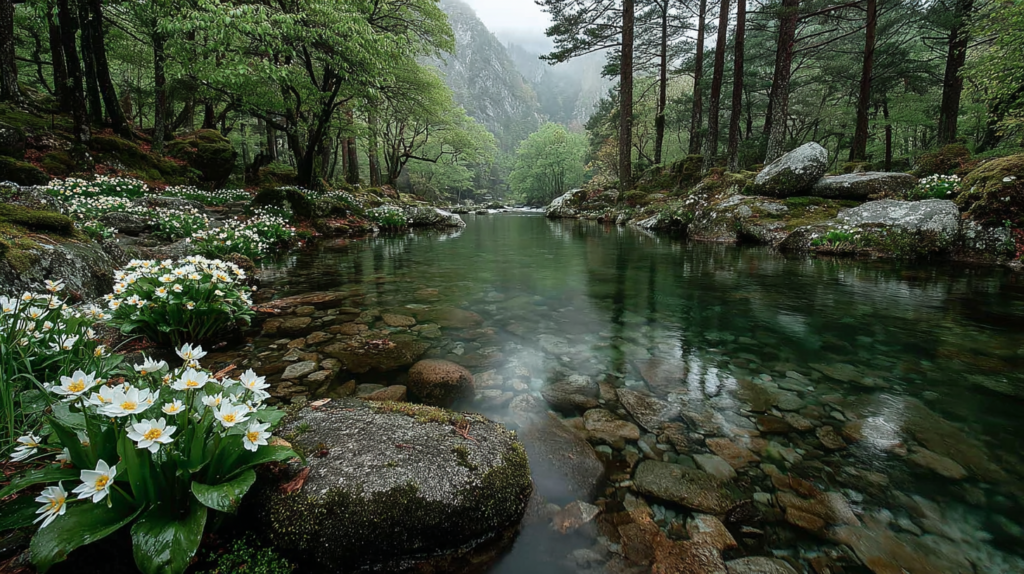
In 2024, a Japanese gin achieved the highest honors simultaneously at the world’s three major spirits competitions. It was named World’s Best in the Classic Gin category at the World Gin Awards, received the Trophy|an award given to only a single label|at the International Spirits Challenge, and won Double Gold at the San Francisco World Spirits Competition. This was the first time in history that a Japanese gin had taken the top global prize in the “Classic” category|not Contemporary, not Flavored, but Classic. The bottle was NISEKO ohoro GIN STANDARD, crafted in Niseko, Hokkaido.
The Paradox of Leaving Rice Behind
The gin is made by the Hakkaisan Brewing Group, founded in 1922 and best known for its Hakkaisan sake. For more than a century, this long-established Niigata brewer has been making alcohol from rice, water, and koji. Then, at the end of 2020, it opened a distillery in Niseko. Up to that point, the story could still fit neatly into a now-familiar narrative: a sake producer entering the craft gin space.
What made ohoro GIN quietly unusual begins here. While many Japanese craft gins emphasize a delicate Japanese identity by using rice-based spirits or kasutori shochu as their base, the Hakkaisan Brewing Group deliberately chose a neutral spirit instead. A brewery that had worked with rice for over 100 years intentionally removed rice from the foundation of its gin.
The reason was clear. Even at a relatively high 47% ABV, the goal was to preserve the essential oils of the citrus and botanicals while building a body sturdy enough to hold up in a Martini or a Negroni. This was not meant to be a bottle that simply sits gently beside Japanese cuisine. It was meant to be a bottle chosen at bar counters in London and New York. It was a quiet but decisive choice.
Northern Water, and a Name That Means “To Continue”
The name “ohoro” comes from the language of the Ainu, the Indigenous people of Hokkaido, and means “to continue.” Embedded in the name is a pledge: to continue making spirits worthy of this place for 50 years, 100 years, and beyond.
The water used in production is underground spring water from Niseko Annupuri, ultra-soft water with a hardness of around 33. Snowfall exceeding 15 meters a year seeps over many years through layers of volcanic ash, emerging as soft water with only modest mineral content. Despite the gin’s 47% ABV, international experts have described its texture as “surprisingly low in harshness” with a “creamy finish.” That texture is shaped by this water.
Of the 13 Botanicals, Only 2 Are Local
There are 13 botanicals in total. Of those, only two are sourced from Niseko: bog myrtle and Japanese mint. The rest include the classical building blocks of London dry gin|juniper berries, coriander, and angelica root|along with five kinds of citrus. Bog myrtle, a plant native to wetlands across the Northern Hemisphere, is a rare ingredient in gin even by global standards. Its pine-like resinous character, together with the crystalline coolness of the mint, lands as an accent atop an otherwise classical structure.
Rather than piling in countless local ingredients to create a sense of uniqueness, ohoro does the opposite: it narrows them down. That restraint allows it to preserve the universality of a classic gin while still leaving behind a quiet trace of Hokkaido’s terroir.
What It Means to Stand in “Classic,” Not “Japanese”
When looking at the category of Japanese gin, one of the best-known labels both in Japan and abroad is Suntory’s ROKU. Built around six Japanese botanicals|sakura flower, sakura leaf, sencha, gyokuro, sansho pepper, and yuzu|it is designed to layer a distinctly Japanese aromatic identity onto the framework of gin. The term “Japanese Craft Gin” expresses that philosophy succinctly. Even the hexagonal bottle, with each of its six sides engraved with one of the six Japanese ingredients, reinforces the same position: to make Japanese gin assert its identity through aroma.
NISEKO ohoro GIN stands somewhere else. Rather than pushing Japanese botanicals to the foreground, it leaves the classical London dry framework intact|juniper berry, coriander, angelica root|and then quietly adds Hokkaido ingredients like bog myrtle and Japanese mint as accents. The gin won the top prize at the World Gin Awards not in the “Japanese Gin” category, but in the “Classic Gin” category. That choice of classification alone tells you a great deal, quietly but clearly, about where this gin stands.
Should a gin assert its Japanese identity through aroma, or should it weave a sense of place into the grammar of a classic? Neither approach is inherently right or wrong. What this contrast reveals, quietly, is that within the still-young category of craft gin, multiple philosophies have already begun to emerge side by side. The path ohoro GIN chose was not to speak loudly about Japanese identity, but to speak the shared global language of London dry gin while letting the atmosphere of the northern forest linger just beneath the surface.
A Narrative Resonating in the Heart of Bangkok
For establishments celebrated on Asia’s 50 Best Bars list or Michelin-starred fine-dining tables, ohoro GIN offers a quiet reliability as a base spirit, seamlessly supporting the structure of classic cocktails such as the Martini or the Negroni. Beyond its utility, it brings a narrative worthy of contemplation: a century-old brewery’s decision to leave rice behind, a name that means “to continue” in Ainu, the snow and forests of Niseko, and its global triple crown in 2024.
In the tropical warmth of Bangkok, a bottle carrying the resinous depth and cool clarity of a northern forest presents an intriguing contrast. The narrative of “ohoro” gently invites those who appreciate the profound connection between nature and craft to experience a fragment of Hokkaido’s pristine winter. (Mr.Bacchus)
This article is intended solely to explore the distillation philosophy and cultural heritage of Niseko Distillery (a member of the Hakkaisan Brewing Group, the producer of NISEKO ohoro GIN STANDARD) and does not aim to promote or encourage the consumption of alcohol. / บทความนี้จัดทำขึ้นเพื่อนำเสนอข้อมูลเกี่ยวกับปรัชญาการกลั่นและมรดกทางวัฒนธรรมของโรงกลั่น Niseko Distillery (ในเครือ Hakkaisan Brewing Group ผู้ผลิต NISEKO ohoro GIN STANDARD) เท่านั้น มิได้มีเจตนาเพื่อส่งเสริมหรือโฆษณาเครื่องดื่มแอลกอฮอล์ สำหรับผู้มีอายุ 20 ปีขึ้นไป โปรดดื่มอย่างรับผิดชอบ
Discover the culture behind every bottle
We share brewery stories, tasting notes and the craft of koji & fermentation | for educational and cultural purposes only.
เราถ่ายทอดเรื่องราวจากผู้ผลิต บันทึกรสชาติ และศาสตร์แห่งโคจิและการหมัก | เพื่อการศึกษาและวัฒนธรรมเท่านั้น
Follow on Instagram FacebookRelated Articles
“The Logic of Subtraction” / “May you be blessed with ten millionfold good fortune”