Bar
Shochu Used to Be the “Odd Duck Out”
Reading a Self-Taught New York Mixologist’s Method Through a Shelf in Bangkok
In New York, there is a self-taught mixologist who studies cocktails on his own while balancing work as a tour guide and life as a father. In a piece he contributed to an industry publication, he captured the reality surrounding shochu with striking honesty.
“With whiskey, gin, or mezcal, I can throw ideas around with other people. But shochu is the odd duck out.”
Even in New York, where you would expect to find everything, only a handful of bars put shochu at the center of the menu. The only real exceptions he names are two places: Katana Kitten in the West Village and Oldies in Industry City.
His method is simple, and highly adaptable. He compares each shochu to a base spirit he already knows well. He asks himself what kind of cocktail he would make with that spirit. Then he works backward from the classics, adjusting the other ingredients so that shochu becomes the star. Here, I want to reinterpret his three recipes through three distinguished bottles now finding their place in Bangkok.
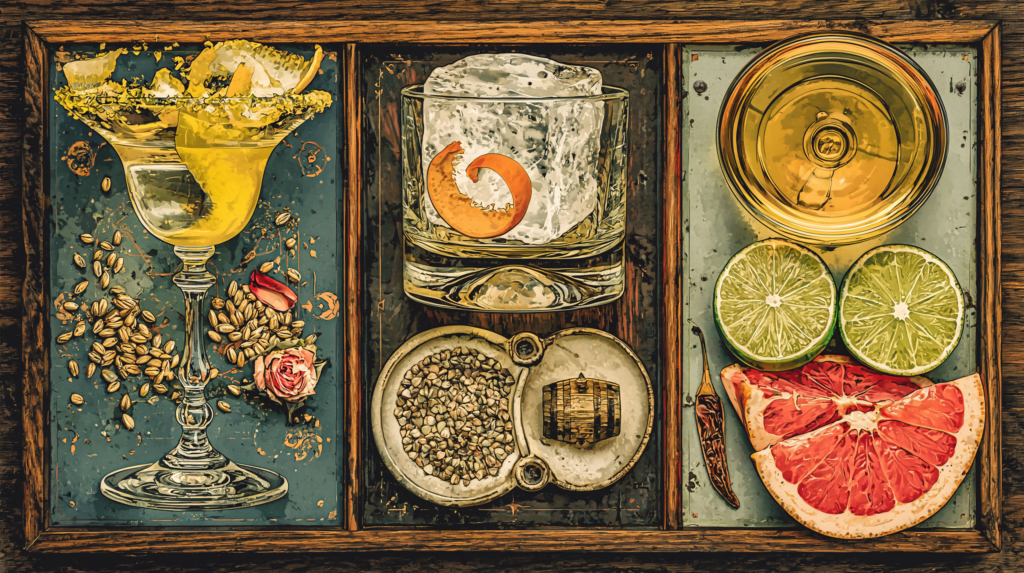
NOMANOMA Barley × Fifty-Fifty Martini
The first bottle he reached for was a barley shochu from Saga. He found notes of rose and a pronounced floral aroma, with a texture on the palate that reminded him of Champagne yeast. He saw it as something close to “genever, or an unaged high-malt whiskey,” and adapted it into a Fifty-Fifty Martini.
A bottle that beautifully embodies this profile is Nomanoma Barley from Shirogane Shuzo in Kagoshima. Made with ginjo yeast, this barley shochu won a Gold Award at Kura Master 2024. The bright aromatics created by the ginjo yeast and the soft, grain-derived depth line up perfectly with the “floral + malt” structure he described. Pair it one-to-one with dry vermouth and express the oils of a lemon peel over the top. “If I had yuzu, I would have used yuzu,” he added in his note. In Bangkok, that line can become a real order just as it is.
Soba Oshō 8-Year Sherry Cask × Old Fashioned
The second bottle was a buckwheat shochu. In his notes, he described it as “chocolate, cacao, a toasty malt bomb.” He used it to build an Old Fashioned: just under a barspoon of simple syrup, one dash of Angostura bitters, and an orange peel over a large cube of ice. He wrote that it was “like an adult chocolate milkshake made with buckwheat milk,” and named it the “Far East OF.”
A counterpart that mirrors this description almost exactly is the Guild Series Soba Oshō 8-Year Sherry Cask. This buckwheat shochu was quietly matured for eight years in sherry casks, where layers of dried fruit and cacao fold into the sweet shadows of oak. If you apply his recipe directly to this bottle, it should draw out an even deeper finish than the original Far East OF. The roasted character of buckwheat and the mature aromas from sherry cask aging are exactly the kind of pairing that belongs in an Old Fashioned glass.
Nakamura × Japanese Siesta
The third bottle was a sweet potato shochu. At first sip, he thought, “This is like a tequila with soft vanilla notes,” while his tasting partner picked up a nuance of red bell pepper. In that moment, the cocktail that came to his mind was the Siesta, created by a legendary New York bartender. It is a drink built with blanco tequila, lime, grapefruit, simple syrup, and a small amount of Campari. He reworked it into a “Japanese Siesta,” dialing the Campari way back so the vanilla-like sweetness of the sweet potato spirit and its vegetal finish could take center stage.
A spirit well-suited to anchor this creation is Nakamura, crafted by Nakamura Shuzojo in Kagoshima. The distillery continues to preserve koji-making in a stone koji room|an ishimuro|a practice now found at only three distilleries left in Kyushu. Its spirit is described as smooth, delicate, fragrant, elegant, and full-bodied. In the context he lays out|sweet potato shochu as a stand-in for tequila|that refinement answers beautifully. The liveliness of the Siesta remains intact, but the finish turns softly amber and subdued. It is the kind of drink that seems made for a Bangkok night.
The “Odd Duck Out” Becomes the Star When the Setting Changes
What makes his article so compelling is its honesty about the reality of New York as a vast city. There are few places to learn about shochu, few peers to exchange ideas with, and so he has little choice but to teach himself by reverse-engineering the classics. That is how the piece reads: as a record of trial and error.
In Bangkok, the picture looks a little different. KOUJI ALCHEMIST by Salon du Japonisant, which opened in February 2026, is an experiential bar built around Japanese spirits made with koji. It is trying to create, right in the middle of the city, exactly the kind of place he wrote New York lacks: a space where people can learn about shochu and cocktails together. It is also a place where his method can be made concrete through thoughtfully curated labels.
The shochu that was seen as the “odd duck out” in New York is beginning to take center stage in Bangkok. The distance between those two realities is not measured in geography, but in the depth of a city’s cultural curiosity. The way one self-taught mixologist wrote down his substitutions for the classics is already starting to take tangible form in another city|through three bottles: Nomanoma Barley, Soba Oshō 8-Year Sherry Cask, and Nakamura. (Mr. Bacchus)
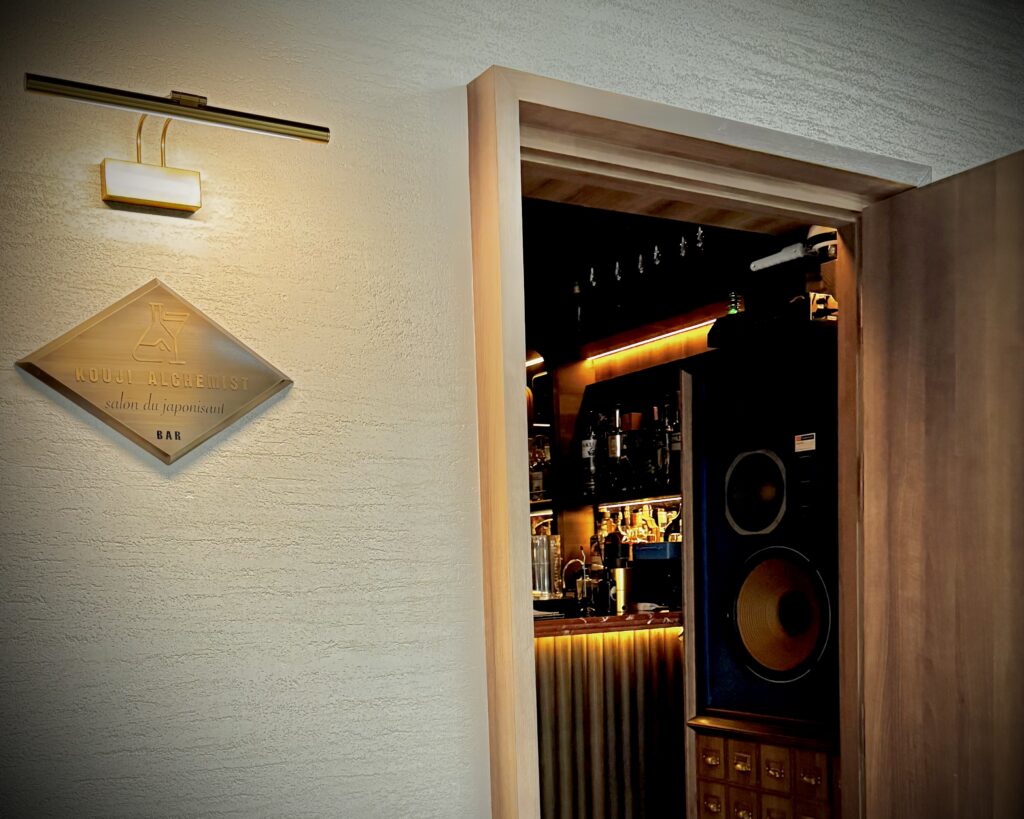
KOUJI ALCHEMIST by Salon du Japonisant is a premium spirits bar and experiential space in Bangkok’s Sukhumvit district, opened in February 2026. Centered on Japan’s koji fermentation culture, it offers Japanese sake, shochu, and craft spirits alongside koji-inspired cocktails and non-alcoholic beverages. Operated by Bacchus Global Co., Ltd., a Bangkok-based importer of Japanese sake, shochu, and spirits, the venue is supported by storage and transport conditions managed according to product and logistics stage. No single temperature is represented as applying continuously to every product from the brewery to Bangkok.
This article is intended solely to explore distillation techniques and cultural heritage of Japanese shochu, specifically NOMA NOMA Mugi (Shirakane Distillery), SOBA-OSHO Sherry Cask 8 years (Guild Series), and NAKAMURA (Nakamura Distillery), and does not aim to promote or encourage the consumption of alcohol. / บทความนี้จัดทำขึ้นเพื่อนำเสนอข้อมูลเกี่ยวกับเทคนิคการกลั่นและมรดกทางวัฒนธรรมของโชชูญี่ปุ่น โดยเฉพาะ NOMA NOMA Mugi (Shirakane Distillery), SOBA-OSHO Sherry Cask 8 years (Guild Series) และ NAKAMURA (Nakamura Distillery) เท่านั้น มิได้มีเจตนาเพื่อส่งเสริมหรือโฆษณาเครื่องดื่มแอลกอฮอล์ สำหรับผู้มีอายุ 20 ปีขึ้นไป โปรดดื่มอย่างรับผิดชอบ
Related Product(s)
Related Articles
“The Quiet Arrival of Mezcal in Bangkok: What a Single Bottle Can Reveal”
Discover the culture behind every bottle
We share brewery stories, tasting notes and the craft of koji & fermentation | for educational and cultural purposes only.
เราถ่ายทอดเรื่องราวจากผู้ผลิต บันทึกรสชาติ และศาสตร์แห่งโคจิและการหมัก | เพื่อการศึกษาและวัฒนธรรมเท่านั้น
Follow on Instagram Facebook