Drink
Choose by the Table: Food, Serving Style, and Occasion
Choose by the Table: Food, Serving Style, and Occasion
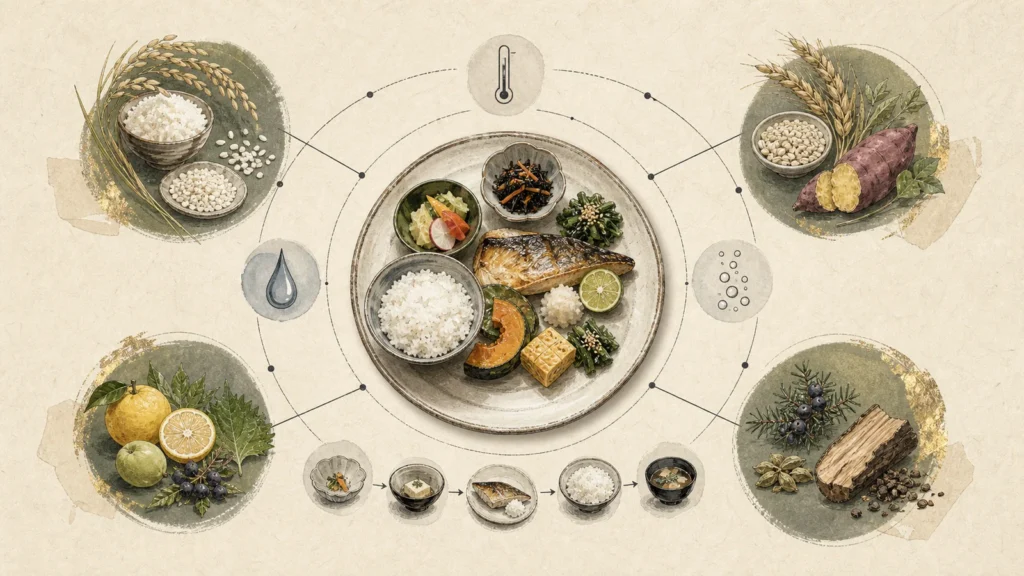
This framework begins with the finished dish and its service format. Beverage categories are compared only after those conditions are clear.
A beverage list often begins with category names: sake, shochu, liqueur, whisky, gin, and rum. A table does not. It begins with a finished dish, a service plan, and the way the meal is organised.
That distinction matters. The same fish, served raw or grilled, can differ in perceived weight, aroma, texture, and finish. The same shochu can seem more or less intense depending on dilution and temperature. A structure that fits one course may be too dominant across a sequence of six.
The comparison is therefore not simply about which category is “best.” It is about what the completed table requires.
1. Read the finished dish, not only its main ingredient
“Seafood,” “chicken,” or “pork” is not enough information. Cooking method, sauce, seasoning, temperature, texture, and aromatic intensity can shape a dish more strongly than the ingredient name alone.
Five dimensions provide a practical first reading.
- Perceived weight: Fat, sweetness, umami, concentration, and viscosity can add weight.
- Leading tastes: Sweetness, acidity, saltiness, bitterness, and umami are considered separately rather than as a single flavour.
- Cooking method: Steaming can preserve delicacy; frying can add fat and crispness; grilling can add roasted or smoky aromas.
- Texture and density: A clear broth, raw fish, a creamy sauce, and charred meat differ in density, texture, and aromatic intensity.
- Length of finish: A subtle dish can be obscured by a beverage with a much longer aromatic finish or more persistent alcohol warmth.
In sushi, seasoned rice, toppings, condiments, fat, and serving temperature all affect the comparison. The relationship is read from the complete plate, not from the fish alone.
2. Define the role before comparing categories
A beverage can perform more than one role at the table. It may continue a flavour already present, create contrast, or connect elements that otherwise feel separate.
Continuity places related elements beside one another: a gentle rice-derived character and a soft, umami-led dish, for example.
Contrast gives the dish a clearer outline. Acidity, carbonation, dryness, or a change in temperature can alter the perception of richness or sweetness without repeating it.
Aromatic bridge uses a shared aromatic thread rather than an identical flavour. Citrus, herbs, grain, roasted notes, smoke, or spice may connect the dish and beverage even when their production methods are unrelated.
Defining the role first keeps the analysis centred on the complete table rather than on the reputation of an individual bottle.
3. Treat serving style as part of the comparison
Category alone does not determine how a beverage is perceived at the table. Temperature, dilution, carbonation, portion size, and glass shape can alter aromatic intensity, perceived sweetness, alcohol warmth, texture, and finish.
Lower temperatures can restrain aroma and make a beverage seem tighter. Higher temperatures can make aromas more apparent and may alter perceived texture. Water and soda alter the beverage’s concentration; temperature changes how that concentration is perceived. These are service variables, not automatic improvements.
This is especially important for distilled categories. Comparing undiluted shochu with chilled sake reflects differences in service format as well as category. A clearer analysis considers the concentration, temperature, and aromatic intensity actually presented with the dish.
4. Let the occasion define the required flexibility
“Occasion” need not mean a celebration. In service terms, it describes how the table is organised.
The analysis considers whether there is one dish or a sequence, whether several people share different plates, how precisely temperature and dilution can be controlled, and whether one beverage is assessed across the meal or each course is considered separately.
A meal centred on one dish allows a narrow and specific comparison. In a multi-course meal, progression includes when perceived weight, aroma, sweetness, and alcohol impact peak, as well as how temperature changes from course to course. A shared table requires broader flexibility because several textures and seasonings may appear at once.
The occasion therefore changes the comparison criteria before categories are assessed.
5. What each category contributes to the comparison
The categories below are not rankings. They have different structural profiles.
Sake: brewed structure and temperature range
Sake is brewed from rice, koji, water, and yeast; some categories permit the addition of brewing alcohol. Its structure can include varying levels of acidity, sweetness, umami, aroma, and texture. Temperature changes how these elements are perceived.
The analysis compares the dish’s perceived weight and finish with the structure of the sake at its intended service temperature.
Shochu: raw-material identity and the effects of dilution
Shochu is distilled, and its raw material, koji, fermentation, distillation method, and maturation can shape aroma and texture. Water and soda alter the beverage’s concentration, while temperature changes the perception of intensity.
The analysis considers both the aromatic profile and the intended serving concentration.
Liqueur: sweetness and a defined aromatic accent
Liqueurs combine a spirit or fermented base with ingredients such as fruit, herbs, spices, tea, coffee, or dairy components, usually with perceptible sweetness. That sweetness is structural: it changes weight, finish, and the relationship with acidic, salty, spicy, or sweet foods.
The analysis considers whether the aromatic accent and sweetness remain proportionate to the dish and serving size.
Other distilled spirits: concentrated aroma and service precision
Whisky, gin, rum, and other distilled spirits differ widely. They generally require careful attention to concentration. Production method, botanical or raw-material character, maturation, alcohol strength, and dilution all affect their presence beside food.
The analysis considers whether aroma and alcohol warmth remain discernible without obscuring the dish or the sequence.
A five-stage table framework
When several categories appear structurally plausible, the framework considers five stages.
- Description: A description of the finished dish in one sentence, including weight, leading tastes, cooking method, texture, aroma, and finish.
- Definition: The role of the beverage as continuity, contrast, or aromatic bridge.
- Identification: The intended service conditions: temperature, dilution, carbonation, portion, and glassware.
- Comparison: The structural profiles of the relevant categories.
- Review: The complete occasion: one dish, a shared table, or a course progression.
This framework does not produce one universally correct answer. It supports an analysis that can be explained, tested, and adjusted.
Related educational resources include the Pairing knowledge page, the Sake Pairing series, and the Shochu & Spirits Pairing series.
For a category-first framework, begin with Selecting Your First Bottle.
Related reading: “Cuisine Has Evolved. What About Drinks?” / “The Silent Synergy of Fermentation”
Related product references: “BORN Gold” / “DAIYAME 40” / “NISEKO OHORO GIN STANDARD” / “KOKUTO DE LEQUIO Smoky Umami Rum”
This article provides educational information about how food structure, service variables, dining format, and beverage categories can be compared. It does not encourage alcohol consumption or promote any product. Thai law prohibits the sale of alcoholic beverages to persons under 20 years of age.
Discover the culture behind every bottle
We share brewery stories, tasting notes and the craft of koji & fermentation — for educational and cultural purposes only.
เราถ่ายทอดเรื่องราวจากผู้ผลิต บันทึกรสชาติ และศาสตร์แห่งโคจิและการหมัก — เพื่อการศึกษาและวัฒนธรรมเท่านั้น