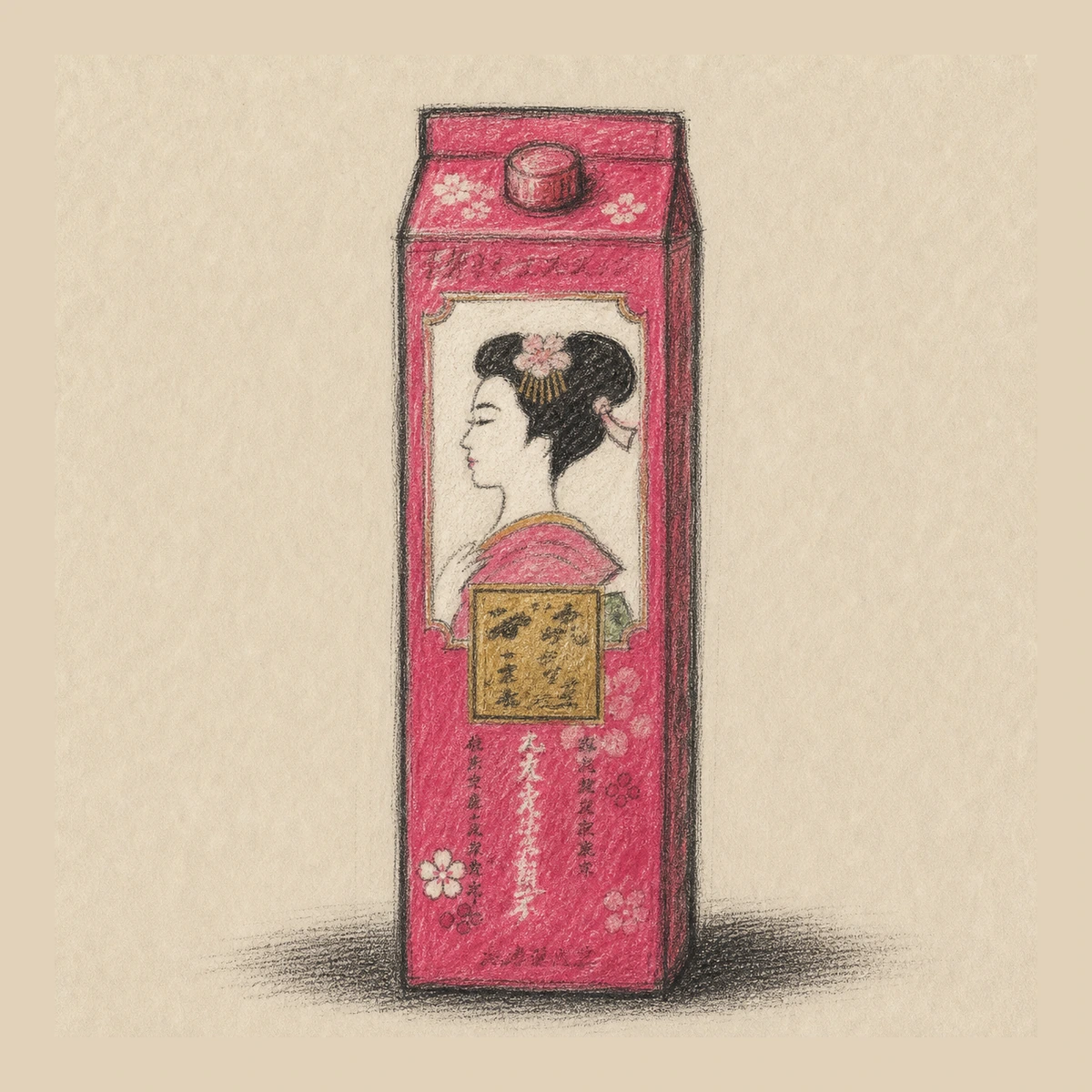
BIJIN na UMESHU
Kishu Nanko ume steeped in Kagoshima honkaku barley shochu, with no added flavouring, colouring or acidifiers. Restrained sweetness lets plum acidity and grain depth meet cleanly.
Thailand · Product information
Product information from Bacchus Global Co., Ltd., based in Bangkok, Thailand. About Bacchus Global
Barley-shochu-based umeshu
Barley-shochu depth beneath Kishu Nanko ume
Hamada Shuzo steeps Kishu Nanko ume in honkaku barley shochu made in Kagoshima. The liqueur retains not only the fruit but also the rounded grain character of a singly distilled shochu base.
A foundation of honkaku barley shochu
Rather than using a nearly neutral continuously distilled spirit, BIJIN begins with Kagoshima honkaku barley shochu, giving the palate gentle toast and depth.
Kishu Nanko ume, left unadorned
The Nanko ume is steeped without added flavouring, colouring or acidifiers, preserving natural fruit sweetness and acidity as the centre of the liqueur.
Restrained sweetness, rounded texture and a clear core
At 8% ABV, the liqueur remains light while retaining the roundness of barley shochu and the savoury depth of ume. Gentle acidity leaves the finish clean rather than simply sweet.
Nanko plum fruit with a quiet toasted-grain note
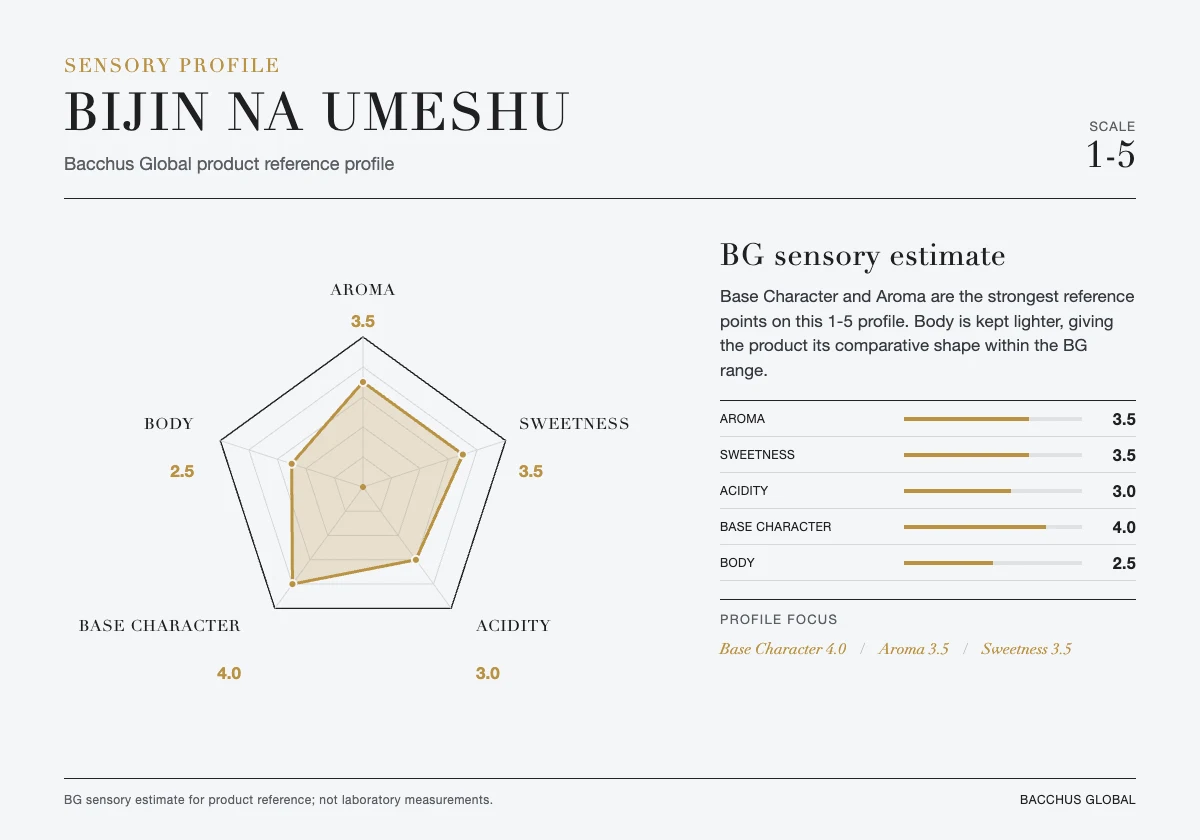
Kishu Nanko ume suggests apricot and peach, followed by the soft grain aroma of barley shochu. The palate is rounded, with plum depth and gentle natural acidity. Sweetness stays measured, and a trace of grain richness remains through a clean finish.
Question 1
What is the base spirit?
- Honkaku barley shochu from Kagoshima
- Sake alone
- Grape brandy alone
Read the answer and explanation
Correct answer: A — Honkaku barley shochu from Kagoshima
The base is honkaku barley shochu made in Kagoshima.
Question 2
Which fruit is steeped?
- Aomori apples
- Kishu Nanko ume
- Okinawan shikuwasa
Read the answer and explanation
Correct answer: B — Kishu Nanko ume
The page specifies Kishu Nanko ume.
Question 3
Which additives does the page say are not used?
- Only added sugar
- Only yeast
- Added flavouring, colouring and acidifiers
Read the answer and explanation
Correct answer: C — Added flavouring, colouring and acidifiers
The page says no added flavouring, colouring or acidifiers are used.
Where Nanko plum meets toasted grain
These pairings are not combinations stated officially by the producer; they are a reading drawn from the characteristics recorded on this product page.
This pairing rationale draws on the following reference books: “Food Pairing Encyclopedia” records apricot’s aroma as linked to honey, chicken broth and roasted chestnut — a direction close to this ume’s own apricot and peach character; following the harmony concept in “Logical Pairing,” the barley’s grain aroma resonates directly with toasty notes in a dish.
Hamada Shuzo in Ichikikushikino, Kagoshima
Hamada Shuzo was founded in Ichikikushikino, Kagoshima, in 1868. It works through three breweries: Denbee-gura for tradition, Denzouin-gura for innovation and Kinzangura for succession. BIJIN is made at Denzouin-gura, translating the producer’s shochu expertise into the structure of an umeshu.
Contact Bacchus Global for product documentation and trade information.