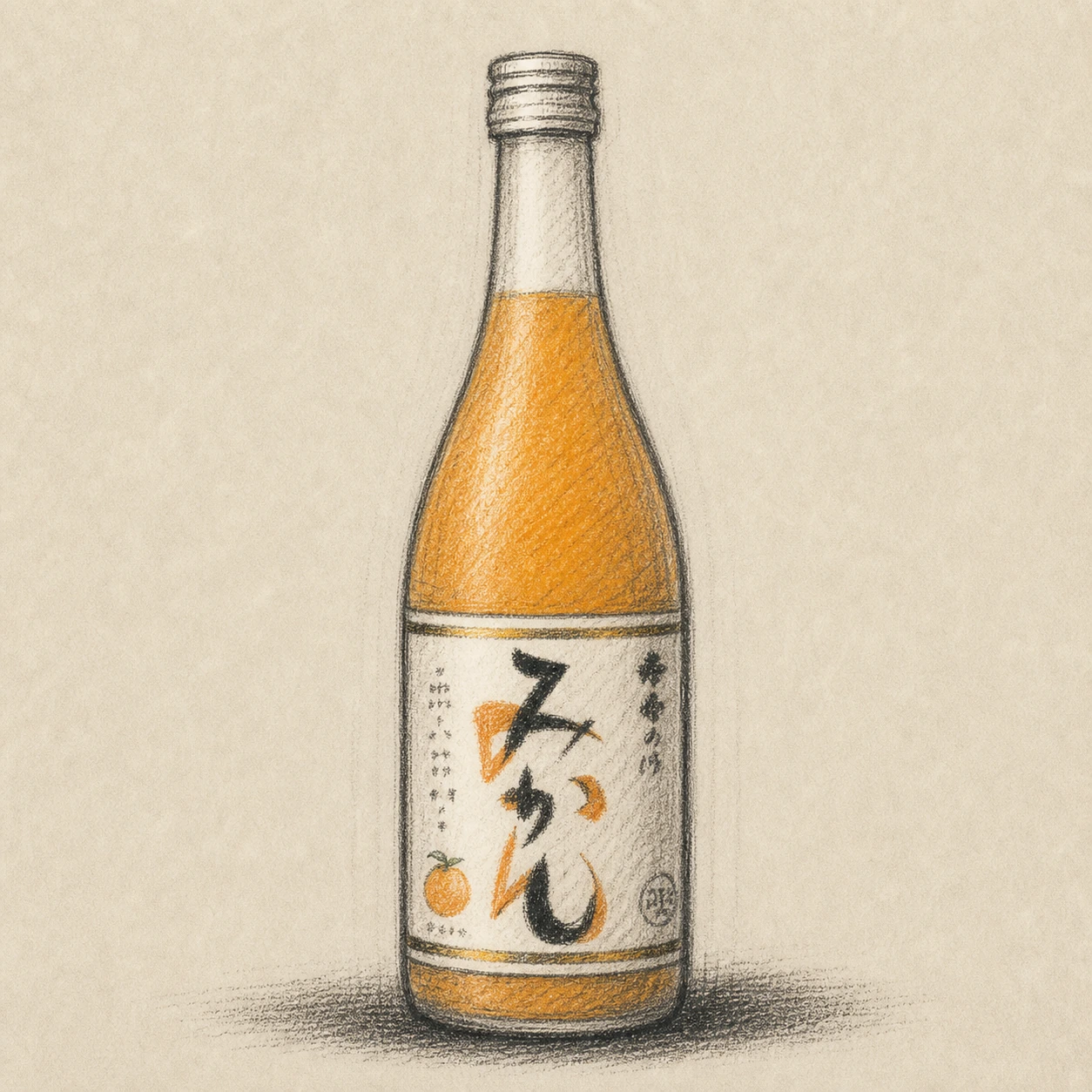
ARAGOSHI Mikan / Orange
Japanese mandarin peel, membranes, seeds and pith are removed before the juice sacs are blended intact, preserving a lively citrus burst on the palate.
Thailand · Product information
Product information from Bacchus Global Co., Ltd., based in Bangkok, Thailand. About Bacchus Global
Fruit liqueur
Keeping mandarin juice sacs intact
Its character comes from the way the main ingredient meets the base spirit. Two choices are central to the result.
Removing peel, membrane, seeds and pith
Careful preparation leaves the fruit’s sweetness and acidity clear.
Blending without crushing the juice sacs
Each intact segment gives the liqueur its distinctive burst of texture.
Mandarin expressed through texture as well as aroma
Sake roundness joins the fruit’s lively texture and refreshing acidity.
Freshly peeled mandarin, bursting fruit and bright acidity
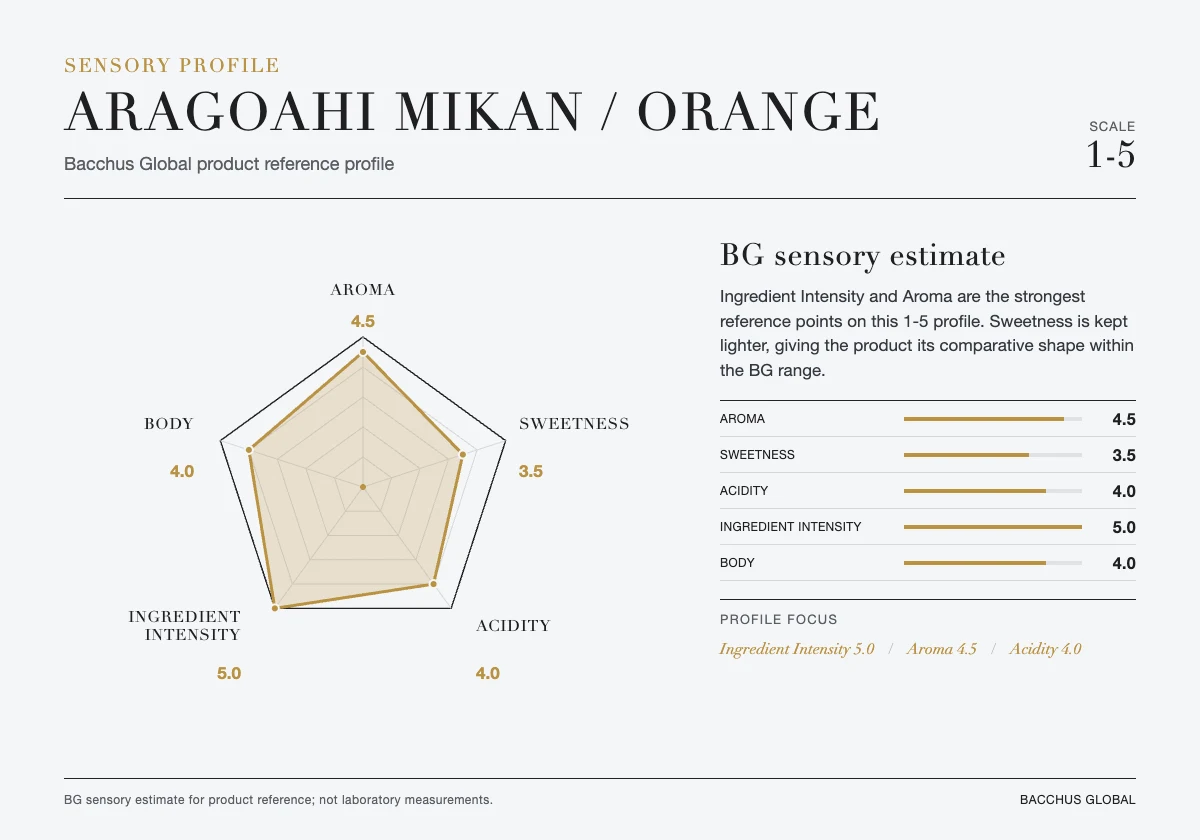
Mandarin aroma and sweetness open clearly as the juice sacs burst, followed by a light citrus finish.
Question 1
Which citrus is used?
- Japanese satsuma mikan
- Only grapefruit
- Only yuzu
Read the answer and explanation
Correct answer: A — Japanese satsuma mikan
Japanese-grown satsuma mikan provides the fruit.
Question 2
What is carefully removed?
- All fruit segments
- Outer and inner peel, seeds and strings
- All the juice
Read the answer and explanation
Correct answer: B — Outer and inner peel, seeds and strings
Removing those parts leaves the fruit segments clean.
Question 3
What is protected during blending?
- Turning segments to powder
- Making the liqueur fully clear
- Keeping the segments intact
Read the answer and explanation
Correct answer: C — Keeping the segments intact
The mikan segments are blended without crushing them.
Four directions shaped by bursting fruit and light acidity
These pairings are not official combinations announced by the producer, but a reading of the aroma and flavor characteristics recorded on the product page. The mandarin’s clear aroma and sweetness, the burst of its juice sacs, and a light citrus finish form the basis for four directions.
One basic principle in food pairing is using light acidity to set off bright sweetness through contrast. Aragoshi Mikan’s bursting sweetness and light citrus finish follow this same logic.
Umenoyado Brewery in Katsuragi, Nara
Umenoyado Brewery is based in Katsuragi, Nara. For this liqueur, it brings ingredient selection and established production craft together in a distinctly Japanese expression.
Related products
Only directly relevant products and Bacchus Global stories are shown.
Contact Bacchus Global for product documentation and trade information.