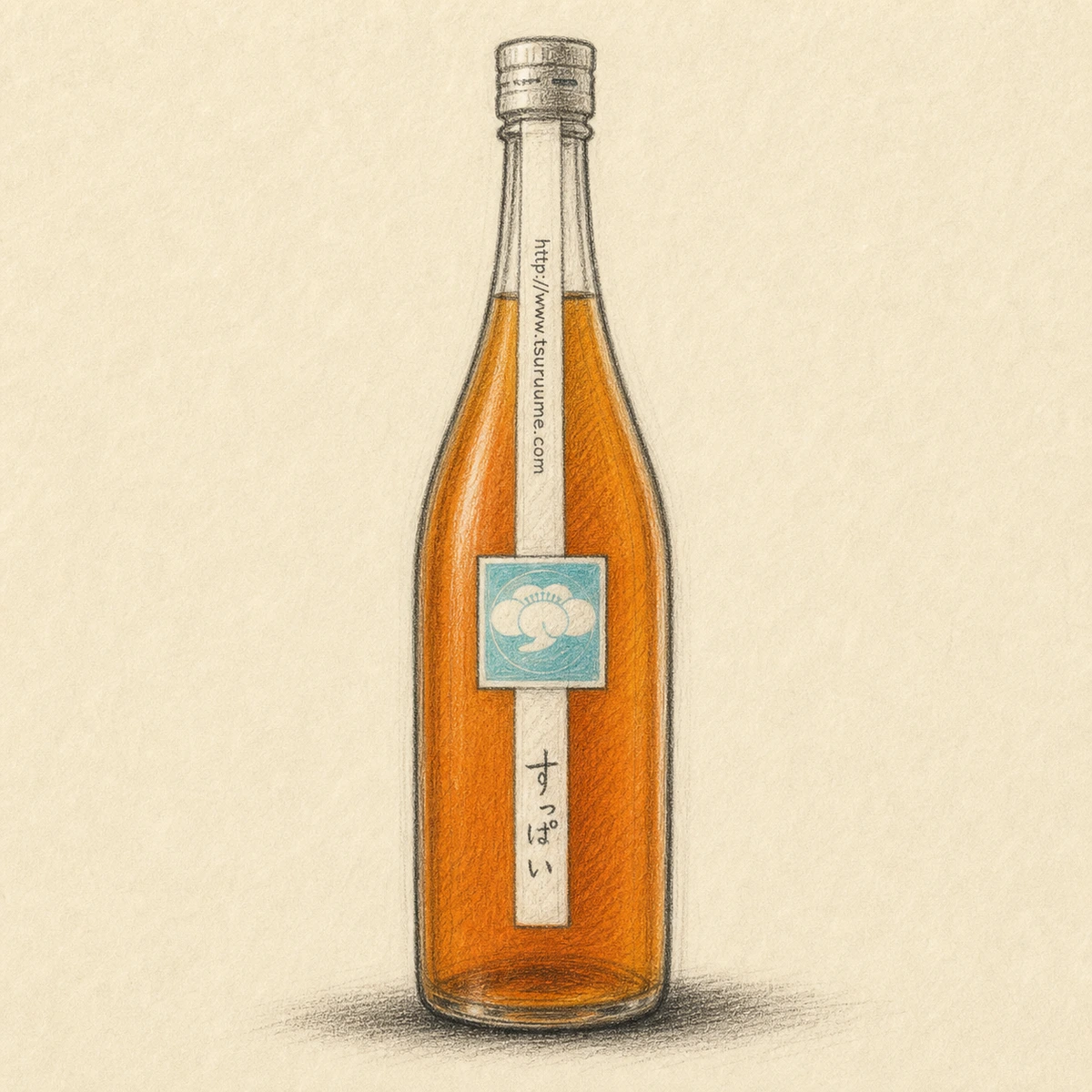
TSURUUME Ume Suppai
Three to four times the usual quantity of ume and more than twice the acidity: a sake-based liqueur that places ripe-plum concentration and vivid tartness at the centre.
High-acidity sake-based umeshu
More fruit, with acidity as the lead
Built on sake, this expression uses three to four times the amount of ume found in a typical plum liqueur.
Using ripe ume without restraint
The generous fruit load draws out concentrated perfume, flavour and acidity.
Binding the acidity with the softness of sake
Rice-derived roundness softens the sharpness, creating depth rather than acidity alone.
More than twice the acidity, still full of fruit
Vivid tartness runs through ripe-plum sweetness and savoury depth.
A mouthful of plum, bright acidity and a clean finish
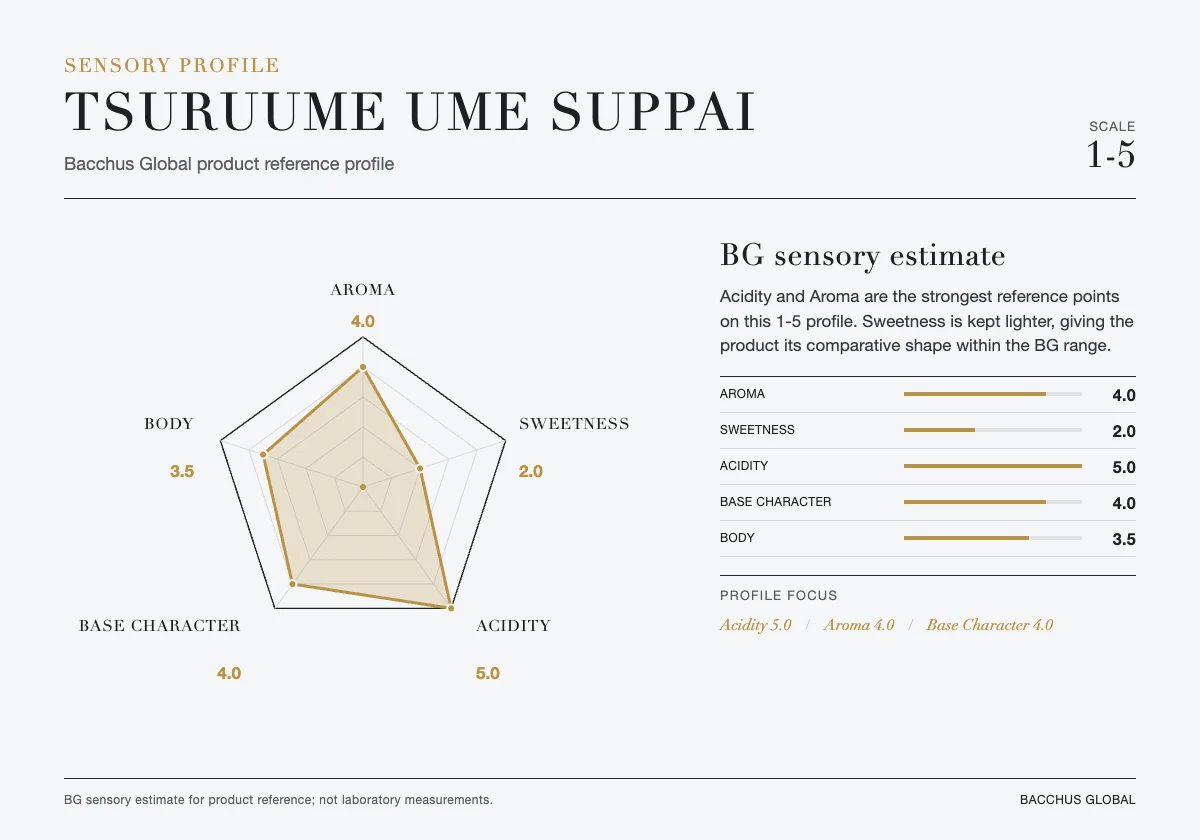
Ripe-plum aroma and dense fruit open broadly before clear acidity tightens the profile. Sweetness sits within the fruit’s weight, leaving a long, refreshing finish.
Four directions opened by pronounced acidity
TSURUUME Suppai is a plum liqueur made with three to four times the usual amount of ume on a sake base, built around pronounced acidity. What follows is not a pairing the producer has presented officially, but a reading drawn from the aroma and taste recorded on this page.
There is a principle that matching acidity to acidity creates a sense of unity, a role suited to the pronounced acidity of TSURUUME Suppai. Acidity is also described as cutting through richness, a lens that applies to fried food and fermented dishes.
Heiwa Shuzo and the fruit of Kishu
Heiwa Shuzo makes sake in Kainan, Wakayama, and applies that brewing knowledge to the region’s fruit through its Tsuruume range.
From the same producer
Only directly relevant products and Bacchus Global stories are shown.
Contact Bacchus Global for product documentation and trade information.