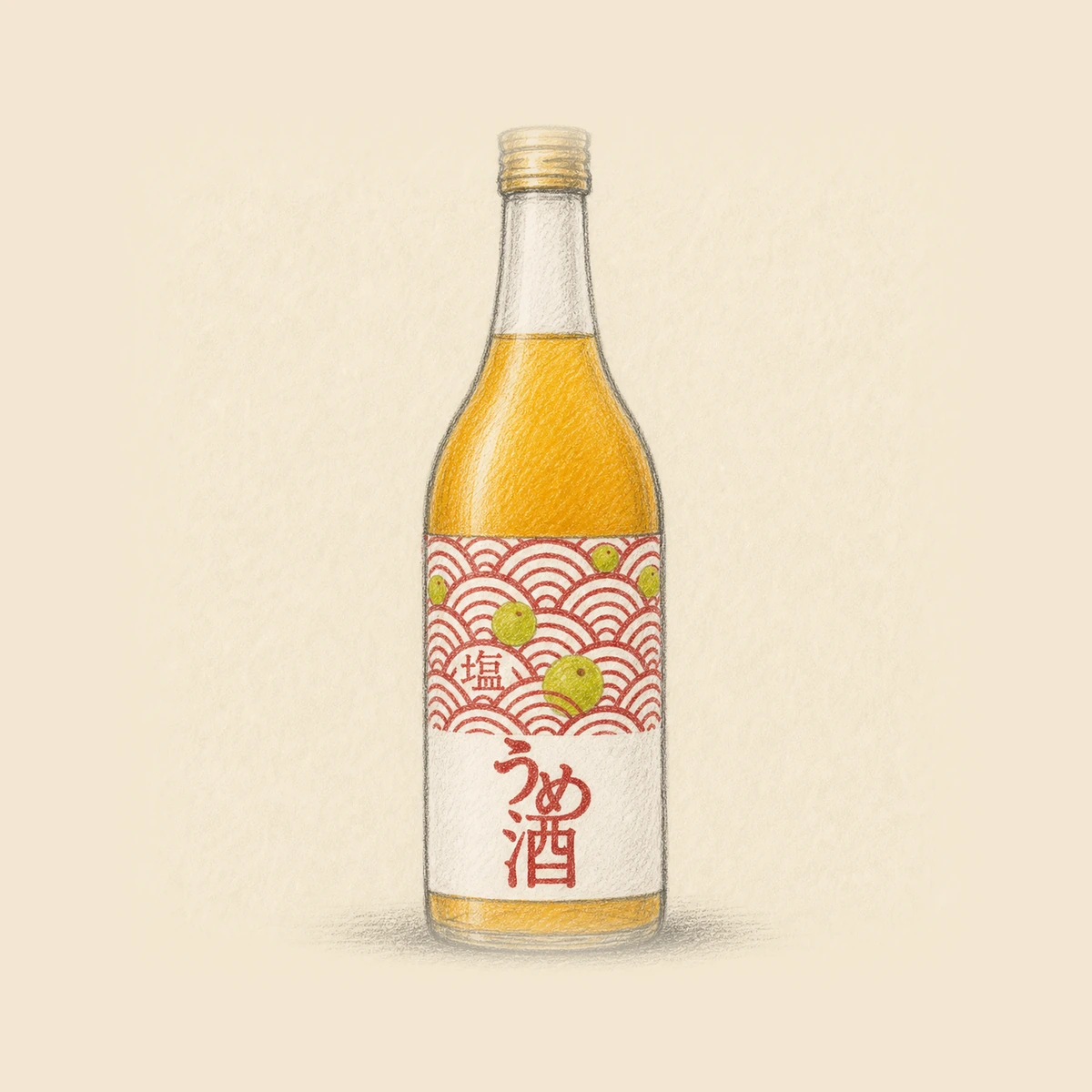
SHIO UME
Ume, sake, sugar and salt: a sake-based liqueur in which traditional Uminosei sea salt from Izu Oshima gives shape to sweetness and acidity.
Salt-accented sake umeshu
A measure of traditional sea salt in sake-based umeshu
House-brewed sake forms the base, with the flavour built from ume, sugar and Uminosei sea salt from Izu Oshima.
Building a gentle foundation with sake
Rather than placing neutral spirit at the centre, the brewery uses sake to receive the fruit with a softer alcoholic profile.
Using Uminosei to tighten the palate
The complex salinity of sea salt defines the boundary between sweetness, acidity and fruit rather than making the drink simply salty.
Light in alcohol, clear in flavour
At 7% ABV, acidity and mineral character give the lighter body a firm centre and make it an easy match with food.
Ume acidity, measured sweetness and a saline finish
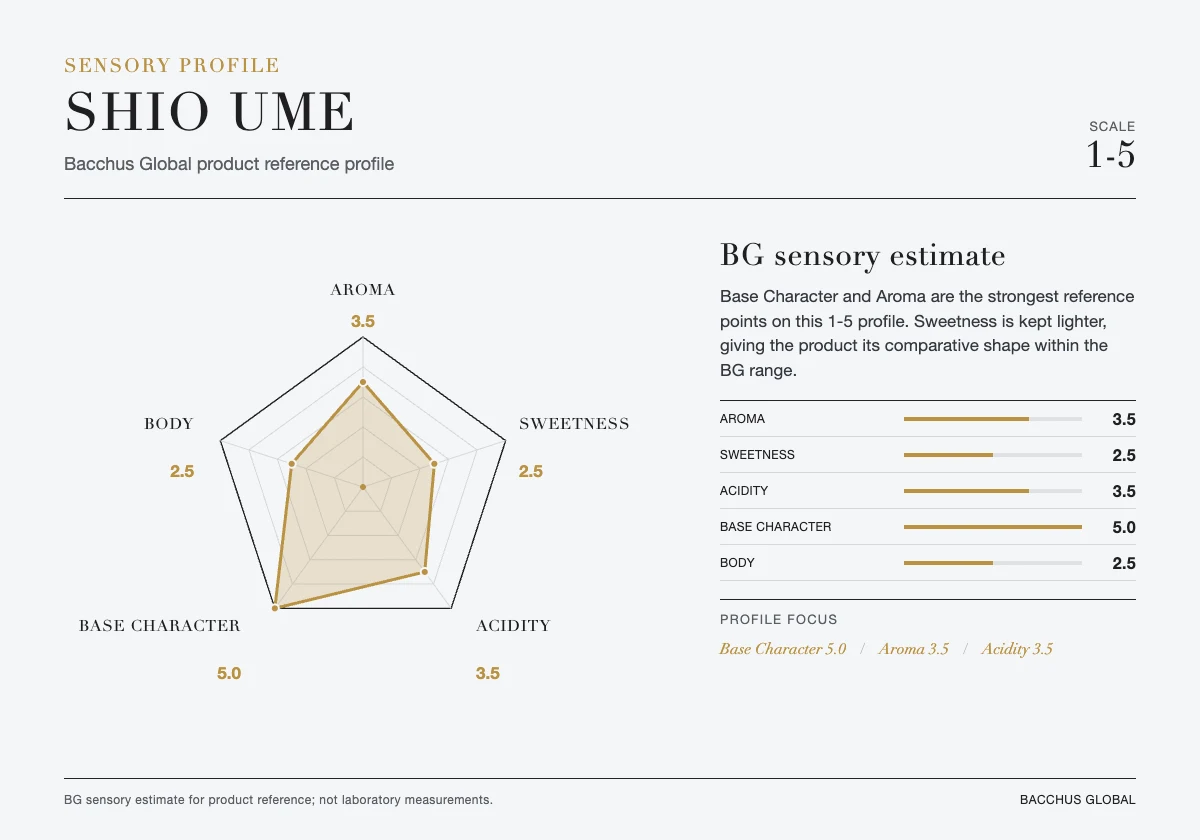
Muted amber in colour, it brings lively ume acidity over the softness of sake. The salt remains restrained, drawing the finish together cleanly.
Ume and sea salt — two lines of acidity bridging the table
The food affinities for SHIO UME are not combinations officially presented by the producer, but a reading drawn from the characteristics recorded on this page. Built around the acidity and mineral outline that the Uminosei sea salt from Izu Oshima brings, and the light 7% body, they are organised into four directions.
These suggestions are a hypothesis built on structural cues drawn from food-pairing theory — acidity suppressing richness, salt contrasting with and lifting umami, and shared aroma compounds creating synergy — and are not an official recommendation from the producer.
Kitajima Shuzo, established in Konan in 1805
Founded in 1805 along the old Tokaido route in present-day Konan, Shiga, Kitajima Shuzo builds this liqueur on more than two centuries of sake brewing.
Contact Bacchus Global for product documentation and trade information.