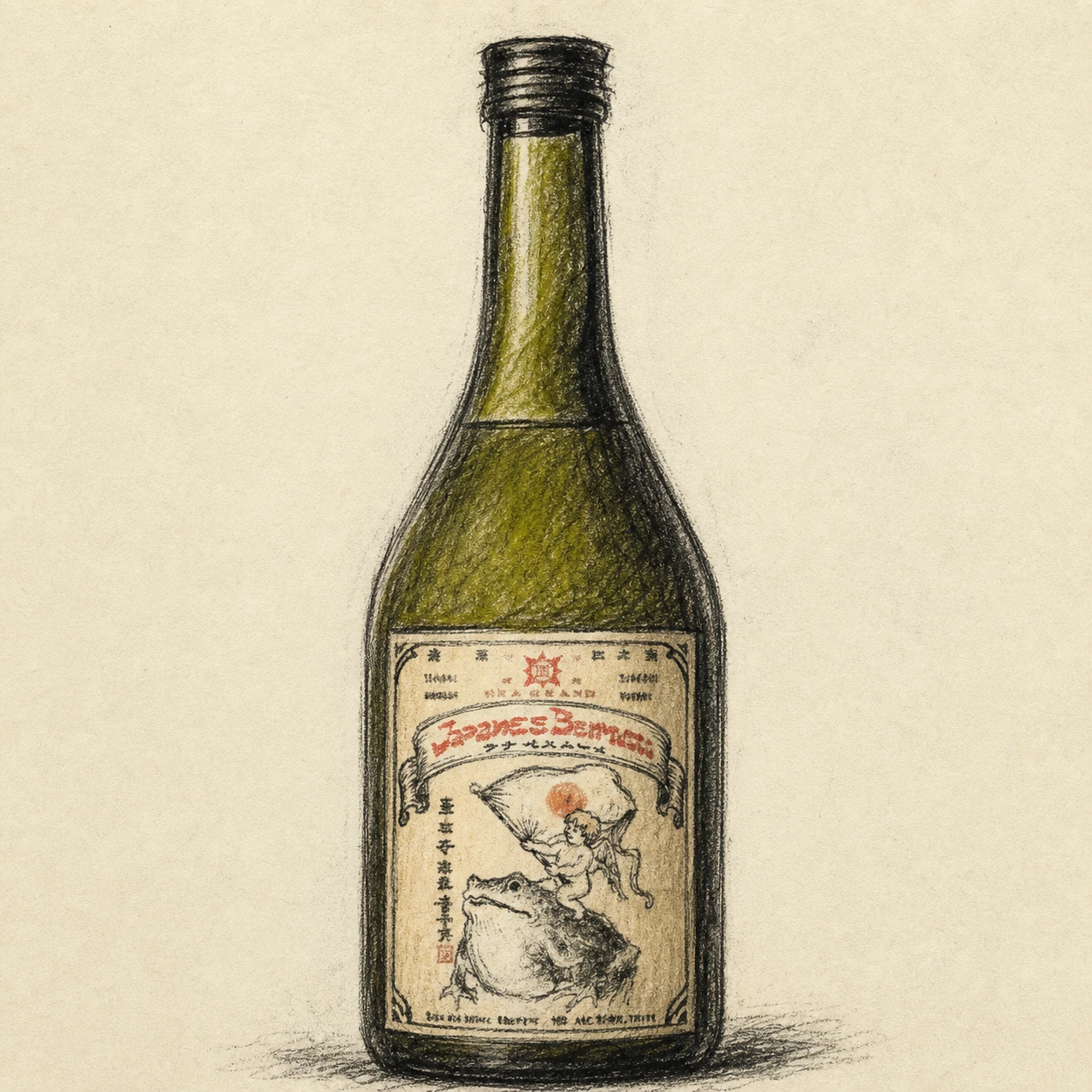
SAKE VERMOUTH
Junmai sake is infused with yuzu, grapefruit, sansho and other botanicals, then fortified with honkaku rice shochu—a Japanese vermouth grounded in rice savouriness.
Fortified sake vermouth
Turning junmai sake into vermouth with citrus and herbs
Its character comes from the way the main ingredient meets the base spirit. Two choices are central to the result.
Infusing botanicals into junmai sake
Yuzu, grapefruit and sansho are layered over the savoury depth of rice.
Fortifying with honkaku rice shochu
A rice-derived spirit strengthens the frame without breaking the flavour line.
Rice savouriness, citrus and sansho lift
Soft junmai sweetness forms the bass note, brightened by yuzu and grapefruit before sansho tightens the finish.
Yuzu, grapefruit, sansho and rice

Citrus meets young koji and yeast notes; rice sweetness and savouriness broaden the palate before sansho lingers.
Four directions guided by rice umami, citrus and sansho botanicals
Japanese Sake Vermouth is built on the soft, savoury umami of junmai sake, layered with bright yuzu and grapefruit and the spice of sansho pepper, which lingers into the finish. The combinations below are not official pairings presented by the producer, but readings drawn from the recorded taste characteristics.
Dishes combining sansho and citrus are said to align with the vermouth’s own layered aroma, and koji- and yeast-derived notes are noted to align with fermented food. Infusing junmai sake with citrus and botanicals, then fortifying it with rice shochu, this vermouth-style liqueur draws on both mechanisms, meeting spiced dishes as well as fermented food.
Tsutsumi Shuzo in Hitoyoshi Basin, Kumamoto
Tsutsumi Shuzo is based in Hitoyoshi Basin, Kumamoto. For this liqueur, it brings ingredient selection and established production craft together in a distinctly Japanese expression.
Related products
Only directly relevant products and Bacchus Global stories are shown.
Contact Bacchus Global for product documentation and trade information.