Drink
Two Fruits Differ Only in Juice. One Also Carries Wine.
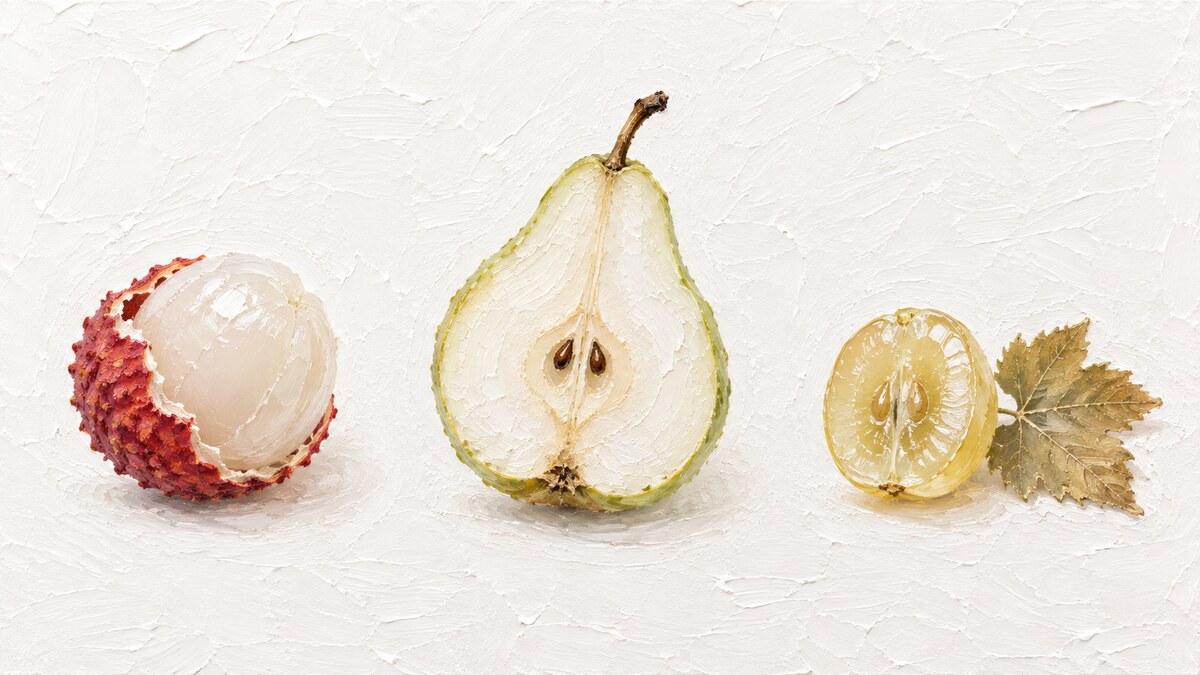
Among the SHIROI liqueurs made by Sakurao Distillery (operated by SAKURAO Brewery and Distillery Co., Ltd., Hatsukaichi, Hiroshima), three bottles stand side by side: Lychee, La France and Chardonnay. Lined up, their ingredient labels share a great deal. White rose spirits, sugars, pasteurised cultured milk beverage, sweetened condensed milk, and fruit juice. Sorbitol, flavouring and an acidulant appear on all three as well. Alcohol content is 6% across the board, and every bottle holds 720ml.
There is one exception. Only the Chardonnay label lists white wine alongside its fruit juice.
Only Chardonnay Carries Wine
Lychee and La France differ only in their juice ratio, 11% and 10% respectively. Beyond that, nothing else on their labels sets them apart.
Chardonnay’s label lists 10% fruit juice, plus white wine. Of the three, it is the only bottle whose ingredients extend beyond juice. The label alone does not say which wine, from where, or for what purpose it was added.
What the Name Points To
Chardonnay is both a fruit and the name of a grape variety, one that traces to the village of Chardonnay in the Mâconnais district of Burgundy, France. Lychee and La France are eaten as fruit; the Chardonnay grape, by contrast, is grown worldwide chiefly for winemaking. The presence of white wine on this one label is the difference that sets it apart.
The aroma notes follow a similar pattern across the three. Lychee is described as tropical and floral, with cis-rose oxide, a compound known for its rose-like character, cited as one contributor. La France is a pear known to continue ripening after harvest, and its distinct pear fragrance is noted on the label. Chardonnay’s aroma is described as grape-derived and reminiscent of Muscat. Whether that character comes from the juice, the wine, or both is not something the label settles.
Visible Only When the Three Stand Together
Looked at alone, the difference in ingredients might seem minor. Read the three labels side by side, though, and a pattern appears: Lychee and La France rely on juice alone, while Chardonnay carries both juice and wine.
Within a shared architecture, the difference recorded on the label simply remains there, unresolved into anything more.
This article is intended solely to explore the blending craftsmanship and cultural heritage of SAKURAO Brewery and Distillery Co., Ltd. and the SHIROI brand, and does not aim to promote or encourage the consumption of alcohol. / บทความนี้จัดทำขึ้นเพื่อนำเสนอข้อมูลเกี่ยวกับศิลปะการผสมผสานและมรดกทางวัฒนธรรมของ SAKURAO Brewery and Distillery Co., Ltd. และแบรนด์ SHIROI เท่านั้น มิได้มีเจตนาเพื่อส่งเสริมหรือโฆษณาเครื่องดื่มแอลกอฮอล์ สำหรับผู้มีอายุ 20 ปีขึ้นไป โปรดดื่มอย่างรับผิดชอบ
Related Articles
“Sakurao and Togouchi, The Elegance of Twin Terroirs” / “Not Defining Umeshu by a Single Formula — Umeyoshi’s Choice of Four Base Spirits” / “Two Expressions, One Orchard: The Craft of Wakayama Umeshu”
Related Product(s)
SHIROI Lychee / SHIROI La France / SHIROI Chardonnay
Discover the culture behind every bottle
We share brewery stories, tasting notes and the craft of koji & fermentation — for educational and cultural purposes only.
เราถ่ายทอดเรื่องราวจากผู้ผลิต บันทึกรสชาติ และศาสตร์แห่งโคจิและการหมัก — เพื่อการศึกษาและวัฒนธรรมเท่านั้น