Drink
From Cherry Blossom Yeast to Katsuobushi: The Okinawan Ingredients and Craft Behind LEQUIO
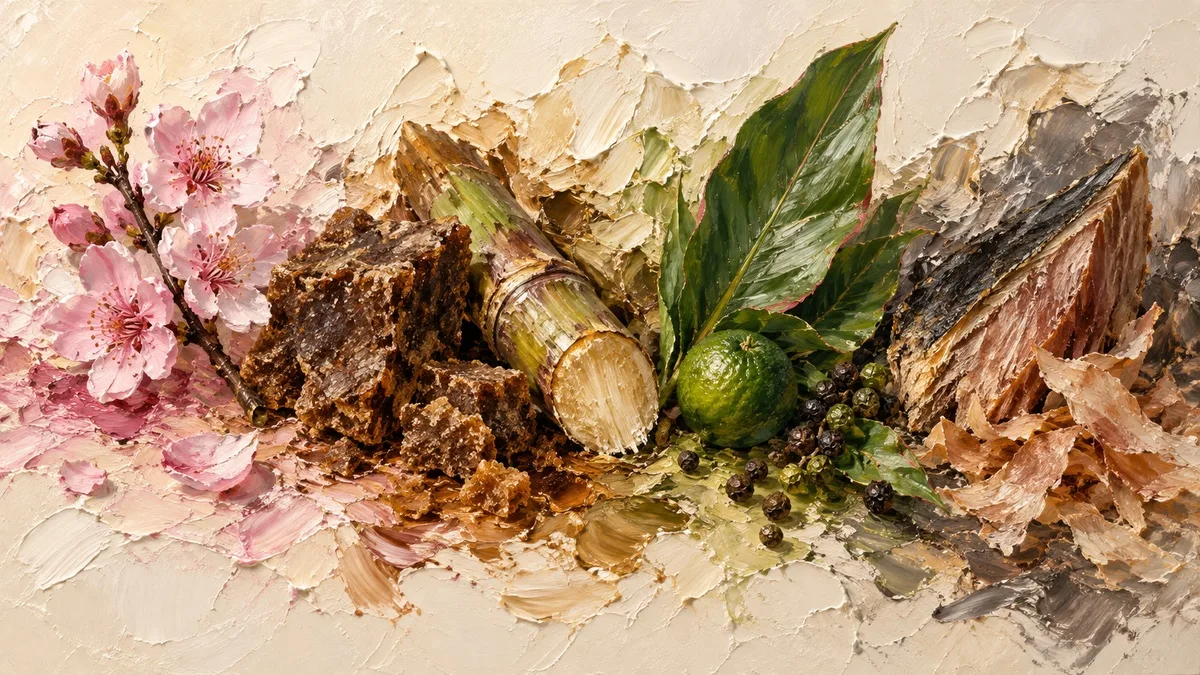
Awamori, liqueur, and rum follow distinct paths of creation. Tracing how they are made reveals shared ingredients and the work of the people behind them.
Yeast discovered on cherry blossoms, and katsuobushi, the smoked, dried bonito used to make dashi. At first glance, these two ingredients seem unrelated. Yet both are used in products from LEQUIO, a spirits series produced in Okinawa.
The four products explored here comprise one awamori, one brown sugar liqueur, and two rums. Their names identify different categories, but tracing their production reveals connections: shared yeast or brown sugar, followed by different processes.
Production is handled by Mizuho Shuzo, a distillery founded in 1848 in Shuri, Naha. Akira Nakazato and colleagues work on production and product development in collaboration with international bar operator SG Group and spirits developer OneSpirit. The series brings together the distillery’s fermentation and distillation techniques with bartenders’ experience of combining ingredients.
Learning to Work with a Yeast Discovered on Cherry Blossoms
AWAMORI DE LEQUIO uses sakura yeast discovered on cherry blossoms on Mount Yae in Motobu, northern Okinawa. Nakazato isolated it in 2015. Isolation means separating the yeast being studied from other microorganisms.
Yeast converts sugar into alcohol. In awamori production, black koji mold is first cultivated on rice to make rice koji. Enzymes produced by the mold break rice starch down into sugars, which yeast converts into alcohol. Distilling the fermented mixture produces awamori. The name “sakura” refers to where the yeast was found; it does not mean that cherry blossoms are added for flavor.
The discovery did not immediately lead to an awamori product. The producers continued researching the yeast while using spirits made with it as bases for gin and liqueur, eventually launching AWAMORI DE LEQUIO in 2026. The years between its discovery and its release under that name were also spent learning about the yeast through other spirits.
The rice comes from Thailand. The Okinawan character of the spirit lies not only in where ingredients come from, but also in the locally discovered yeast and the distillery’s accumulated knowledge.
Brown Sugar as Both a Fermentation Base and a Finishing Ingredient
Awamori made with the same sakura yeast also provides a base for KOKUTO DE LEQUIO Kokuto Liqueur. Announced in 2023, it combines awamori and brown sugar rum, with brown sugars from two islands dissolved into the blend.
Kokuto is made by boiling down sugarcane juice until it solidifies. This liqueur uses kokuto from Iriomote and Yonaguni. The producers select and blend the two, working with their differences in flavor rather than treating brown sugar as a uniform sweetener.
Here, brown sugar has two roles. In making brown sugar rum, yeast converts the sugars in kokuto into alcohol. The fermented mixture is then heated and the resulting vapor cooled to collect the spirit, a process called distillation. When finishing the liqueur, by contrast, kokuto is dissolved into the finished spirits.
The same ingredient plays a different role depending on whether it is used before fermentation or added after the spirit has been made. Looking at where brown sugar enters the process helps explain the distinction between rum and liqueur.
Looking to Citrus Peels and an Ingredient Better Known for Dashi
KOKUTO DE LEQUIO Yambaru Spiced Rum builds on a brown sugar rum base with botanicals. Yambaru is the forested region of northern Okinawa.
The 2024 development announcement describes the seeds and peels left after pressing shikuwasa citrus juice as the starting point for the project. These are combined with shell ginger, a member of the ginger family with aromatic leaves, and pipachi, a spice also known as island pepper.
The ingredients are steeped in rum and then redistilled. The process includes both adding the aromatic materials and distilling the mixture again. Peels and seeds left after juice pressing become sources of aroma in another process.
KOKUTO DE LEQUIO Smoky Umami Rum uses several types of katsuobushi, developed with the cooperation of the Motobu Fisheries Cooperative. The 2025 development announcement describes smoky aromas from katsuobushi and a flavor reminiscent of umami.
Its starting point is also brown sugar rum. It differs from the botanical rum in the ingredients added and the flavors sought. Food-processing work outside the distillery, including citrus pressing and katsuobushi production, thus contributes to the products’ origins.
Carrying Knowledge from One Product into the Next
Viewed together, these four products reveal shared ingredients across the categories of awamori, liqueur, and rum. Sakura-yeast awamori provides a base for the liqueur, while brown sugar rum underpins products made with botanicals or katsuobushi.
LEQUIO’s developers have studied the yeast through other spirits, varied the uses of brown sugar, and incorporated citrus peels and katsuobushi into production. Each product reflects decisions about which ingredients to use and the techniques for working with them. Following that work, from yeast research to the use of materials from food processing, makes the connections between the four products clear.
LEQUIO: Ingredients and Production
This article explores the ingredients, production methods and cultural background of LEQUIO for educational purposes. It does not promote the purchase or consumption of alcohol. Intended for readers aged 20 and over.
บทความนี้นำเสนอวัตถุดิบ วิธีการผลิต และภูมิหลังทางวัฒนธรรมของ LEQUIO เพื่อให้ความรู้ มิได้มีเจตนาส่งเสริมการซื้อหรือการบริโภคเครื่องดื่มแอลกอฮอล์ สำหรับผู้อ่านอายุ 20 ปีขึ้นไป
Discover the culture behind every bottle
We share brewery stories, tasting notes and the craft of koji & fermentation — for educational and cultural purposes only.
เราถ่ายทอดเรื่องราวจากผู้ผลิต บันทึกรสชาติ และศาสตร์แห่งโคจิและการหมัก — เพื่อการศึกษาและวัฒนธรรมเท่านั้น
Follow on Instagram Facebook