BAKKAN NASAKESHIMA
From Hachijo Island, a barley shochu shaped by white koji and atmospheric distillation. Roasted grain and cocoa-like depth meet a mellow sweetness, placing the weight of traditional distillation inside a profile designed to remain composed with food.
A shochu culture carried to Hachijo in 1853
Hachijo Kohatsu traces the island’s shochu culture to 1853, when the Satsuma merchant Tanso Shoemon brought distilling knowledge to Hachijo after being exiled there. BAKKAN NASAKESHIMA belongs to that island tradition while expressing it through barley rather than the familiar Kyushu-centred story of shochu.
Tokyo Shimazake, defined by place
Tokyo Shimazake received geographical-indication protection in March 2024. The designation identifies the distilled culture of Tokyo’s islands and recognises barley koji as a characteristic part of its production tradition. For this bottle, the GI is not a decorative claim; it locates the spirit within Hachijo’s climate, history and craft.
White koji and atmospheric distillation
White koji builds the fermentation, while atmospheric distillation carries a fuller register of barley aroma into the spirit. The producer’s stated aim is not bitterness for its own sake, but a roasted character in which sweetness remains present and the weight of the distillate stays usable alongside a meal.
Roasted barley, cocoa and a rounded centre
Across producer and specialist descriptions, the profile gathers around roasted barley, barley chocolate, cocoa and malt-chocolate associations. The palate is described as mellow and sweetness-led, with a finish that keeps its roasted character without becoming sharply bitter. These terms describe sensory associations; chocolate or cocoa is not added.
Where roasted barley and cocoa meet the table
The pairings below are not the producer’s own recommendations, but a reading of the recorded flavour characteristics. Roasted barley, cocoa and malt-chocolate aromas, together with a mellow finish that stays roasted without turning sharply bitter, guide four directions.
This pairing rationale draws on the following reference book: Logical Pairing describes flavour harmony as built through both resonance and combination. Roasted barley, cocoa and malt-chocolate notes sit in the same register as the browning of live-fire cooking and the roast of nuts — a pairing built on resonance rather than contrast.
A visual reference to Hachijo weaving
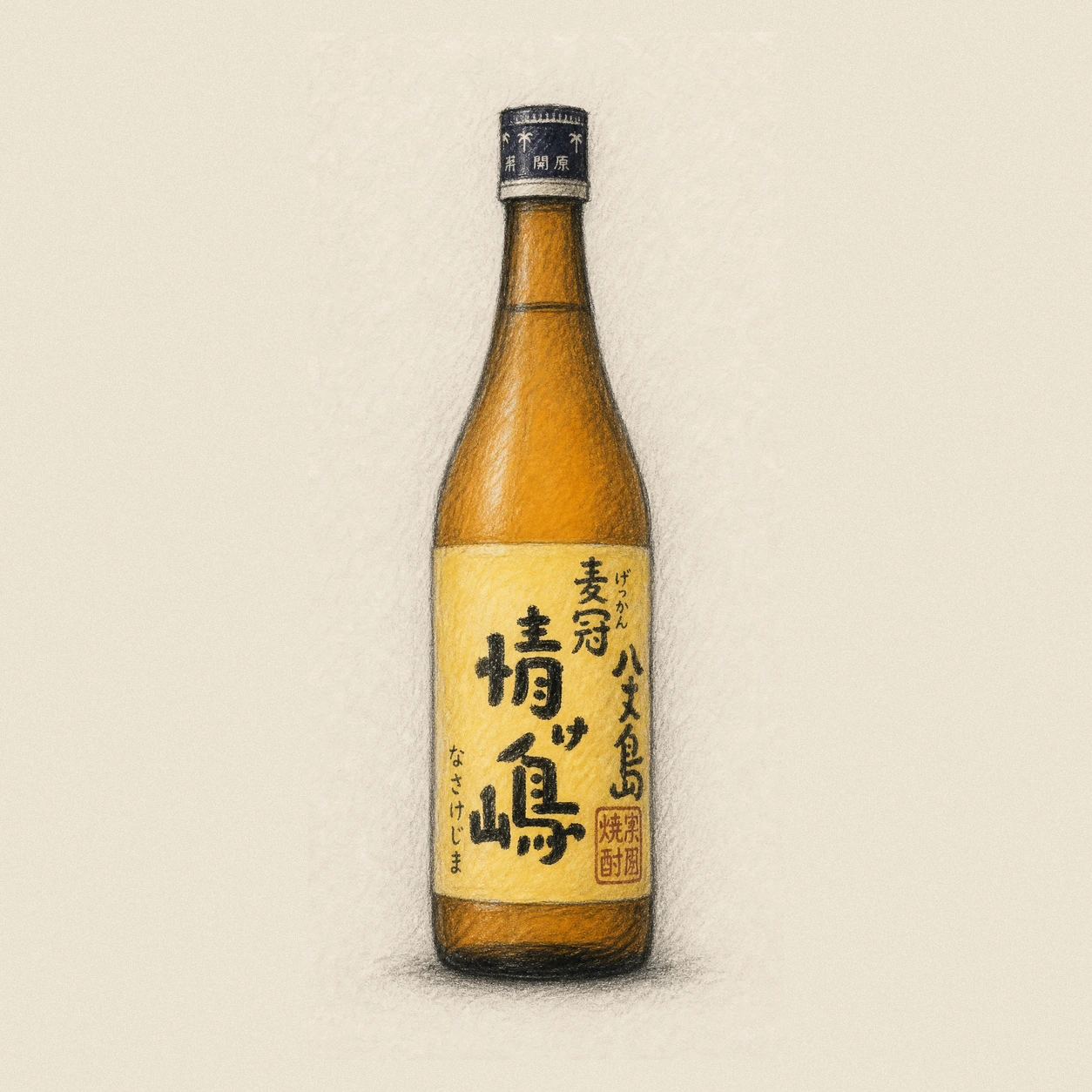
The vivid yellow label recalls Kihachijo, the silk weaving tradition associated with the island. Against the brown bottle, it gives BAKKAN NASAKESHIMA an immediate visual connection to Hachijo before the provenance is explained in words.
Four records tied directly to this bottle
Awards are presented as competition records for this specific product only; they do not guarantee individual preference or quality.
Hachijo Kohatsu: rebuilding and continuity
Hachijo Kohatsu was founded in 1947 on Hachijo Island. After a fire destroyed the distillery in 1992, a new production site began operating in 1994. That recovery forms an important part of the house’s continuity: island history is preserved through a working distillery that has also reconsidered how barley shochu can carry depth and remain food-conscious.
For current-lot specifications, availability, storage requirements and trade terms, please contact Bacchus Global.