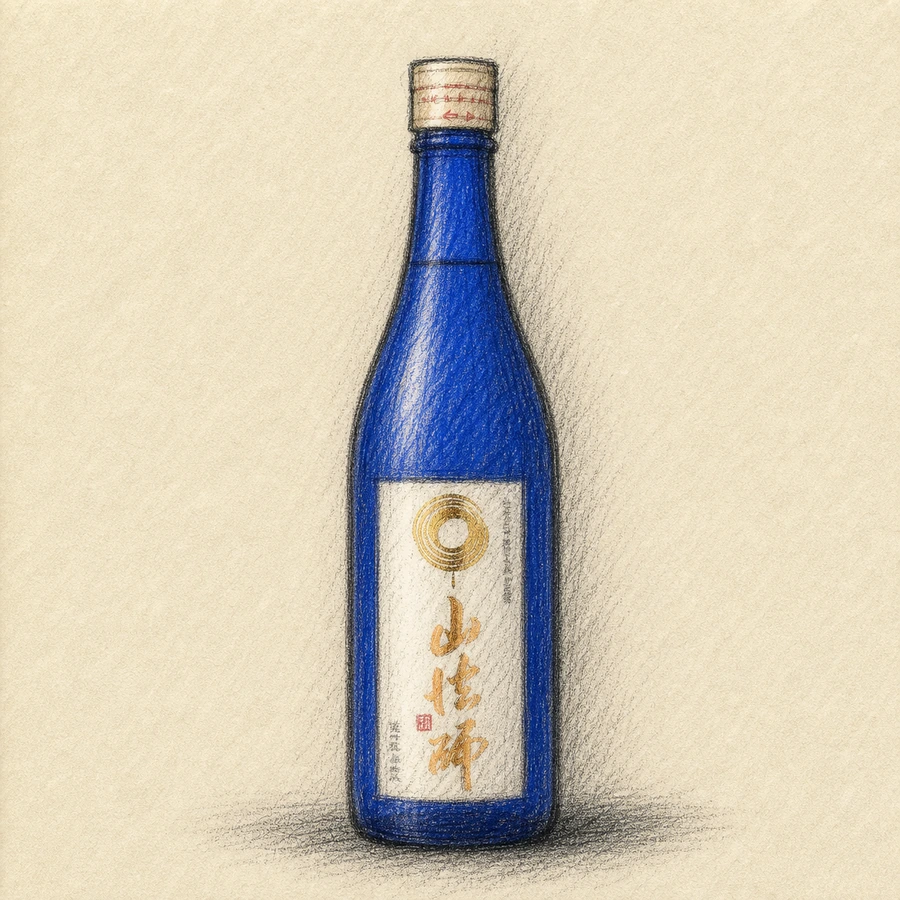
YAMAHOUSHI Junmai-Ginjo Dewasansan
Yamagata’s own Dewa Sansan rice and spring water from Mt. Kurobuse, polished by hen-pei — a method that follows the rice’s natural shape.

A defined expression of the range
YAMAHOUSHI Junmai-Ginjo Dewasansan is made from 100% Dewa Sansan, a sake rice Yamagata Prefecture spent years developing, brewed with spring water from Mt. Kurobuse. It is polished using hen-pei seimai, a method that follows the rice grain’s natural flat shape rather than grinding it round, carefully removing the parts that would otherwise contribute off-flavours and drawing out the rice’s gentle sweetness and clarity.
How it tastes
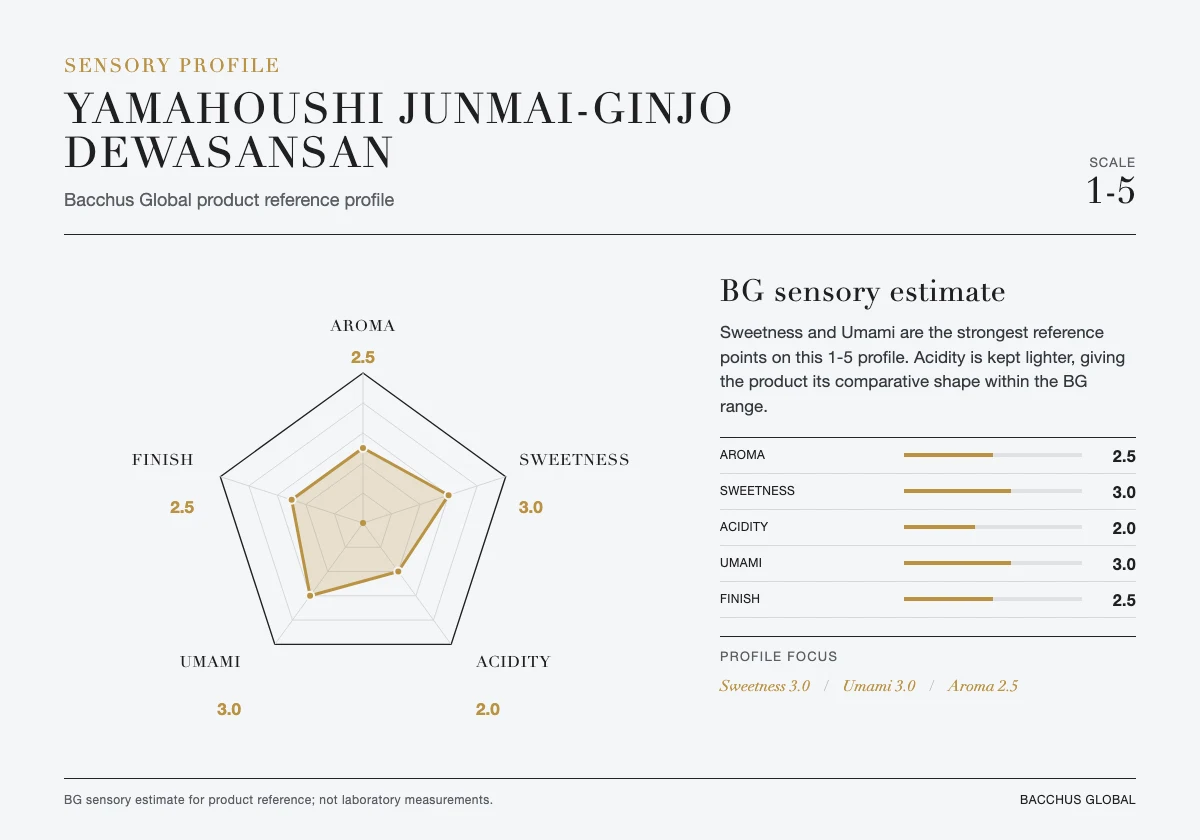
A gentle aroma recalls apple and white peach. The palate is soft, with the rice’s refined sweetness and fullness spreading quietly; acidity stays restrained, and the finish stays clear, cutting light and clean.
The apple and white peach character stays clear through a light, clean finish.
YAMAHOUSHI · ROKKASEN · Yamagata
Rokkasen began in 1972, when five breweries in Yamagata’s Kitamurayama district joined forces. It holds to two guiding ideas: wajō-ryōshu — that good sake comes from harmony among the brewers themselves — and junsui hakkō, “pure fermentation,” which values working in harmony with the microorganisms doing the work.
Hen-pei seimai, and awa-mochi kobo — a foam-producing yeast that lets the brewers track fermentation by eye rather than numbers alone. That reliance on the brewers’ own senses, not just data, underpins Yamahoushi’s gentle but firm character.
National recognition
Four directions built on gentle sweetness that expands with temperature
The brewery does not publish official food pairings. What follows are four directions read from the aroma and taste structure stated on this page — a gentle apple and white peach aroma, a soft mouthfeel, a refined rice sweetness and fullness, restrained acidity, a light clean finish — together with a temperature design that expands from chilled through to warmed sake.
Reflecting the temperature versatility of a single bottle that serves from chilled through to warmed, we have drawn one dish built around gentle sweetness from Western, Thai and Japanese cuisine into every one of the four directions.
Interested in listing YAMAHOUSHI Junmai-Ginjo Dewasansan at your restaurant or retail venue? Our team can provide information on availability, storage requirements and trade terms.