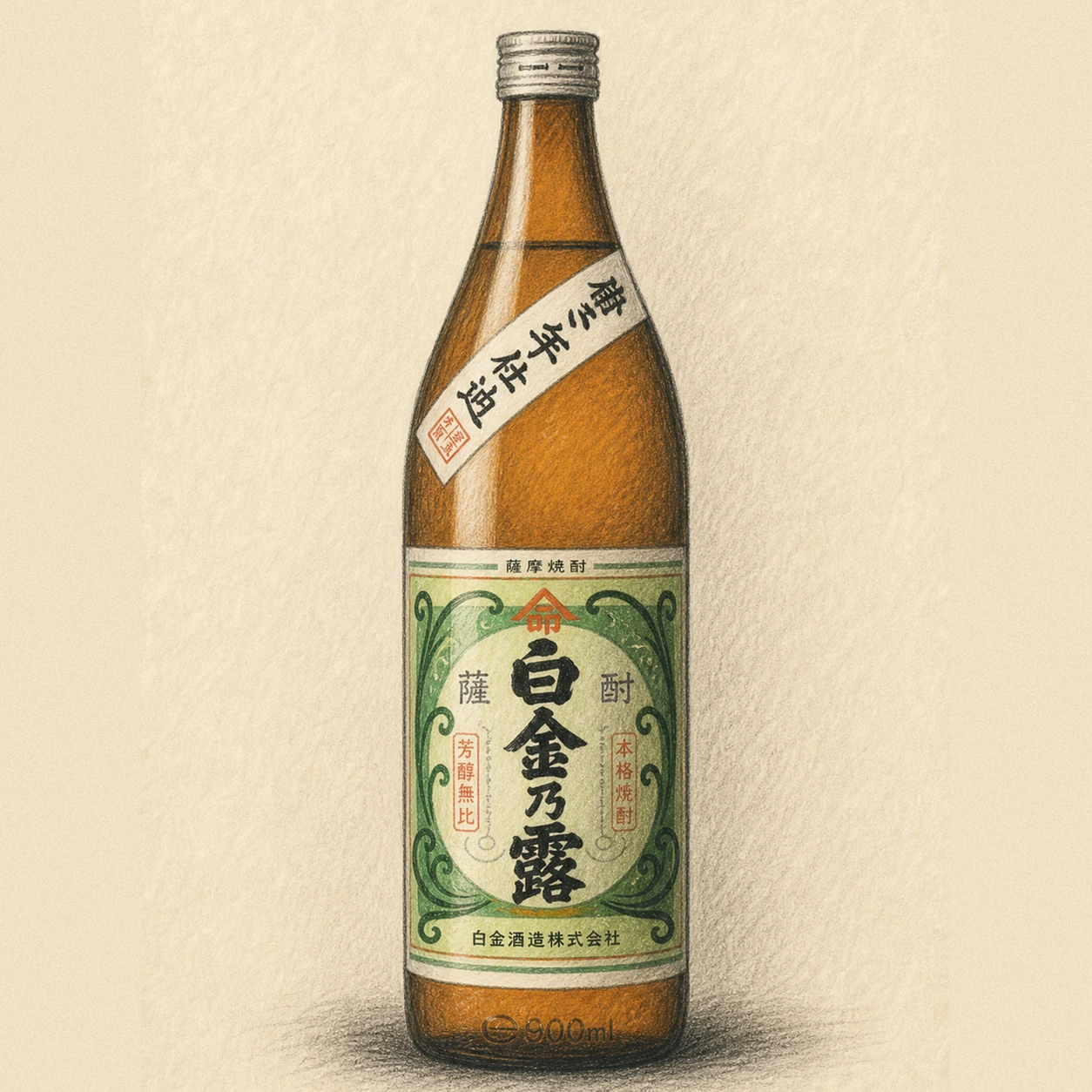
SHIRAKANE-NO-TSUYU
A sweet-potato shochu made in a historic stone warehouse, beginning with the deliberate hand-trimming of each potato. SHIRAKANE-NO-TSUYU brings white koji and atmospheric distillation into a clear, unforced expression of the distillery’s long craft.
Thailand · Product information
Product information from Bacchus Global Co., Ltd., based in Bangkok, Thailand. About Bacchus Global
A hand-led first step
Before fermentation, the distillery’s makers remove stems, damaged areas and darkened surfaces from the sweet potatoes by hand. This “polished potato” work is not a visual flourish; it is a material-first decision at the beginning of the making.
History as a working place
Shirakane Distillery continues its white-koji, atmospheric-distilled shochu production in a historic stone warehouse registered as a tangible cultural property.
Question 1
What does the hand-trimming of sweet potatoes involve?
- Removing stems, damage and dark spots by hand
- Covering the potatoes in gold leaf
- Adding potatoes after distillation
Read the answer and explanation
Correct answer: A — Removing stems, damage and dark spots by hand
The page describes this as careful preparation of the raw material before fermentation.
Question 2
Which koji and distillation method are used?
- Black koji and vacuum distillation
- White koji and atmospheric distillation
- Yellow koji and continuous distillation
Read the answer and explanation
Correct answer: B — White koji and atmospheric distillation
The specifications and the stone-warehouse section both describe white koji and atmospheric distillation.
Question 3
How does the page describe the stone warehouse?
- A building moved from abroad
- A museum piece no longer used
- A nationally registered tangible cultural property still in use
Read the answer and explanation
Correct answer: C — A nationally registered tangible cultural property still in use
The historic stone warehouse is part of the producer’s current shochu-making process.
Where careful hand-work meets the table
SHIRAKANE-NO-TSUYU is a white-koji, atmospheric-distilled sweet-potato shochu made after a hand-led “polished potato” step, in which stems, damaged areas and darkened surfaces are removed from the sweet potatoes before fermentation. The pairings below are not an official combination from the producer; they are a reading drawn from the recorded, material-first care taken at the start of the process.
This pairing rationale draws on the following reference book: Food Pairing (ingredient data) groups sweet-potato aromas with nutty, cheese-like and roasted families. A process built on hand-polishing the raw material points toward simple dishes that let ingredient quality lead, a structural match for this shochu’s own material-first approach.
Aira, Kagoshima — Shirakane Distillery
Shirakane Distillery was founded in 1869 in Aira, Kagoshima. Its stone warehouse is a registered tangible cultural property, and the house continues to make shochu there with a method that begins by hand-trimming sweet potatoes.
For current-lot specifications, availability, storage requirements and trade terms, please contact Bacchus Global.