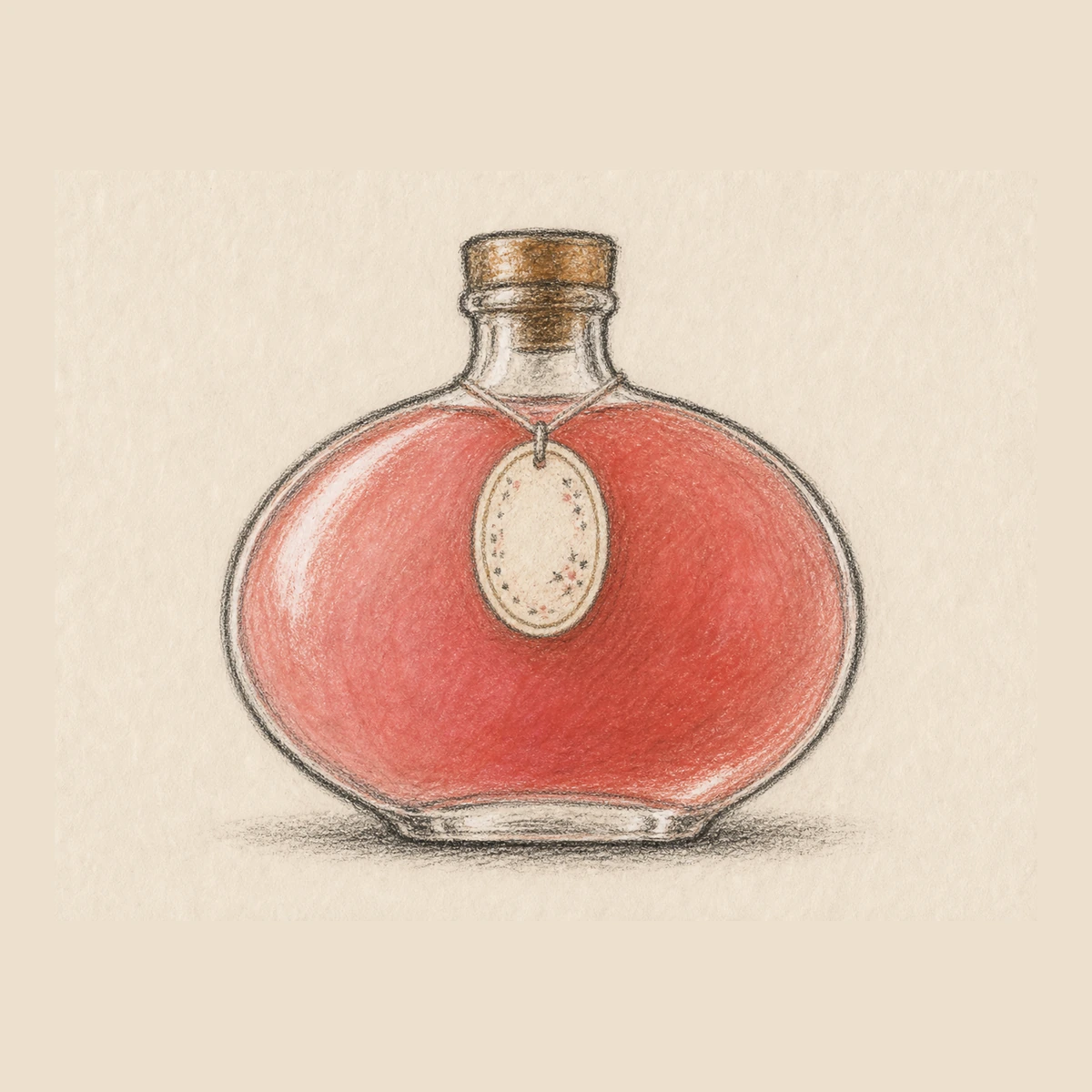
ROSE UME LIQUEUR YUME HIBIKI
Morning-picked Oshukubai ume is steeped the same day, then layered with edible rose petals, drawing bright plum acidity and floral perfume along the same line.
Thailand · Product information
Product information from Bacchus Global Co., Ltd., based in Bangkok, Thailand. About Bacchus Global
Rose umeshu
Morning-picked ume and edible rose petals
Oshukubai ume harvested in Oyama is steeped the same day, then joined by the perfume of edible rose.
Keeping the time from harvest to steeping short
Fruit picked in the morning enters the vat that afternoon, preserving vivid acidity and delicate volatile aroma.
Using petals to shape the aromatic opening
Edible rose brings floral lift while the fruit of the ume remains at the centre.
Plum and rose, aromatic in parallel
Rather than becoming perfume-led, the liqueur holds its shape through the sweet-tart character of Oshukubai ume.
Fragrant rose and bright plum acidity
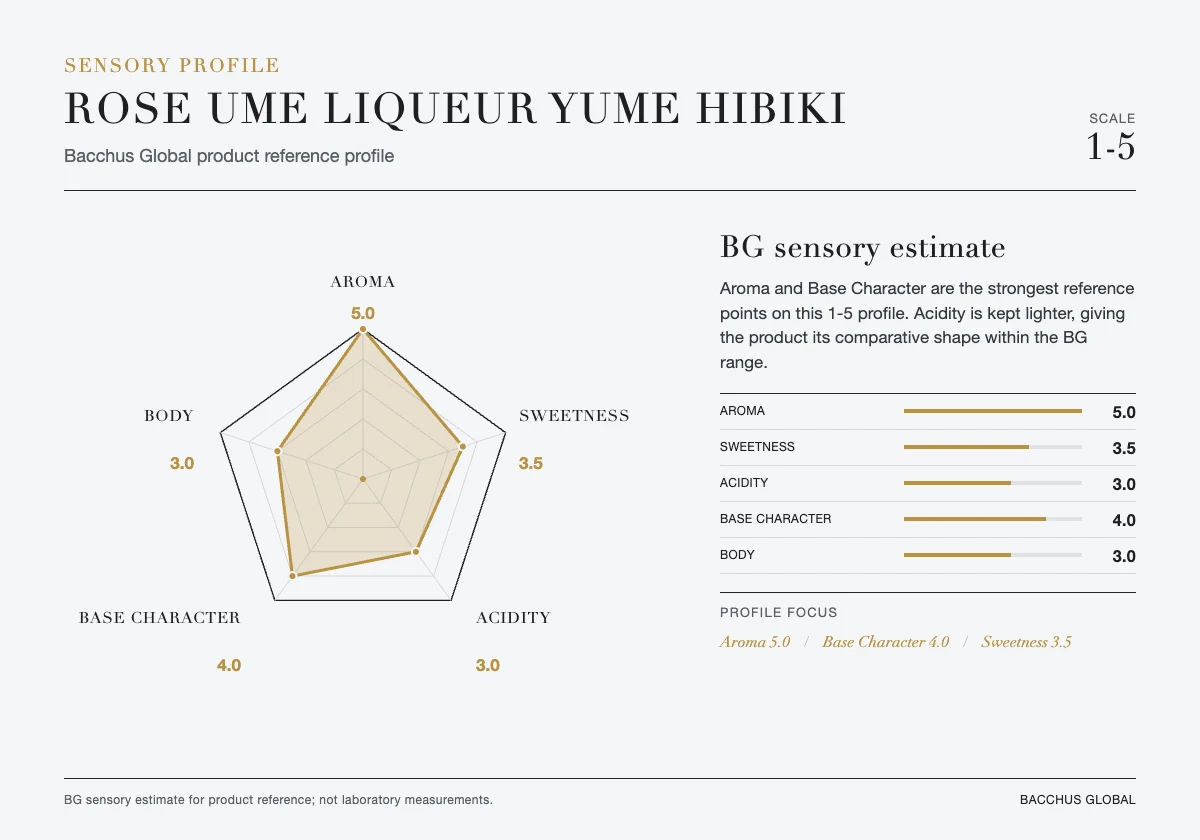
Rose appears first, followed by ripe-plum fruit and refreshing acidity. The palate is smooth, with an aromatic but lively finish.
Question 1
Which ume variety is used?
- Oshukubai
- Nanko alone
- Tsuyu Akane
Read the answer and explanation
Correct answer: A — Oshukubai
The umeshu uses Oshukubai grown in Oyama.
Question 2
When is the harvested ume steeped?
- The following year
- On the day of harvest
- After ten years in cask
Read the answer and explanation
Correct answer: B — On the day of harvest
The morning-picked fruit is steeped that afternoon.
Question 3
Which floral ingredient is added?
- Cherry leaves
- Lavender roots
- Edible rose petals
Read the answer and explanation
Correct answer: C — Edible rose petals
Edible rose petals add the floral layer.
Four directions guided by morning-picked ume and rose
Yume Hibiki is made by steeping Oshukubai ume, harvested in the morning in Oyama, the same day — preserving vivid acidity and the floral lift of edible rose, closing on an aromatic, lively finish. The combinations below are not official pairings presented by the producer, but readings drawn from the recorded taste characteristics.
Edible-flower aroma is said to align with dishes that use flowers themselves, and same-day-picked ume’s bright acidity is noted to align with light, vinegared dishes. By keeping the time between harvest and steeping short, Yume Hibiki preserves that freshness and draws on both mechanisms, meeting aromatic starters as well as light noodles and cold dishes.
A specialist plum-liquor producer in Oyama
Oyama Yume Kobo works with locally grown ume in Hita, Oita, steeping the fruit soon after harvest to retain its sense of place.
From the same producer
Only directly relevant products and Bacchus Global stories are shown.
Contact Bacchus Global for product documentation and trade information.