Drink
The Logic of the Seto Inland Sea
Sakurao Gin Limited and the Journey of Jigōzen Oyster Shells
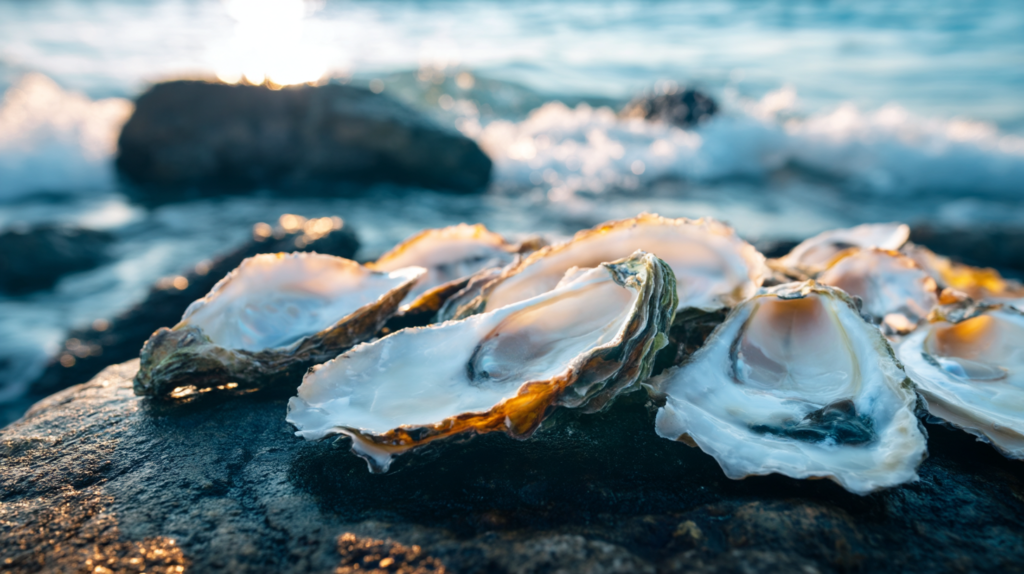
The Logic of the Seto Inland Sea: Sakurao Gin Limited and the Journey of Jigōzen Oyster Shells
Along the coastline of Hatsukaichi City in Hiroshima Prefecture lies Jigōzen. A serene port town facing the sacred island of Miyajima across the water, it sits at a unique intersection of complex tidal currents within Hiroshima Bay. These nutrient-dense waters, long celebrated for producing exceptional oysters, hold a hidden connection to the world of spirits. Each year, a portion of the oyster shells from this sea travels inland to a distillery, transforming into a defining botanical for gin.
Incorporating a material that is neither plant nor fruit into the flavor profile of a gin is a deliberate, highly calculated choice. Sakurao Gin Limited, crafted by the Sakurao Distillery, sources all 17 of its botanicals exclusively from within Hiroshima Prefecture. The Jigōzen oyster shell is perhaps the most intriguing among them—a botanical that captures the very essence of the Seto Inland Sea in liquid form. Why use oyster shells in a premium spirit? Exploring this choice reveals the distillery’s deep reverence for terroir and craft.
The Role of Oyster Shells as a Botanical
In the architecture of gin, botanicals generally serve two distinct purposes: infusing aroma or defining the structural foundation of flavor.
Citrus peels, for instance, lead the former role, imparting bright, vibrant top notes to the distillate. Juniper berries anchor the latter, forming the resinous, pine-forward backbone essential to any true gin. Where, then, do oyster shells fit into this sensory canvas?
Jigōzen oyster shells are imbued with rich marine minerals. By introducing them into the distillation process, the distillery coaxes out a distinctive quality often described as “marine minerality.” Rather than contributing overt aroma or heat, they impart a tactile thickness—a subtle, briny texture that layers itself beneath the bright citrus and sharp juniper. It brings a structural weight born of the ocean, giving the liquid a remarkable multidimensionality on the palate.
When Sea and Mountain Overlap
Sakurao Gin Limited balances this maritime influence with another unexpected local botanical: fresh wasabi, also harvested in Hatsukaichi City.
While the oyster shells ground the liquid with texture, the wasabi introduces a crisp, disciplined heat. As the initial citrus brightness gracefully recedes on the mid-palate, the clean sharpness of wasabi converges with the juniper, creating a refined tension.
The ocean-driven minerality of oyster shells meets the mountain-grown sharpness of wasabi. These two contrasting elements are woven together with the delicate floral notes of cherry blossoms and the aromatic warmth of Kawane yuzu. What emerges is a complex, layered composition that transcends the conventional, simple category of a “citrus-forward craft gin.”
This nuanced complexity achieved global recognition in 2018, when the International Wine & Spirit Competition awarded Sakurao Gin Limited its prestigious “Gold Outstanding” medal. That year, it was one of only eight gins worldwide to receive this ultimate distinction.
Cultivating Juniper in Hiroshima Soil
To truly understand the distillery’s commitment to its origins, one must look at the most fundamental ingredient of all: the juniper berries.
By definition, gin cannot exist without juniper. Yet, the vast majority of the world’s supply is harvested along the Mediterranean coast or in Eastern Europe, and nearly all Japanese craft gins rely on imported European juniper.
Sakurao Distillery spent seven years cultivating its own juniper trees in Hiroshima soil, meticulously hand-harvesting the small berries from trees reaching just a meter in height. The milestone of sourcing all 17 botanicals locally was only made possible through this patient, near-obsessive dedication.
From the standpoint of production efficiency, opting for entirely local ingredients is rarely rational. Yet, the distillery pursued this path because it values the intrinsic truth of provenance over mere output. The parent company, Sakurao Brewery and Distillery Co., Ltd. (formerly Chugoku Jozo), was founded in 1918. For a producer that spent a century mastering sake, shochu, and whisky, choosing to launch a locally defined gin marked a profound tribute to their centenary. Provenance here is not merely marketing data; it is the very soul of the narrative within the glass.
A Resonance in Bangkok
In the cocktail bars of Bangkok, appreciation for Japanese craft spirits has grown with sophisticated momentum. Through pioneering labels, discerning bartenders and enthusiasts have become familiar with the presence of Japanese botanicals. Yet, the deeper conversation surrounding the specific philosophies of these distilleries is still evolving.
Beyond immediate freshness, the intricate interplay of minerality and clean spice in Sakurao Gin Limited shares an intuitive affinity with the flavor structures celebrated in Thai gastronomy—where the clean salinity of fish sauce, the sharp warmth of chili, and the vibrant acidity of lime coexist in harmony. How these coastal elements from Hiroshima will weave themselves into the fabric of Bangkok’s discerning bar scene is a story that is only beginning to unfold, one thoughtful pour at a time. (Mr. Bacchus)
This article is intended solely to explore the distillation techniques and cultural heritage of SAKURAO Brewery and Distillery and the SAKURAO GIN LIMITED brand, and does not aim to promote or encourage the consumption of alcohol. / บทความนี้จัดทำขึ้นเพื่อนำเสนอข้อมูลเกี่ยวกับเทคนิคการกลั่นและมรดกทางวัฒนธรรมของ SAKURAO Brewery and Distillery และแบรนด์ SAKURAO GIN LIMITED เท่านั้น มิได้มีเจตนาเพื่อส่งเสริมหรือโฆษณาเครื่องดื่มแอลกอฮอล์ สำหรับผู้มีอายุ 20 ปีขึ้นไป โปรดดื่มอย่างรับผิดชอบ
Discover the culture behind every bottle
We share brewery stories, tasting notes and the craft of koji & fermentation — for educational and cultural purposes only.
เราถ่ายทอดเรื่องราวจากผู้ผลิต บันทึกรสชาติ และศาสตร์แห่งโคจิและการหมัก — เพื่อการศึกษาและวัฒนธรรมเท่านั้น
Follow on Instagram FacebookRelated Articles
“Terroir in a Bottle” / “Why Japanese Gin Alone Is Staying Afloat While the Global Gin Market Sinks” / “Steeping 136 Kilograms of Strawberries—and Finishing Crystal Clear” / “Beyond Whisky”
Related Product(s)
SAKURAO Japanese Craft Dry Gin Limited / SAKURAO Hamagou Japanese Craft Dry Gin / SAKURAO Japanese Craft Dry Gin