BENIOTOME
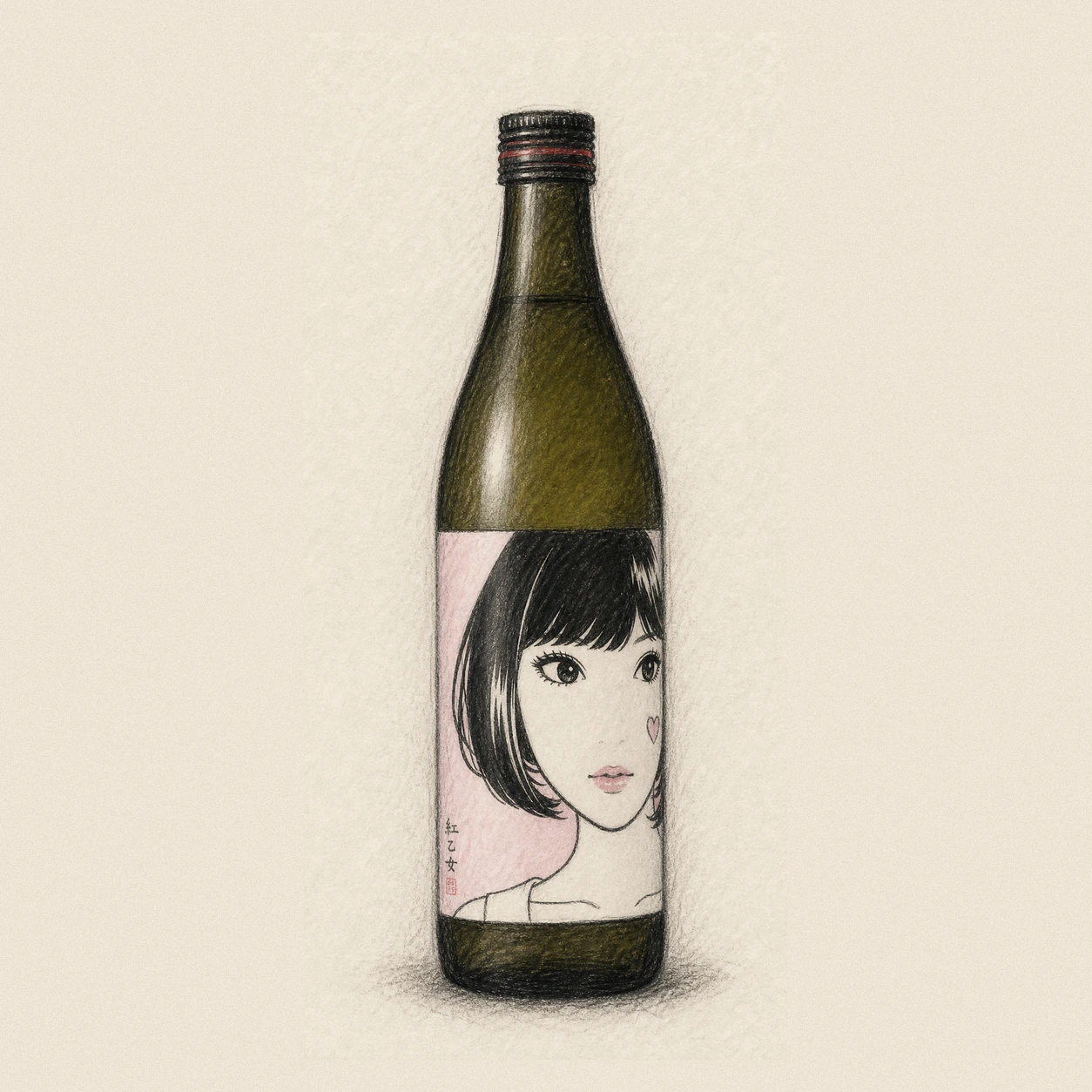
A pioneering expression of sesame shochu from Kurume. Sesame, white koji and vacuum distillation shape a composed aromatic profile, while the Eguchi Hisashi label gives this edition its unmistakable visual identity.
Thailand · Product information
Product information from Bacchus Global Co., Ltd., based in Bangkok, Thailand. About Bacchus Global
Sensory profile

Producer bottle specifications are shown for reference; current Thailand formats and lot specifications should be confirmed separately. Product specification reference
A pioneer of sesame shochu
Beniotome Shuzo began in 1978 under founder Haruno Hayashida. Its early purpose was unusually clear: to create a distilled spirit in which aroma could stand at the centre. Sesame became the route to that idea, establishing the house as a pioneer of sesame shochu.
Sesame carried through a clean distillation
This edition uses sesame at a minimum of ten per cent, with white koji and vacuum distillation. The result is not presented as sesame flavour added after the fact; the ingredient belongs to the production design and is held within a clean, measured structure.
The story behind this bottle
Aya and Kenji explore Eguchi Hisashi's label artwork, sesame as an ingredient, flavour descriptions and the maker's story. English · about 8 minutes 5 seconds.
Roasted nuance without heaviness
Roasted sesame and soft grain notes lead to gentle savoury depth and a clean finish. The sesame character remains recognisable without making the profile feel heavy.
Question 1
What product category does the product page show?
- Sesame shochu
- Junmai Ginjo
- Umeshu (plum liqueur)
Read the answer and explanation
Correct answer: A — Sesame shochu
It is a distilled spirit that incorporates sesame into its design.
Question 2
How is sesame treated on the page?
- Used as an ingredient at 10% or more
- Only its aroma is added afterward
- It is only depicted on the label
Read the answer and explanation
Correct answer: A — Used as an ingredient at 10% or more
Sesame is an ingredient, not a metaphor for aroma.
Question 3
What role does the page record for Hisashi Eguchi?
- The illustrated label
- Founder of the distillery
- Grower of the ingredient rice
Read the answer and explanation
Correct answer: A — The illustrated label
It is a design element separate from the ingredients and the production process.
Where roasted sesame extends toward the table
The pairings below are not the producer’s own recommendations, but a reading of the recorded flavour characteristics. A profile that moves from roasted sesame and grain toward soft savoury depth and a clean finish guides four directions.
Sushi and Japanese Cuisine Pairing Principles positions shochu, which carries almost no iron, as “a liquid spice that does not interfere with food.” This edition, which keeps its roasted sesame character and soft savouriness without added weight, sits alongside light seafood and mushroom dishes without crowding them, contributing aroma alone.
An illustrated label with a distinct identity
This is the Eguchi Hisashi edition of BENIOTOME. Its illustrated label gives the house’s long-established sesame shochu a distinct contemporary identity.
From Kurume, since 1978
Beniotome Shuzo was founded in Kurume, Fukuoka, in 1978. The house developed around the aromatic possibilities of sesame and continues to define itself through that specialised field rather than through a broad, generic shochu portfolio.
For current-lot specifications, availability, storage requirements and trade terms, please contact Bacchus Global.