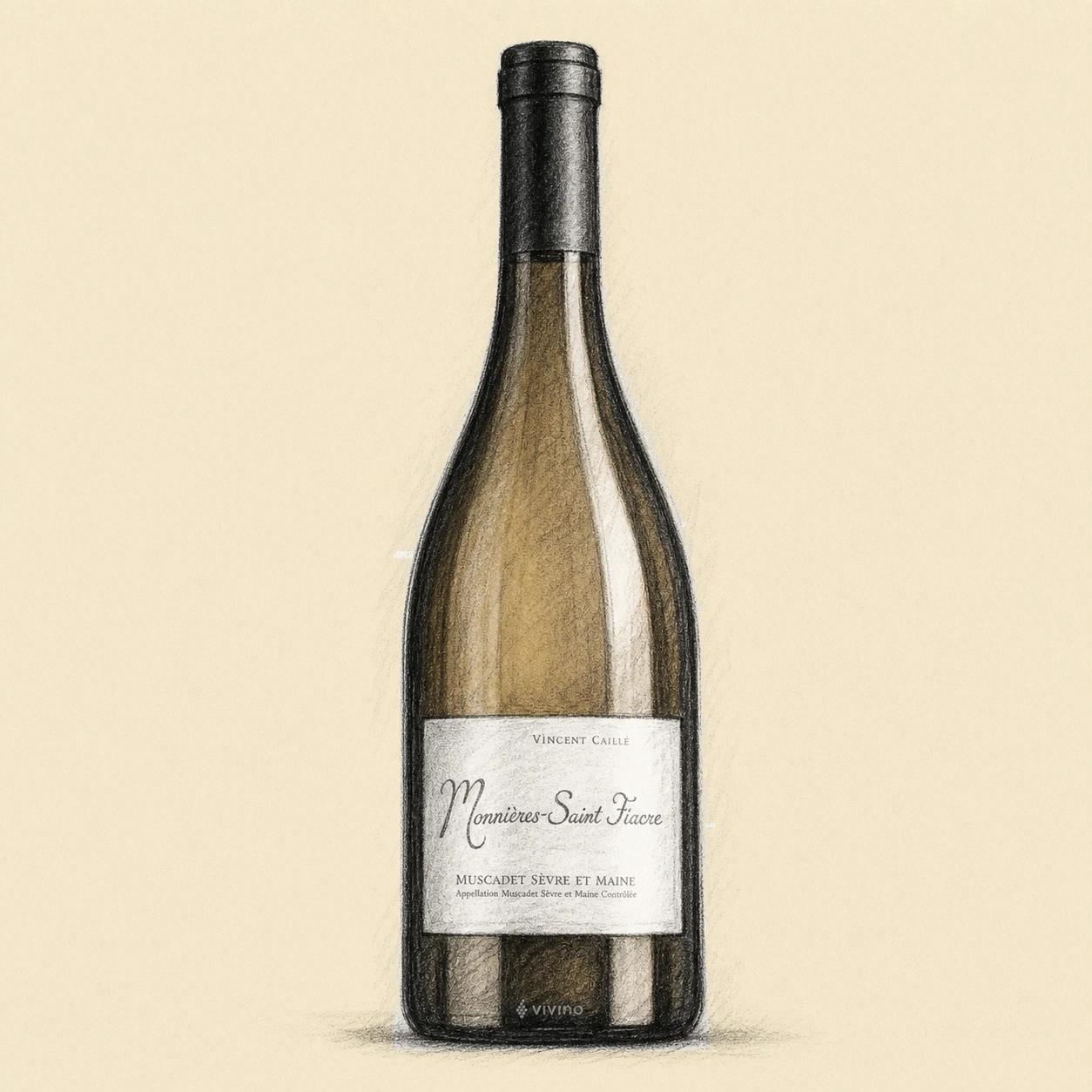
Original bottle illustration — Bacchus Global
AOP Muscadet Sèvre et Maine — Cru Communal
LE FAY D'HOMMEMonnières-Saint Fiacre
Some wine writers note that Muscadet cru communal wines like this one are built to reward patience in the cellar rather than early drinking.
Thailand · Product information
Product information from Bacchus Global Co., Ltd., based in Bangkok, Thailand. About Bacchus Global
- Wine type
- Dry white wine
- Grape
- Melon de Bourgogne 100%
- Appellation
- AOP Muscadet Sèvre et Maine — Cru Communal Monnières-Saint Fiacre
- Origin
- Monnières, Pays Nantais, Loire Valley, France
- Drinking window
- 2028–2035+
- Recommended temperature
- 10–12°C
- Alcohol
- 12%
- Bottle size
- 750 ml
About the Wine
Domaine Le Fay d'Homme, led by Vincent Caillé since 1986, farms parcels across Monnières, Gorges, Maisdon-sur-Sèvre and Mouzillon in the Pays Nantais, at the western edge of the Loire Valley.
This cuvée is drawn from a single parcel of two-mica gneiss in Monnières, planted with Melon de Bourgogne vines over 65 years old and vinified with native yeasts before an extended sur lie aging in underground concrete tanks.
Taste profile
In the glass
MONNIÈRES-SAINT FIACRE
Scale1–5
BG wine structure estimate
Comparative profile within the Bacchus Global wine range.
Notes of candied mandarin orange
Mineral-driven structure
Before it reaches the glass
Temperature
10–12°C, decanted approximately two hours before serving
Timing
Drinking window 2028–2035+; bottled August 2023
Glassware
Large-bowled white Burgundy glass, or a glass suited to dry Chenin/Muscadet styles
Question 1
Which grapes are listed in the product facts?
- Melon de Bourgogne 100%
- Petit Manseng, Gros Manseng
- Syrah 50%, Grenache 50%
Read the answer and explanation
Correct answer: A — Melon de Bourgogne 100%
The linked part of this page lists Melon de Bourgogne 100%.
Read the relevant passageQuestion 2
Which appellation is listed in the product facts?
- AOC Champagne Premier Cru – Grauves (échelle des crus 95%)
- AOP Muscadet Sèvre et Maine — Cru Communal Monnières-Saint Fiacre
- Vin de France (Terroir du Jurançon)
Read the answer and explanation
Correct answer: B — AOP Muscadet Sèvre et Maine — Cru Communal Monnières-Saint Fiacre
The linked part of this page lists AOP Muscadet Sèvre et Maine — Cru Communal Monnières-Saint Fiacre.
Read the relevant passageQuestion 3
Which origin is listed in the product facts?
- Côte des Blancs (south), Champagne, France
- Gan, Jurançon, foothills of the Pyrenees, southwestern France
- Monnières, Pays Nantais, Loire Valley, France
Read the answer and explanation
Correct answer: C — Monnières, Pays Nantais, Loire Valley, France
The linked part of this page lists Monnières, Pays Nantais, Loire Valley, France.
Read the relevant passageAt the table
The wine's mineral drive and extended lees aging give it enough textural depth to sit alongside a range of cuisines, from delicate Japanese preparations to milder Thai dishes and classic French sauces.
Each pairing leans on a different side of the wine — its saline minerality, its lees-derived texture, or its acid backbone — rather than a single dominant style.
Japanese
- Simmered white fish (shiromi nitsuke)
- Shijimi clam soup
- Shrimp shinjo dumplings
Why it worksThe wine's mineral, saline core echoes the umami of dashi-based preparations, while its texture from extended lees aging complements delicate fish and shellfish without overpowering them.
Thai
- Steamed snakehead fish with light soy (pla chon nueng see-ew)
- Mild coconut-galangal chicken soup (gai tom kha)
- Steamed seafood curry mousse (hor mok talay)
Why it worksThese milder, herb-forward preparations avoid heavy chili, allowing the wine's freshness and minerality to stay in balance with the dish rather than being overwhelmed by intense spice.
Western
- Fish in beurre blanc sauce
- Roast white meat such as veal or poultry
- Soft-ripened cheese
Why it worksThe wine's acidity and lees-derived richness are structured to stand up to butter-based sauces and creamy cheese textures, a pairing style rooted in the wine's home region.
From cellar to bottle
Winemaking
Hand-harvested Melon de Bourgogne is settled for ten hours, then fermented for 21 days with native yeasts before 34 months of sur lie aging in underground concrete tanks.
Product detail
Bottled on August 22, 2023, in 750 ml bottles under natural cork.
Monnières-Saint Fiacre
Domaine Le Fay d'Homme has been in the Caillé family for five generations, with Vincent Caillé leading the estate since 1986.
Official producer website→Certifications

Agriculture Biologique (AB) · Ecocert

Demeter Biodynamic · Demeter
Organic & Biodynamic Farming
The Monnières parcel behind this cuvée is farmed under organic (AB, Ecocert) and biodynamic (Demeter) practices, in line with the estate's certification since 2007 (Ecocert) and 2012 (Demeter).
Trade information
Contact Bacchus Global for product documentation, availability and trade enquiries.