SEKITOBA Murasaki
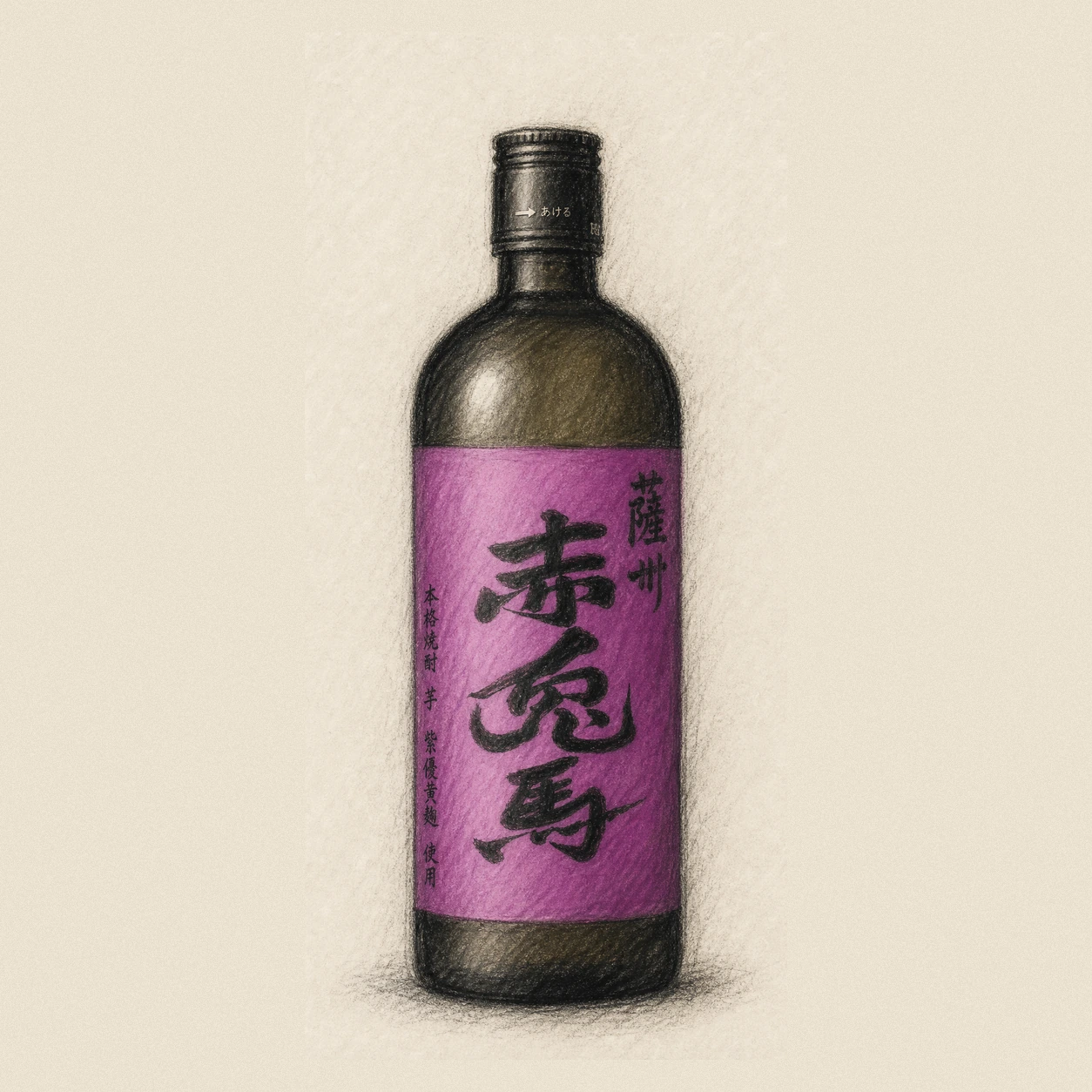
Aya-murasaki purple sweet potato and Koganesengan bring fruit and depth into the same frame. White koji, atmospheric distillation and SEKITOBA’s proprietary filtration shape a composed expression of the brand’s ‘smooth yet rich’ idea.
Thailand · Product information
Product information from Bacchus Global Co., Ltd., based in Bangkok, Thailand. About Bacchus Global
720 ml / 1800 ml
Sensory profile
Purple sweet potato within the Red Hare line
SEKITOBA MURASAKI extends the identity of the black-label signature through purple sweet potato. It remains anchored in the Red Hare story launched in 2001, but shifts the centre of gravity toward fruit and floral detail rather than simply repeating the standard expression.
Aya-murasaki and Koganesengan, together
The product combines Aya-murasaki purple sweet potato with Koganesengan rather than presenting either as a sole ingredient. White koji and atmospheric distillation retain body; the blend of sweet-potato varieties gives the profile its own aromatic direction.
Fruit at the entrance, depth underneath
SEKITOBA’s proprietary filtration brings clarity to the first impression while preserving a softer, fuller centre. Fruit, floral notes and gentle sweetness lead toward sweet-potato depth and a clean, rounded finish.
Purple sweet potato as the centre of the expression
MURASAKI is defined by the meeting of Aya-murasaki and Koganesengan. Its identity therefore rests on varietal aroma, rounded sweetness and the way proprietary filtration keeps those qualities composed within the SEKITOBA line.
Question 1
Compared with the standard Sekitoba, what ingredient feature is also reflected in this product’s name?
- It uses purple sweet potato
- It uses Omachi sake rice
- It uses grape juice
Read the answer and explanation
Correct answer: A — It uses purple sweet potato
The producer describes the aroma derived from purple sweet potato as this product’s characteristic.
Question 2
What process does the page cite as common to the Sekitoba series?
- Its own special filtration
- In-bottle secondary fermentation
- Rice polishing
Read the answer and explanation
Correct answer: A — Its own special filtration
It is a technique that shapes the profile characteristic of the series.
Question 3
What does ‘fruit and flowers’ refer to?
- Added fruit juice and flower petals
- An impression of the aroma
- The area where the sweet potatoes are grown
Read the answer and explanation
Correct answer: B — An impression of the aroma
It is a metaphor describing the aroma derived from purple sweet potato.
Alongside floral and fruit aromas
What is recorded above is fruit and flowers, a gentle sweetness, moving into sweet-potato umami and a rounded finish. The floral character of the Ayamurasaki purple potato is drawn through the brand’s proprietary filtration into a structure that leans on more than lightness alone. What follows are four directions that follow that aroma and structure. They are not pairings the distillery states officially.
The fruit-driven aroma of the purple sweet potato is recorded as avoiding the kind of clash a wine’s tannins can cause, which lets it sit comfortably alongside sharply sour or spiced dishes.
Three houses for tradition, innovation and continuity
Hamada Shuzo was founded in 1868 in Ichikikushikino, Kagoshima. Its three-house structure assigns distinct roles to Denbee-gura, Denzouin-gura and Kanayama-gura, allowing historical methods, modern development and long-term continuity to remain visible within one producer.
For current-lot specifications, availability, storage requirements and trade terms, please contact Bacchus Global.