BOURGOGNE
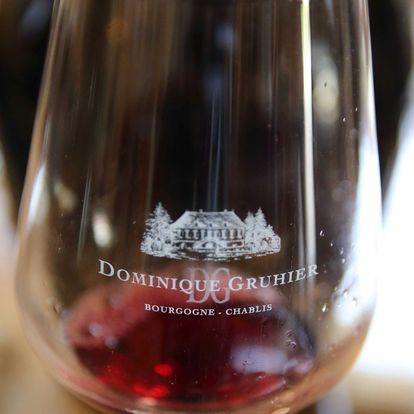
DOMAINE DOMINIQUE GRUHIER
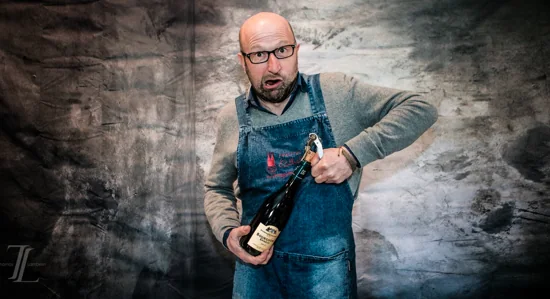
The Unique Terroirs of Épineuil and Tonnerre
In the beautiful landscape of Burgundy, DOMINIQUE GRUHIER’s winemaking is deeply rooted in nature and the environment. With the conversion to organic viticulture that began in 2003, his wines come from more healthy and rich soil, and his vines are growing strong and beautiful. This change has a significant impact on the quality and taste of the wine.
DOMINIQUE GRUHIER places great importance on the concept of “terroir”. Terroir refers to the idea that the geographic characteristics and climate of a specific region influence the taste of the wine. He tries to ensure that each wine faithfully reflects the character of the terroir. This requires that the soil be vibrant, allowing the vines to absorb nutrition from it and produce richly flavored wines.
Particularly, soils similar to those in the Chablis region, rich in white stones such as Kimmeridgian and Oxfordian soils, are highly esteemed. The vineyards are undulating, protected from the cold winds of the Langre plateau, and benefit from their own microclimates. In addition to the AOC Burgundy regional appellation, the region has the privilege of naming special terroirs: Épineuil and Tonnerre. Recently, this special terroir has attracted the attention of the French wine industry.
DOMINIQUE GRUHIER has a strong passion for organic farming and producing additive-free wines. Since 1999, he has aimed to create wines without the use of sulfites or by keeping their use to a minimum. This approach, known as “natural wine,” focuses on preserving the purity and deliciousness of the fruit, as well as its digestibility. The red wines made from Pinot Noir are particularly notable for their lightness, akin to angel wings. Their aroma features red fruits such as raspberries, cherries, and currants, along with black fruits like blackberries, blueberries, and cassis, complemented by a peppery accent. These wines are characterized by pleasant tannins and a velvety texture, often accompanied by smoky notes. Although rare, the white wines made from Chardonnay are lively, dry, and well-balanced. They frequently exhibit a flinty aroma, and upon tasting, one can detect rich flavors of fern, white peach, and mango. These wines are a great expression of Dominique Gruhier’s passion and attention to details.
In 1990, Dominique’s parents acquired the “Domaine de l’Abbaye du Petit Quincy” in Épineuil, where he revived winemaking. The Domaine can trace its history back to 1212, when it was used as a summer residence for monks and a wine making warehouse. Dominique spent more than 20 years restoring this historic building while converting it to organic cultivation, which was certified in 2014.
Today, DOMINIQUE GRUHIER covers 25 hectares and grows grapes in areas such as Chablis and Épineuil. cultivating vines in regions such as Chablis and Épineuil In Chablis, he produces Petit Chablis, Chablis, and Chablis Premier Cru Montée de Tonnerre. In Épineuil, his offerings include Bourgogne Épineuil, Bourgogne Épineuil Rosé, Bourgogne Tonnerre, and Crémant de Bourgogne.
Location: Épineuil, Burgundy
- Size: 25 ha (61.78 ac)
- Varieties: Pinot Noir, Chardonnay, Pinot Gris
- Viticulture: Organic (Ecocert- USA and Europe, 2014)
- Vinification (whites): Ambient yeast fermentation, aged for 10-11 months in stainless steel tanks and used barrels (228L and/or 400L).
- Vinification (reds): Up to 100% whole cluster (depending on vintage and cuvée), ambient yeast fermentation, aged for 10-12 months in 228L and/or 400L barrels (0-30% new)
DOMINIQUE GRUHIER’s wines are the result of a winemaking process that maximizes the characteristics of the land and emphasizes harmony with nature. His passion and commitment will continue to produce great wines in the future! (Mr.Bacchus)

RELATED BLOG
ORGANIC? BIODYNAMIC? NATURE? SUSTAINABLE? VEGAN?
Discover the culture behind every bottle
We share brewery stories, tasting notes and the craft of koji & fermentation — for educational and cultural purposes only.
เราถ่ายทอดเรื่องราวจากผู้ผลิต บันทึกรสชาติ และศาสตร์แห่งโคจิและการหมัก — เพื่อการศึกษาและวัฒนธรรมเท่านั้น
Follow on Instagram FacebookRelated Articles
“Memories of a Monastery, A Love Letter to a Daughter” / “The Secret of Sake “Omachi”” / “HERITAGE DU PIC SAINT LOUP” / “BRUNO DANGIN”
Related Product(s)
Terres de Garnerot 2022 / Vénus Blanc de Blancs Extra Brut 2017Les Louères 2023 / Mercurey Roc Blanc – Red 2023 / Mercurey Roc Blanc – Blanc 2023 / Les Louères 2023