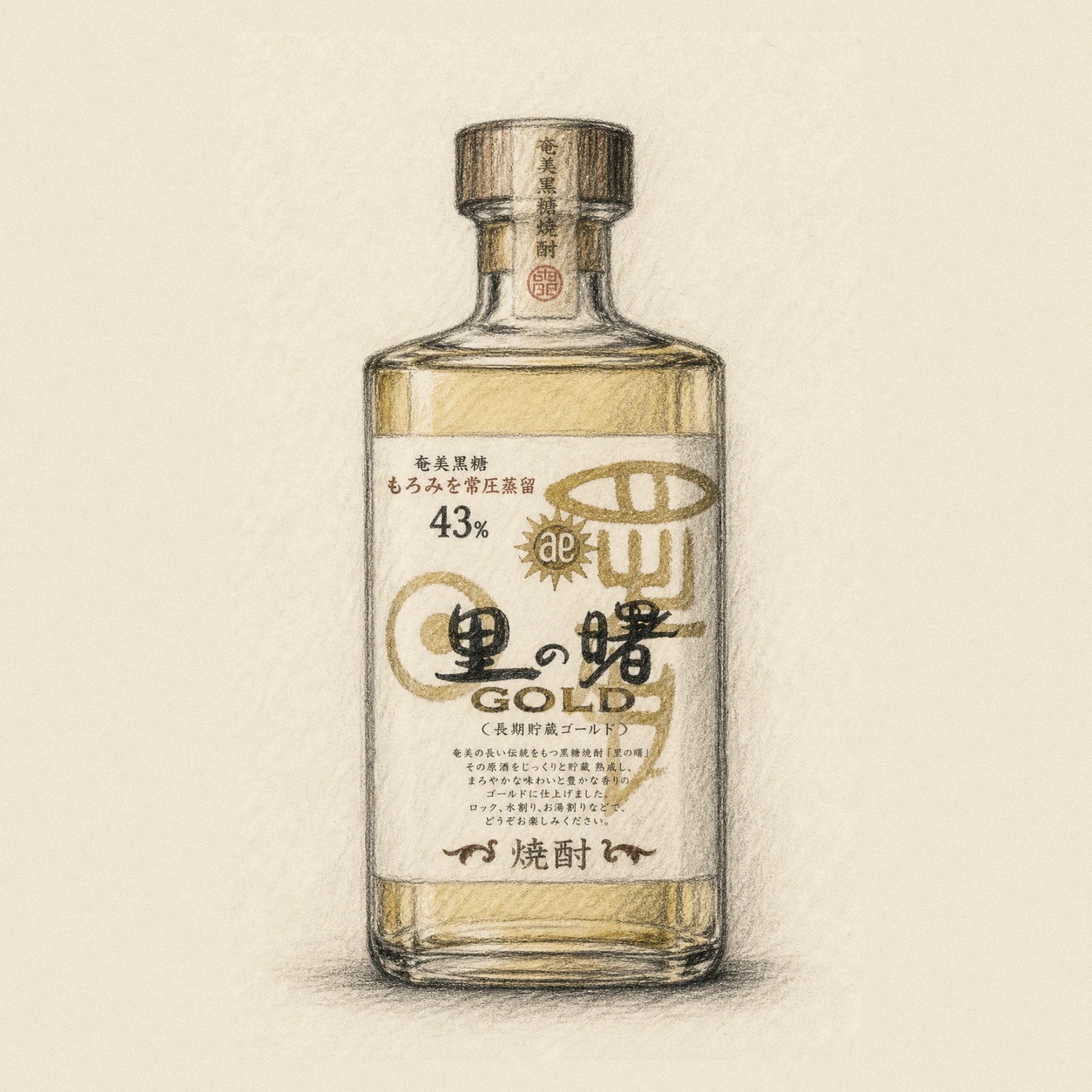
SATO no AKEBONO Gold
Two distillation approaches are matured separately in oak before being blended: the clarity of vacuum distillation and the depth of atmospheric distillation. The resulting amber kokuto shochu is a considered bridge between Amami’s sugar-cane tradition and a cask-led spirit profile.
Thailand · Product information
Product information from Bacchus Global Co., Ltd., based in Bangkok, Thailand. About Bacchus Global
Separate paths before one blend
SATO no AKEBONO Gold does not simply add oak to a single spirit. Machida Distillery matures the vacuum-distilled SATO no AKEBONO and an atmospheric-distilled spirit separately in oak, then brings them together. That sequence is the bottle’s central idea.
Question 1
Which ingredients does the page list?
- Brown sugar and rice koji
- Sweet potato and barley koji
- Grapes and rice koji
Read the answer and explanation
Correct answer: A — Brown sugar and rice koji
The page presents it as Amami kokuto shochu made with brown sugar and rice koji.
Question 2
Which two distillation methods are combined?
- Atmospheric only
- Vacuum and atmospheric
- Continuous distillation and bottle fermentation
Read the answer and explanation
Correct answer: B — Vacuum and atmospheric
The product brings together distillates made by vacuum and atmospheric methods.
Question 3
What happens before the distillates are blended?
- Fruit juice is added
- They are fermented together in one jar
- Each is matured separately in oak
Read the answer and explanation
Correct answer: C — Each is matured separately in oak
The two distillates mature in separate oak casks before blending.
Where two spirits meet, four directions
SATO no AKEBONO Gold is a kokuto (brown sugar) shochu built from two spirits, vacuum-distilled and atmospheric-distilled, each matured separately in oak before blending. The pairings below are not an official combination from the producer; they are a reading drawn from the recorded process of maturing and joining two separate spirits.
This pairing rationale draws on the following reference book: Logical Pairing reads a drink’s weight through sweetness, umami, alcohol content and concentration, using matched weight as a starting point. Maturing two separate spirits in oak before bringing them together is a process that resonates, in structure, with dishes assembled by layering several elements in stages.
A factual competition history
SATO no AKEBONO Gold received TWSC Best of the Best in 2020 and entered the TWSC Hall of Fame in 2022, recognising sustained results over multiple years.
Award record
The award record shown is specific to this product; it does not guarantee individual preference or quality.
Tatsugo, Amami Oshima — Machida Distillery
Machida Distillery works in Tatsugo, Amami Oshima, within the island group where kokuto shochu may be made. The house became an early adopter of vacuum distillation in the category, while SATO no AKEBONO Gold brings vacuum- and atmospheric-distilled spirits into a cask-led blend.
For current-lot specifications, availability, storage requirements and trade terms, please contact Bacchus Global.