Drink
A Back Bar Where Category Boundaries Begin to Blur
A Night in 2026 Bangkok Where Sake, Shochu, Awamori, Wine, Gin, and Liqueur Meet at the Same Table
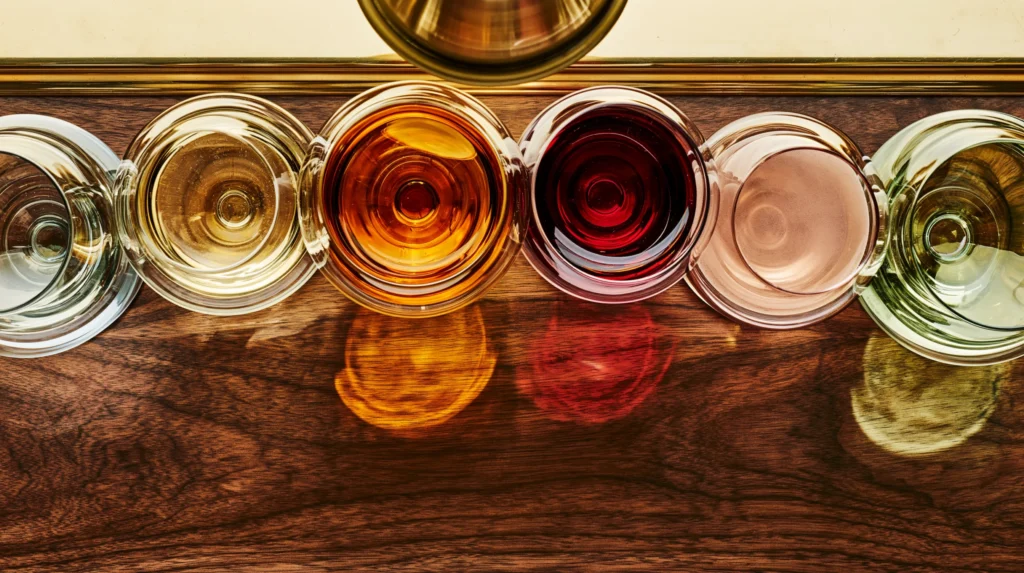
On a Bangkok night, I’d like you to slowly take in the back bar of a small, unassuming spot|left to right, if you can. Next to a cask-aged rice shochu from Minamiuonuma in Niigata sits an amber-hued kokuto (brown sugar) shochu from the Amami Islands. Further along, a seven-year, oak-aged awamori from Nakijin in Okinawa waits its turn, followed by a Pinot Noir from Yoichi in Hokkaido. Beside it rests a French craft gin, distilled from hand-picked botanicals in the Loire Valley. A decade ago, such a lineup might have seemed unlikely. Clear lines divided where each belonged|sake in Japanese restaurants, gin in bars, wine in Western dining rooms. In 2026 Bangkok, those lines are quietly beginning to dissolve.
The Expanding Landscape of Japan’s Five Fermented and Distilled Categories
From the perspective of Japanese producers, the outlines of five categories|sake, shochu, awamori, Japanese whisky, and domestically crafted liqueurs|have become increasingly defined in recent years. At Hakkaisan Brewery in Niigata, a cask-aged rice shochu called “Fubika” is made using a three-stage fermentation with black koji. In Niseko, Hokkaido, single malt whisky is being produced in Scottish-made pot stills. Individual producers are no longer confined to a single category; they are moving fluidly across them. In Amami, Kagoshima, Machida Shuzo matures vacuum- and atmospheric-distilled spirits separately in oak to create “Sato no Akebono Gold,” offering a new profile for Japanese brown spirits. Meanwhile, “Sennen no Hibiki” from Nakijin Distillery in Okinawa tells a circular story|Thai rice transformed into awamori, aged to amber in Ryukyuan oak casks and traditional earthenware jars|now reaching dining tables in Bangkok. Japanese alcohol production, spanning fermentation, distillation, and barrel aging, has quietly evolved into a layered, multifaceted craft.
Japanese Wine and the Language of Terroir Crossing Oceans
On the wine side, a quiet shift is also underway. In the Nobori district of Yoichi, Hokkaido, Domaine Takahiko has introduced distinctly Japanese vocabulary|“dashi” and “umami”|into the discourse around Pinot Noir. Sommeliers around the world have begun writing “umami” in Latin script as-is. At ProWine Tokyo in April 2026, renowned critic Jancis Robinson MW appeared via recorded session to discuss “The Current State of Japanese Wine,” joined by producers from Nagano, Yamanashi, Hokkaido, and Kumamoto, each speaking about wine in the language of their own land. The terroir philosophy long cultivated by sake brewers|water, rice, and koji|is now quietly crossing over into wine. Rather than relying on French or Italian frameworks, winemakers are articulating their craft through the vocabulary born from their own soil. That shift is beginning to show up on Bangkok wine lists as well.
Flowers of the Loire and the Refinement of Japanese Liqueurs
Gin and liqueurs, too, are joining this shared table. Founded in 1834, Distillerie Combier in the Loire Valley produces “Combier Meridor London Dry Gin” in a still room designed by engineers associated with Gustave Eiffel. Eight botanicals|juniper, lemon peel, iris, cubeb pepper, and licorice among them|are distilled together in a single run. Meanwhile in Japan, rice shochu–based liqueurs and craft expressions that draw out the aromatics of seasonal citrus, tea leaves, and nuts have entered a new phase of refinement. Gin and liqueurs are no longer just cocktail components|they have become primary expressions of place, taking center stage in the glass.
Designing the Experience of “Meeting at the Same Table”
This cross-category convergence represents more than simply an expansion of inventory; it is a thoughtful reimagining of the drinking experience itself. Some restaurants and bars in Bangkok have begun experimenting with pairings that move across categories: a Hokkaido Pinot Noir at the start of a course, a Ryukyuan oak-aged awamori with the main dish, and a Loire gin topped with tonic alongside dessert. What unites these experiences is the presence of brief, thoughtful explanations from service staff about the “language of the land” behind each pour. Sake sommeliers speak about wine, wine professionals discuss shochu, and bartenders interpret liqueurs. Boundaries of expertise are beginning to blend|quietly, and within the glass.
The landscape of Bangkok in 2026 does not signify the disappearance of categories, but rather a maturation. Each category is reaching a point where it can most fully express the language of its place. When a one-night “flight” is served across a Bangkok counter, what appears in the glass carries with it the snow-cooled cellars of Niigata, the subtropical winds of Amami, the cyclical story of Okinawa and Thai rice, the south-facing slopes of Yoichi, and the hand-harvested flowers of the Loire Valley|each alive with the time and texture of its origin, overlapping in a single evening. (Mr. Bacchus)
This article is intended solely to explore the brewing artistry, distillation techniques, and cultural heritage of Japanese sake, shochu, awamori, Japanese whisky, Japanese wine, and French craft gin and liqueur as offered in the Bangkok food and beverage scene, and does not aim to promote or encourage the consumption of alcohol. / บทความนี้จัดทำขึ้นเพื่อนำเสนอข้อมูลเกี่ยวกับศิลปะการผลิต เทคนิคการกลั่น และมรดกทางวัฒนธรรมของสาเก โชจู อะวาโมริ วิสกี้ญี่ปุ่น ไวน์ญี่ปุ่น และเครื่องดื่มคราฟต์จิน/ลิเคียวร์จากฝรั่งเศส ที่นำเสนอในแวดวงอาหารและเครื่องดื่มของกรุงเทพเท่านั้น มิได้มีเจตนาเพื่อส่งเสริมหรือโฆษณาเครื่องดื่มแอลกอฮอล์ สำหรับผู้มีอายุ 20 ปีขึ้นไป โปรดดื่มอย่างรับผิดชอบ
Discover the culture behind every bottle
We share brewery stories, tasting notes and the craft of koji & fermentation | for educational and cultural purposes only.
เราถ่ายทอดเรื่องราวจากผู้ผลิต บันทึกรสชาติ และศาสตร์แห่งโคจิและการหมัก | เพื่อการศึกษาและวัฒนธรรมเท่านั้น
Follow on Instagram FacebookRelated Articles
“Three Hurdles a Bottle of Whisky Must Clear Before It Reaches Bangkok” / “Bangkok Leads with Eight Bars: Three Ways “Asia’s 50 Best Bars 2026” Reflects How Regional Strength Is Built Over Time”
Related Product(s)
MERIDOR London Dry Gin / SATO no AKEBONO Gold / SENNEN NO HIBIKI