Bar
A Whisky-Based Negroni Variation|Junmai Sake Casks and Mirin
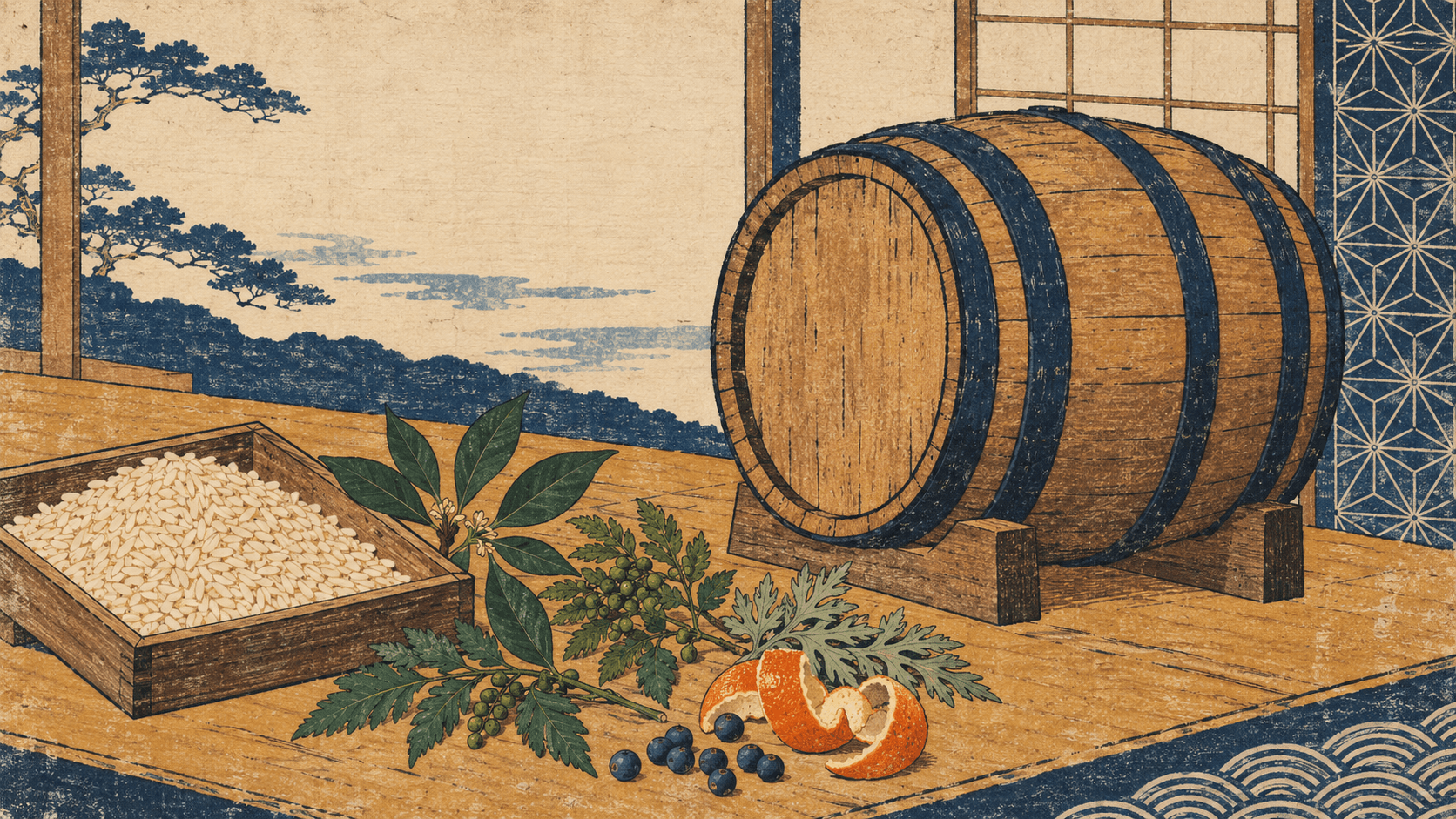
One intriguing way to incorporate Japanese craftsmanship into a Negroni is to combine whisky finished in casks previously used to mature junmai sake with a mirin-based herbal liqueur. Both are carried by Bacchus Global. Starting with the Negroni and drawing inspiration from the whisky-based Boulevardier, this proposed experiment explores a different combination of Japanese ingredients.
Replacing Gin with Whisky: The Boulevardier
The classic Negroni combines equal parts gin, Campari and sweet vermouth. Vermouth is a wine-based beverage flavored with herbs and other botanicals. Gin’s botanical aromas meet the bitterness and sweetness contributed by Campari and vermouth.
The US drinks magazine “Wine Enthusiast” presents variations featuring whisky, sparkling wine and mezcal. The Boulevardier is the classic that interests us here: bourbon or rye whisky combined with Campari and sweet vermouth.
The International Bartenders Association standard gives whisky a larger share than either of the other two ingredients individually. While the Negroni follows a 1:1:1 ratio, the Boulevardier uses 1.5:1:1. The aromatic focus shifts from gin’s botanicals toward the grain and cask aromas of whisky, and the proportions change too. Spirit type and ingredient ratios help distinguish the two classics.
Whisky Finished in Casks Used to Mature Junmai Sake
“TOGOUCHI Whisky Sake Cask Finish,” carried by Bacchus Global, offers another way to explore this idea. Hiroshima’s SAKURAO Brewery and Distillery finishes the whisky in casks previously used to mature its own junmai sake.
The producer describes aromas reminiscent of green apple and spice, sweetness suggesting melon and muscat grapes, and acidity reminiscent of white wine.
The connection between sake brewing and whisky production lies in the cask’s previous use. Alongside raw materials, what a cask previously held can inform cocktail design. A cocktail made with this expression can be considered a variation on the standard Boulevardier.
Pairing It with a Mirin-Based Herbal Liqueur
The second ingredient is “AKA-ONI ROSSO Sweet Vermouth,” made by Kanegasaki Yakusō Shuzō in Iwate Prefecture. Its base combines rice mirin and kasutori shochu, a spirit distilled from sake lees, with botanicals including kuromoji, sansho pepper and wormwood. It is classified as a liqueur.
Combining TOGOUCHI with AKA-ONI ROSSO brings a sake-cask-finished whisky and a mirin-based herbal liqueur into the same cocktail. Their connections to rice take different forms: the history of a finishing cask, and the ingredients of the base beverages.
How might the whisky’s fruit-like character and AKA-ONI ROSSO’s sweetness and herbal aromas interact with Campari’s bitterness? That is the question this proposed experiment would examine.
Comparing Ingredients and Ratios Separately
“SAKURAO Japanese Craft Dry Gin” provides the gin-based reference. It uses citrus from Hiroshima, and its producer publishes a Negroni recipe using the gin. The comparison would examine what changes when its citrus and juniper aromas give way to TOGOUCHI’s character.
For the ingredient comparison, the ratio remains 1:1:1. First, SAKURAO is replaced with TOGOUCHI while the other ingredients remain unchanged. Next, sweet vermouth is replaced with AKA-ONI ROSSO. Keeping the other ingredients and total liquid volume constant helps trace which substitution contributes to a change in flavor.
A separate comparison would then change only the proportions of the same three ingredients to 1.5:1:1, while keeping total liquid volume equal. This increases the whisky’s share. Separating ingredient substitutions from ratio changes makes the results easier to interpret.
SAKURAO is 47% ABV and TOGOUCHI is 40% ABV, so replacing equal volumes also changes the cocktail’s overall alcohol strength. Ice dilution and serving temperature should be kept consistent when comparing flavor. Ingredient names, quantities and comparison conditions belong in the record alongside changes in aroma and flavor.
This combination is a proposed experiment based on product information; its finished flavor remains to be evaluated through these separate comparisons. Whisky finished in casks used to mature junmai sake and a mirin-based herbal liqueur provide two ingredients connected to Japanese craftsmanship. The proposal replaces two of the classic’s three ingredients with these materials.
Related reading
Product information
This article provides educational information about classic cocktail structure and the ingredients and production methods of SAKURAO, AKA-ONI ROSSO and TOGOUCHI. It is not intended to promote or encourage the purchase or consumption of alcoholic beverages.
บทความนี้จัดทำขึ้นเพื่อให้ความรู้เกี่ยวกับโครงสร้างของค็อกเทลคลาสสิก รวมถึงวัตถุดิบและวิธีการผลิตของ SAKURAO, AKA-ONI ROSSO และ TOGOUCHI มิได้มีเจตนาส่งเสริมการซื้อหรือการบริโภคเครื่องดื่มแอลกอฮอล์ สำหรับผู้มีอายุ 20 ปีขึ้นไป โปรดดื่มอย่างรับผิดชอบ
Related Articles
“Redefining Bittersweet: Kanegasaki Herbal Distillery, Combier, and the Architecture of Amaro”
Discover the culture behind every bottle
We share brewery stories, tasting notes and the craft of koji & fermentation — for educational and cultural purposes only.
เราถ่ายทอดเรื่องราวจากผู้ผลิต บันทึกรสชาติ และศาสตร์แห่งโคจิและการหมัก — เพื่อการศึกษาและวัฒนธรรมเท่านั้น
Follow on Instagram Facebook