
JAPANESE WINE
How Changes in Winemaking Took Koshu to the World | A Story-Worthy Wine Refined by Katsunuma’s Producers
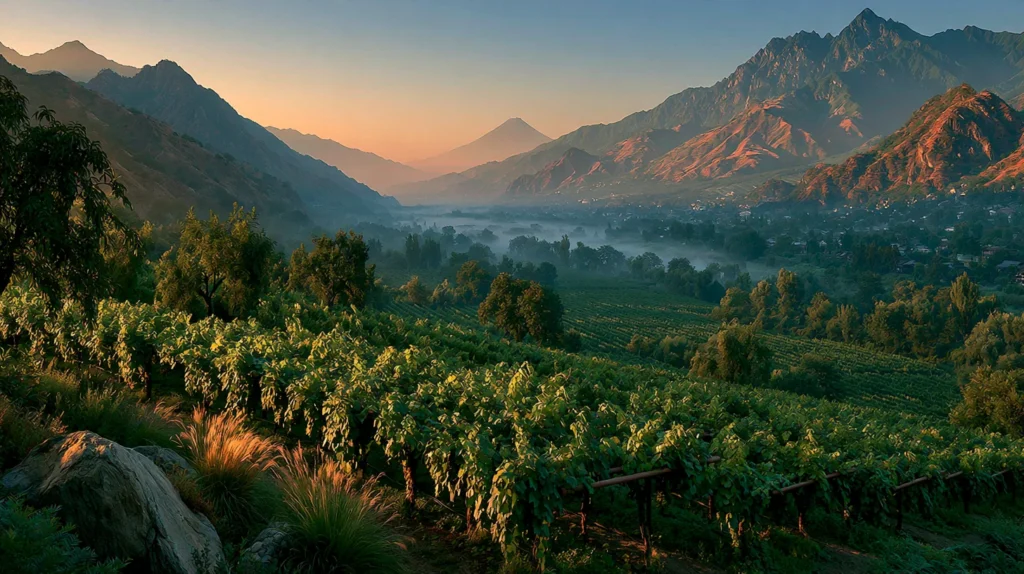
The Evolution of Koshu: A Narrative Refined by Katsunuma’s Winemakers
Koshu is a white grape celebrated for its delicate, understated aromas. When fermented conventionally at low temperatures in stainless steel tanks, it historically yielded a pale, crisp wine where acidity overshadowed the nuance of flavor. The turning point that lent this gentle variety its profound depth was the embrace of sur lie aging. For decades, winemakers in Katsunuma, Yamanashi, have quietly refined this method, intertwining their craftsmanship with the destiny of Koshu. The international acclaim surrounding Japanese wine over the past decade is rooted not in marketing alone, but in these fundamental, patient evolutions within the cellar.
The Nuance of Sur Lie Aging
Sur lie is a traditional technique where wine rests in contact with its lees|the residual yeast sediment|for several months following fermentation. Long a hallmark of France’s Loire Valley for Muscadet, this patient interaction allows the yeast cells to break down naturally. The process releases amino acids that impart a savory complexity and compounds that endow the wine with a rounder, silkier texture. Sharp acidity mellows into a seamless, textured palate, providing substantive depth through the finish.
Among the early adopters of sur lie for Koshu is Marufuji Winery (Rubaiyat Winery) in Katsunuma. Established in 1890, it is one of Katsunuma’s long-established producers and a family-run winery now in its fourth generation. Its winery is one of the cultural properties that make up the Agency for Cultural Affairs’ Japan Heritage story “140 Years of Japanese Wine.” The name “Rubaiyat” was chosen by poet and English literature scholar Kōnosuke Hinatsu, inspired by the collection of quatrains by 11th-century Persian poet Omar Khayyam. Since the era when sweet wines were mainstream, Marufuji has consistently pursued dry wine made in Japan from domestic grapes. It has continued to receive the highest rating in the Japan Winery Awards. Its flagship Rubaiyat Koshu Sur Lie combines aromas reminiscent of Japanese citrus and white peach with richness from lees and sharp acidity.
The Heritage of the Koshu Grape
Koshu is a grape variety indigenous to Japan, said to have been cultivated for around 1,000 years, centered around Katsunuma in Yamanashi. It is thought to have European grape varieties as its main ancestors, while also having ancestry from crosses with wild East Asian varieties. Its skin is pale pink with a grayish tint.
Wine made from Koshu is particularly low in iron and less likely to develop fishy aromas when paired with seafood. This quality supports its compatibility with Japanese cuisine.
In 2010, Koshu became the first Japanese grape variety to be registered on the International Organisation of Vine and Wine (OIV) list. This made it possible for wines exported to the EU to display “Koshu” as the varietal name on their labels. International recognition continued to grow alongside advances in winemaking. In 2014, Grace’s Koshu became the first Japanese wine to win a Regional Trophy at a prestigious British wine competition; in 2024, Suntory’s Koshu received the top award.
Katsunuma Jyozo: Purity and Devotion
Another producer focused on Koshu in Katsunuma is Katsunuma Jyozo. In 1937, its founder began making wine alongside his silk-reeling business. Today, third-generation owner Yuji Aruga is dedicated to Koshu, guided by the motto, “Even if it is only one barrel, make it the very best.” The winery uses a trellis system to limit yields and increase grape concentration. In recent years, it has also explored whole-cluster fermentation, wild yeasts, and amphorae (unglazed clay jars).
Their iconic expression, Aruga Branca Clareza, eschews oak entirely. Following fermentation in stainless steel, the wine rests on its lees for several months in enamel-lined tanks to preserve its pristine clarity. The result is a dry, nuanced wine defined by aromas of fresh citrus and pear, balanced by an energetic acidity. The palate concludes with a delicate saline note and that whisper of pleasant bitterness inherent to Koshu. The 2023 vintage, awarded a Silver Medal (92 points) at the International Wine Challenge (IWC), exemplifies how profound a wine can be when crafted with restraint.
A Resonant Narrative for Bangkok
While Japanese wine currently occupies a niche within Bangkok’s fine-dining landscape, the cultural foundation for its appreciation is deeply rooted. The city’s sophisticated palate, already well-versed in the nuances of premium sake and shochu, offers a natural sanctuary for Koshu. The structural harmony of sur lie Koshu|defined by gentle acidity and savory depth|complements the umami-driven profile of contemporary gastronomy. From pristine sashimi to complex, dashi-infused dishes, it serves to enhance rather than overwhelm delicate culinary flavors.
Ultimately, the presence of Japanese wine in Bangkok is measured not by market volume, but by the resonance of its stories. It is a liquid chronicle of terroir and patience. The quiet months Marufuji Winery entrusts to the lees, and the unwavering devotion of Katsunuma Jyozo’s “single barrel” philosophy, are expressions of pure craftsmanship. The true measure of Koshu’s evolution in the region lies not in its status as a transient trend, but in the depth of the narrative shared with those who appreciate its journey.
This article is intended solely to explore the winemaking artistry and cultural heritage of Marufuji Winery, Katsunuma Jozo, and the Japanese Koshu wine tradition, and does not aim to promote or encourage the consumption of alcohol. / บทความนี้จัดทำขึ้นเพื่อนำเสนอข้อมูลเกี่ยวกับศิลปะการทำไวน์และมรดกทางวัฒนธรรมของ Marufuji Winery, Katsunuma Jozo และไวน์โคชูของญี่ปุ่นเท่านั้น มิได้มีเจตนาเพื่อส่งเสริมหรือโฆษณาเครื่องดื่มแอลกอฮอล์ สำหรับผู้มีอายุ 20 ปีขึ้นไป โปรดดื่มอย่างรับผิดชอบ
Related Articles
“Japan as a Wine Country” / “A Gneiss Vineyard Reshaping the Narrative of Muscadet” / “The Shifting Terroir” / “Two Years of Zero Wine Tariffs”
Related Product(s)
RUBAIYAT Koshu Sur Lie / ARUGA BRANCA CLAREZA
Discover the culture behind every bottle
We share brewery stories, tasting notes and the craft of koji & fermentation | for educational and cultural purposes only.
เราถ่ายทอดเรื่องราวจากผู้ผลิต บันทึกรสชาติ และศาสตร์แห่งโคจิและการหมัก | เพื่อการศึกษาและวัฒนธรรมเท่านั้น

