Drink
Umeshu Starts in the Orchard: Three Decisions Shaping the Bottle at Kishu Honjo Umeyoshi
At its simplest, umeshu is made by steeping ume fruit in alcohol and sugar. Because it has long been made at home in Japan, it is easy to assume the process begins only when the fruit enters the jar.
For those who cultivate the trees, however, the work begins long before.
Based in Minabe, Wakayama Prefecture, Kishu Honjo Umeyoshi grows its own ume, produces umeboshi, and has been crafting umeshu since 2009. In a feature based on a written interview with company president Yamanishi, the work unfolds as a series of deliberate choices made at each stage of production.
Three decisions, in particular, define the character of the umeshu long before it reaches the bottle.
1 | When to Pick: Fruit on the Same Tree Does Not Ripen at the Same Pace
The first choice is timing the harvest.
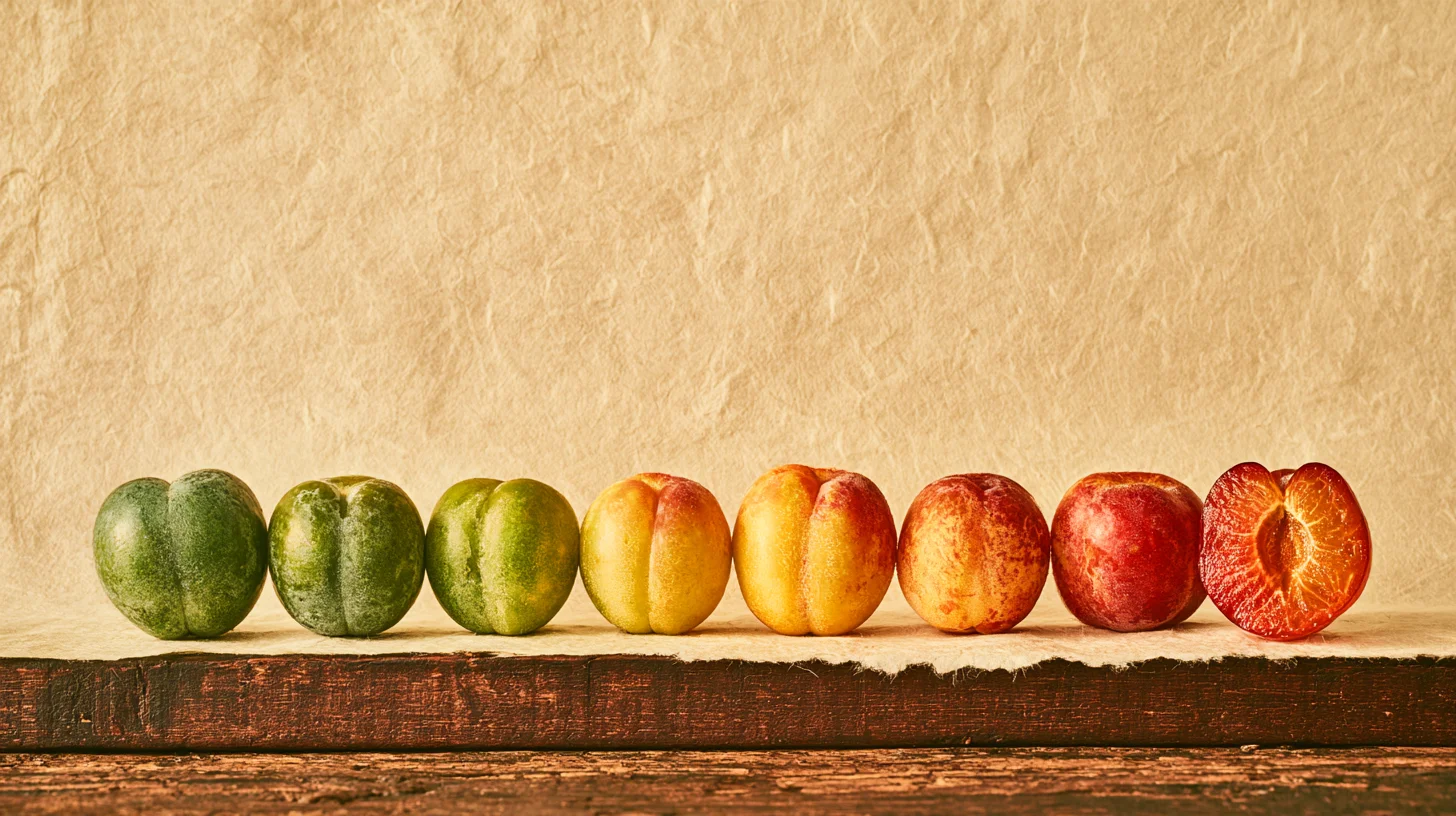
Ume growing on the same tree can ripen at noticeably different speeds. During harvest season, Yamanishi begins each morning in the orchard, inspecting the fruit’s color, gloss, softness to the touch, and aroma.
If the Nanko ume remain green and firm, Yamanishi waits. Once they show a blush of yellow and a subtle sheen, harvest may begin that day.
What guides the decision is not just the condition of the fruit at that moment, but foresight of how it will ripen next.
“Wait another day, or harvest today?”
For Yamanishi, this question cannot be answered by numbers alone.
Producers who purchase ume may not be able to make this first decision on their own. At Umeyoshi, the people who watch the trees and the people who make the umeshu work within the same company.
2 | When to Steep: Ume Keep Changing After Harvest
Harvesting is far from the final judgment.
Once picked, ume continue to change. Umeyoshi steeps its fruit as quickly as possible, yet one variety, Tsuyuakane, calls for a different rhythm.
A hybrid of ume and Japanese plum, Tsuyuakane turns red in both skin and flesh. Handling that suits Nanko ume may not suit it. Instead, Umeyoshi judges how far the fruit should continue to ripen after picking before it is steeped.
Each variety calls for its own timeline.
During the busy harvest period, when orchard work, sorting and steeping overlap, handling fruit in larger batches would make the work easier. Even so, Yamanishi does not want operational convenience alone to compromise fruit the team has judged to be in good condition.
3 | How to Finish It: Choosing a Slower Approach to Filtration
The third decision arrives after steeping is complete.
Filtration strains the umeshu to remove the fine particles that cause cloudiness and to refine the finished umeshu. While processing aids can shorten this step, Umeyoshi chooses not to use them.
Instead, the team filters the umeshu slowly, little by little, by hand.
Yamanishi says, “To be honest, it takes work, and it is not efficient.”
Yet efficiency is not the measure here.
What Umeyoshi seeks to retain is the flavor and aroma of the ume. Rather than making clarity the only goal, the company focuses on how to finish the fruit it has spent an entire year growing.
This choice limits how much can be made in the same amount of time, but Yamanishi does not see that as a bad thing. Nor is manual work the goal in itself; it remains because, after looking at the condition of the fruit, it is the method the team is satisfied with.
Controlling Each Decision Opened the Door to Collaboration
Taking on these three decisions within one company also mattered when working with another producer.
In conversation with the president of Sasaki Shuzo, a sake brewery in Kyoto, Yamanishi discussed a challenge: when the condition of purchased ume differs each time, it is difficult to make umeshu consistently.
Yamanishi proposed a different approach: allow Umeyoshi to make the umeshu.
The reasoning was straightforward. Umeyoshi could decide for itself which fruit to grow, when to pick it, and the condition in which to steep it.
Trial batches uniting Sasaki Shuzo’s sake with Umeyoshi’s Nanko ume ultimately led to ENISHI Umeshu.
The name ENISHI, meaning a connection or bond, comes from this encounter between two makers.
The Final Bottle Begins Long Before Bottling
An umeshu is not shaped solely by what happens after the fruit is steeped in alcohol.
It begins in the orchard, with a morning judgment on whether to pick today or wait another day. It continues through post-harvest handling and extends to filtration, where the team decides how much time to give it.
At Umeyoshi, decisions on harvesting, steeping and filtration are made consistently within the same company, and each next step is decided by looking at the condition of the fruit.
Yamanishi’s family history, relationships with overseas partners and the words passed down by the company’s chairman are covered in the feature “Watching the Ume, Making Today’s Decisions.”
Related feature
Related product information
This article presents information about ume cultivation, umeshu production, and the working practices and history of Umeyoshi. It is not intended to advertise alcoholic beverages or encourage their purchase or consumption. For readers aged 20 and above. Never drink and drive.
บทความนี้นำเสนอข้อมูลเกี่ยวกับการปลูกบ๊วย กระบวนการผลิตอุเมะชู ตลอดจนการทำงานและประวัติของ Umeyoshi โดยมิได้มีเจตนาโฆษณาเครื่องดื่มแอลกอฮอล์ หรือส่งเสริมการซื้อหรือการบริโภค สำหรับผู้อ่านที่มีอายุ 20 ปีขึ้นไป โปรดอย่าดื่มแล้วขับ
Discover the culture behind every bottle
We share brewery stories, tasting notes and the craft of koji & fermentation — for educational and cultural purposes only.
เราถ่ายทอดเรื่องราวจากผู้ผลิต บันทึกรสชาติ และศาสตร์แห่งโคจิและการหมัก — เพื่อการศึกษาและวัฒนธรรมเท่านั้น
Follow on Instagram Facebook