Perspectives
Thailand’s Draft Amendment: A Proposed Shift in Domestic Alcohol Production Rules
On May 13, 2025, Thailand’s Cabinet approved in principle a draft amendment revising the regulations governing domestic alcohol production.
The proposal was brought forward by the Excise Department, an agency under the Ministry of Finance responsible for excise duties on goods such as alcohol and tobacco. The proposed changes target a ministerial regulation, an instrument through which the responsible minister sets out specific rules under statutory authority, originally enacted in B.E. 2565 (2022).
While this draft amendment does not directly alter the requirements for importing alcohol from Japan, understanding its scope provides valuable insight into how the curation of beverage lists across Bangkok’s restaurants and bars may evolve.
Key Concepts: Approval in Principle, Promulgation, and Entry into Force
To navigate this regulatory shift, it is helpful to distinguish between three distinct legal stages.
“Approval in principle” represents the Cabinet’s endorsement of the overall policy direction. “Promulgation” refers to the official publication of the finalized regulation in the Royal Gazette, the state publication through which laws and regulations are made public. Finally, “entry into force” marks the date on which the rules become legally binding and operational.
The Cabinet action in May 2025 corresponds strictly to the first stage: approval in principle.
A Scope Focused on Domestic Producers
Within Thailand’s regulatory framework, distinct rules apply to producing, importing, and selling alcohol.
In 2026, Thailand introduced two regulatory changes. The Ministry of Finance removed the requirement for importers of grape wine and sparkling wine to present documentation proving exclusive import rights for the brand in Thailand. Separately, the Ministry of Public Health lifted the prohibition on alcohol sales between 2:00 p.m. and 5:00 p.m. Each measure proceeded under a separate law.
The draft amendment approved in May 2025 stands apart from these measures. Its focus is strictly on the legal requirements imposed on businesses brewing or distilling within Thailand.
Key Revisions in the Draft Amendment
The proposed amendment sets out the following principal changes.
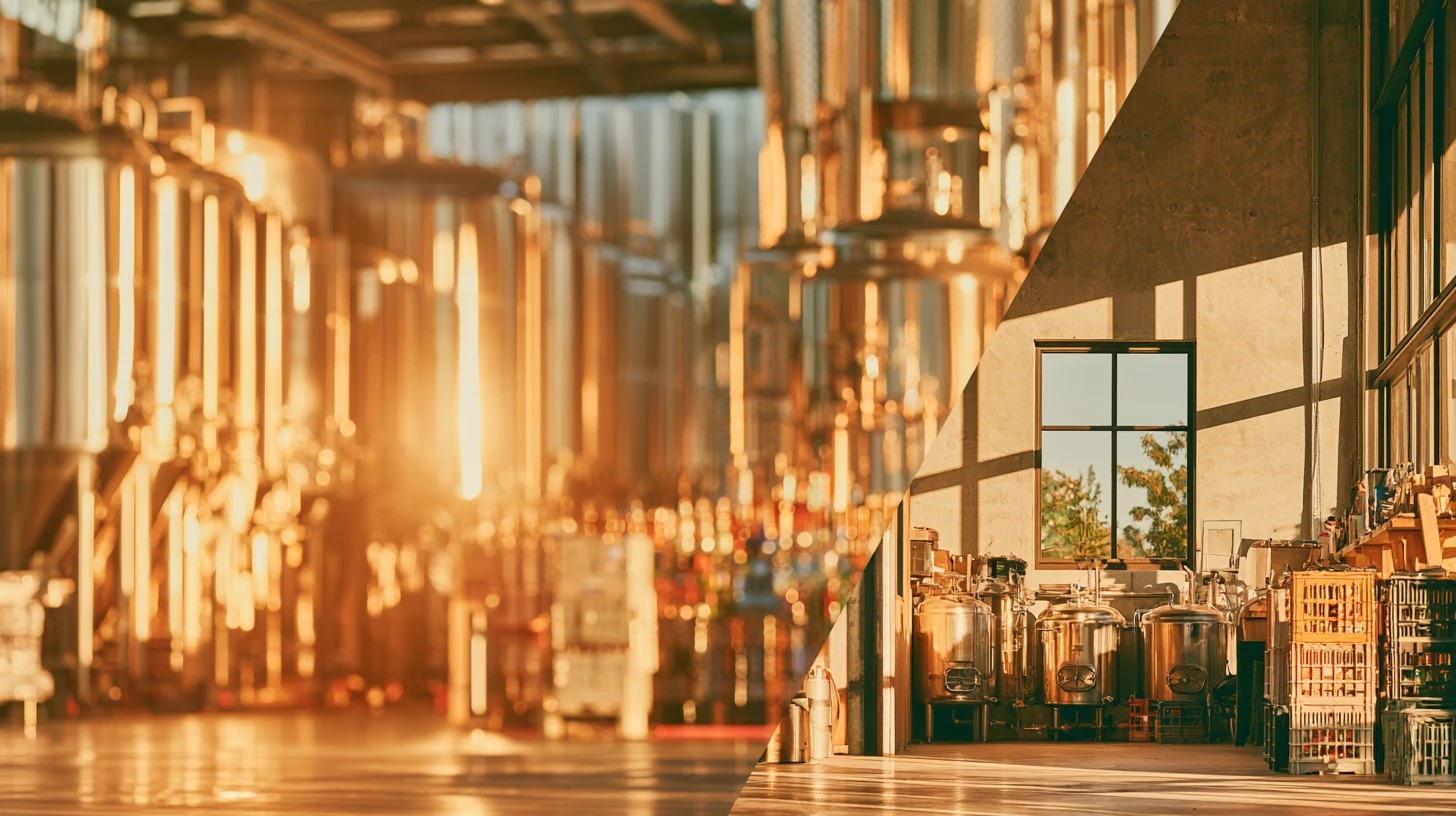
First, it would enable nationwide distribution in kegs, the barrel-type containers used to transport and dispense beer. According to press reports, the breweries and brewpubs concerned (venues brewing and serving beer on-site) were restricted to selling within their immediate premises or province. Under the proposal, inter-provincial shipment would be permitted, provided Excise Department-approved kegs are used.
Second, it addresses minimum investment requirements. A June 2025 commentary by a law firm states that the draft would remove the 10 million baht minimum investment requirement altogether, rather than simply lower the amount.
Third, it revises facility location rules. The previous requirement mandating that production facilities be located at least 100 meters away from public water sources would be removed. In its place, facilities would be required to maintain wastewater treatment systems to prevent environmental pollution.
Fourth, it streamlines operational progression. Under the proposal, operators seeking a medium-scale license would no longer need to complete a mandatory one-year operating history as a small-scale producer, though other standard licensing criteria remain in place.
The same legal commentary also notes the introduction of a new category for “fresh beer breweries,” alongside simplified licensing procedures for medium-scale producers.
From Policy Approval to Practical Implementation
Understanding the distinction between policy intent and regulatory enforcement is essential here.
The Cabinet’s May 2025 action set the general policy direction, and press reports likewise described the decision as approval in principle. Following approval in principle, the process involves final drafting of the text and the necessary approvals before promulgation in the Royal Gazette. The actual date from which producers and venues can operate under these new terms will be determined by the date of entry into force published in that ministerial regulation.
For prospective brewery founders and venue buyers alike, three factors remain essential to verify once the text is finalized: the precise scope of eligible producers, the applicable requirements, and the date of entry into force.
The Evolving Role of Selection and Craftsmanship
If the conditions for starting a brewing operation are eased, space emerges for small-scale producers.
As choices expand, the work of those curating beverage programs for restaurants and bars shifts as well. Curation moves beyond simply listing brands to being able to explain why a particular label is on the list. Who made it, where, and by what method: such information could also inform purchasing decisions.
For those of us dedicated to sharing Japanese sake and shochu, how an increase in local producers affects the way suppliers are chosen is worth watching. If interest in origins, producers, and production methods grows in Thailand, the value of explaining the origin, the makers, and the methods behind Japanese breweries grows with it.
What can be stated with certainty as of May 2025 is that a proposal to revise the conditions placed on those who produce alcohol has been approved in principle. To know what will actually change, and how, one must examine the ministerial regulation subsequently published in the Royal Gazette for the producers it covers, the requirements it sets, and the date it enters into force.
This article is intended solely to explore regulatory developments concerning alcohol production in Thailand and their context for the food and beverage industry, and does not aim to promote or encourage the consumption of alcohol. / บทความนี้จัดทำขึ้นเพื่อนำเสนอข้อมูลเกี่ยวกับความเปลี่ยนแปลงของกฎระเบียบด้านการผลิตสุราในประเทศไทยและบริบทของอุตสาหกรรมอาหารและเครื่องดื่มเท่านั้น มิได้มีเจตนาเพื่อส่งเสริมหรือโฆษณาเครื่องดื่มแอลกอฮอล์ สำหรับผู้มีอายุ 20 ปีขึ้นไป โปรดดื่มอย่างรับผิดชอบ
Related Articles
“Navigating Thailand’s 2026 Alcohol Regulatory Reforms: A Dual-Framework Analysis” / “What Types of Restaurants Are Growing in Thailand’s Foodservice Market?” / “How Much Should a Brewery Reveal? How Japan’s Craft Breweries Define the Boundaries of Transparency” / “Who Decides What Makes a “Good Drink”? — Bangkok’s Dining Table and a Wine Writer’s Binary Choice” / “From Rice to Malt: How the Same Water Connects Sake and Beer— HEIWA CRAFT Pale Ale”
Discover the culture behind every bottle
We share brewery stories, tasting notes and the craft of koji & fermentation — for educational and cultural purposes only.
เราถ่ายทอดเรื่องราวจากผู้ผลิต บันทึกรสชาติ และศาสตร์แห่งโคจิและการหมัก — เพื่อการศึกษาและวัฒนธรรมเท่านั้น