Drink
Who Decides What Makes a “Good Drink”? — Bangkok’s Dining Table and a Wine Writer’s Binary Choice
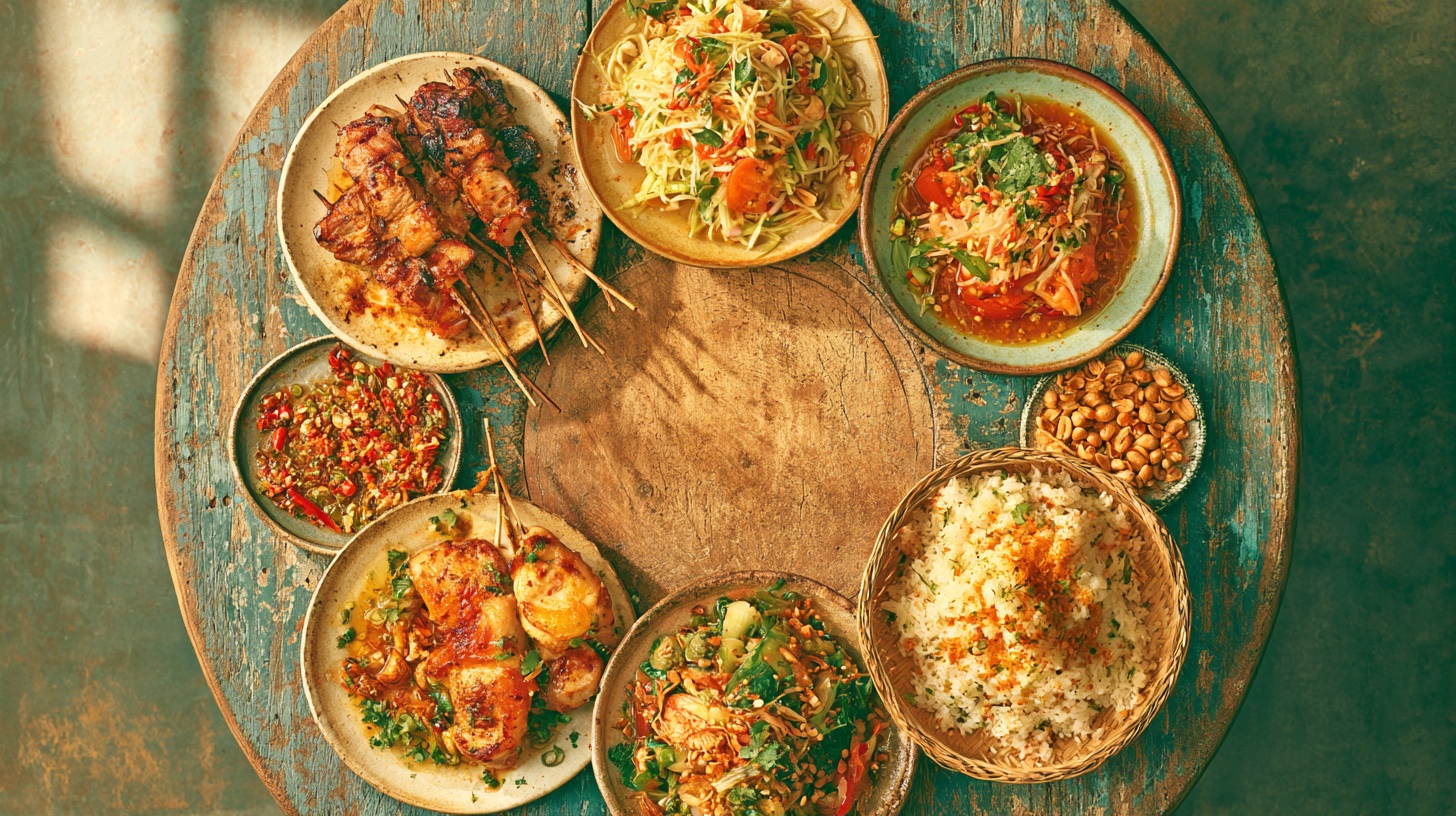
In October 2025, an international wine writer published a lengthy article about food and wine in Bangkok. Its conclusion was straightforward: in this city, you have to choose between prioritizing authentic Thai food and making wine the star of the meal. The writer described a dream of bringing together, at the same table, the food of a tiny Michelin-starred street-food restaurant and the wine list of a fine-dining establishment, and concluded that, if forced to choose one, the food would win.
Yet that binary framing is worth examining through the lens of a decision made by one sommelier. In 2020, a sommelier who runs an upscale Thai restaurant with his chef brother opened a small pad Thai and natural-wine bar in Bangkok’s Old Town. That same year, the brothers’ fine-dining restaurant also began operating upstairs in the same building; it later moved to another building on the same street. He had introduced wine not just to fine dining, but to a neighborhood noodle shop. He told the wine writer that, in the year the pad Thai shop opened, customers kept asking him whether orange wine was made from oranges. By the time the writer published the article, that decision had already been pointing, for five years, toward something the binary framing overlooked.
Taste Is Not What Makes the Two Incompatible
Is this apparent incompatibility truly a matter of taste?
A Singaporean reference book that systematically examines wine pairings with cuisines across Asia identifies chili as the chief challenge in pairing wine with Thai food. Alcohol intensifies the sensation of chili heat, it explains, making higher-alcohol wines more difficult to pair. A Japanese professional guide that approaches food-and-drink pairing through a logical framework characterizes the three beverages this way: “wine is tight, sake is soft, shochu is transparent.” When it comes to spicy food, it argues that shochu works because its relatively unobtrusive flavor does not interfere with the dish, while its aroma provides support.
The wine writer also acknowledges in the article that, at the fine-dining restaurant, a highly tannic red wine successfully paired with an extremely spicy stir-fry. Both in theory and in practice, there are solutions to the problem of taste. If the two do not coexist, the reason lies somewhere else.
Street Food Is Rationally Designed
The writer’s dream was to take a Michelin-starred street-food restaurant and add the wine list of a high-end establishment.
A management study of 5,000 consumers found that successful businesses tend to excel in one of five areas (assortment, price, convenience, service, and experience), differentiate themselves in a second, and remain merely competitive with their industry in the other three. Businesses that try to be the best at everything spread their resources too thin and lose.
A small street-side restaurant can excel at its food, differentiate itself through affordability, and devote relatively little attention to beverages, stopping at beer. According to the article, even the Michelin-starred restaurant mentioned above serves only beer. The individual restaurant’s business rationale has not been verified here, but this configuration can reasonably be read as a deliberate design that prioritizes focus on the food. The absence of wine at a street-food restaurant is better understood not as a deficiency, but as the consequence of that design.
What the Table Wants Is Not the Drink Itself
This raises a broader question: why did few alternative beverages take root alongside beer?
One useful way to think about this comes from management theory: people do not buy a product simply for the product itself; they buy it for what it enables them to do. The famous example is the milkshake. Morning customers were not really buying a beverage; they were buying a way to make a boring commute more tolerable. The true competitors of a product are therefore not merely the other products on the same shelf, but everything else capable of doing the same job.
Look at the Thai dining table, and what it asks for is not necessarily “a drink that pairs well with the food.” A bottle is commonly shared among several people, and ordering tends to happen at the level of the table rather than the individual. The very existence of the term กับแกล้ม, food eaten with alcohol, reflects how closely alcohol and food are intertwined. What the table asks of alcohol is not simply the satisfaction of each person’s palate, but a way to share time among a number of people.
A scholar who has written a cultural history of fermentation argues that fermented foods have served across cultures as vehicles for gifting and sharing. This does not establish a direct causal relationship with how alcohol is consumed in Thailand, of course, but the Thai shared format can be read as belonging to a similar lineage.
Wine, of course, can also be shared from a single bottle. There are nevertheless several possible reasons why it has had more difficulty filling this communal role. Spirits intended to be mixed with water or soda allow both strength and volume to be adjusted to the number of people at the table, so a single bottle can cover a long stretch of time. Wine is ordinarily served without dilution, which limits how many people, and how much time, a bottle can accommodate. Imported wine was also subject to high tariffs until those tariffs were abolished in 2024, which likely made it harder to place wine on the everyday table.
Wine could satisfy the demand for something that “goes with the food.” It was less suited to the demand for something “everyone can share.” The empty seat the writer saw was never necessarily a seat meant for wine.
The Gap Is in the Middle
Where, then, does the empty seat truly lie?
Between fine dining and street food lies a more casual category of restaurant, and there we can already find attempts to excel through food while differentiating through drinks. The sommelier’s pad Thai and natural-wine shop mentioned at the beginning is one example. Others include a restaurant that explicitly describes its food as a contemporary reinterpretation of กับแกล้ม, and another that serves natural wine alongside offal dishes from northeastern Thailand; both appear in 2026 guides or recent reviews. One restaurant devoted to reviving historical Thai dishes introduced sato, a Thai rice wine, in 2023.
The drinks that work in these places will likely need to satisfy three conditions: there must be a logical basis for pairing them with the food; they must suit the shared format of the table; and they must not diminish what makes the food compelling. Drinks that meet those conditions surely exist outside the realm of wine. Whether any of them can truly claim that seat at Bangkok’s table, however, remains an open question.
What the sommelier placed on the table in 2020 was not so much wine as a hypothesis: that the everyday table, too, could have more choices.
The wine writer’s binary can therefore be read as an outsider’s snapshot of a city in the middle of testing that hypothesis. The table the writer dreamed of does not yet exist in anyone’s restaurant. But the experiment that began at a pad Thai shop in 2020 suggests another way of building it: not downward from fine dining, but upward from the everyday table.
This article is intended solely to explore the food culture and drinks landscape of Bangkok’s restaurants and the ideas of the cited authors, and does not aim to promote or encourage the consumption of alcohol. / บทความนี้จัดทำขึ้นเพื่อนำเสนอข้อมูลเกี่ยวกับวัฒนธรรมอาหารและภูมิทัศน์เครื่องดื่มของร้านอาหารในกรุงเทพฯ และแนวคิดของผู้เขียนที่อ้างถึงเท่านั้น มิได้มีเจตนาเพื่อส่งเสริมหรือโฆษณาเครื่องดื่มแอลกอฮอล์ สำหรับผู้มีอายุ 20 ปีขึ้นไป โปรดดื่มอย่างรับผิดชอบ
Related Articles
“Two Years of Zero Wine Tariffs” / “Cuisine Has Evolved. What About Drinks?” / “Echoes of Isan in Bangkok: Sato and the Evolution of Modern Fermentation Culture” / “The Philosophy of Kakuuchi”
Discover the culture behind every bottle
We share brewery stories, tasting notes and the craft of koji & fermentation — for educational and cultural purposes only.
เราถ่ายทอดเรื่องราวจากผู้ผลิต บันทึกรสชาติ และศาสตร์แห่งโคจิและการหมัก — เพื่อการศึกษาและวัฒนธรรมเท่านั้น