Drink
Sake “Koshu” Has No Definition Under Japan’s Liquor Tax Act: How Awamori “Koshu” Differs
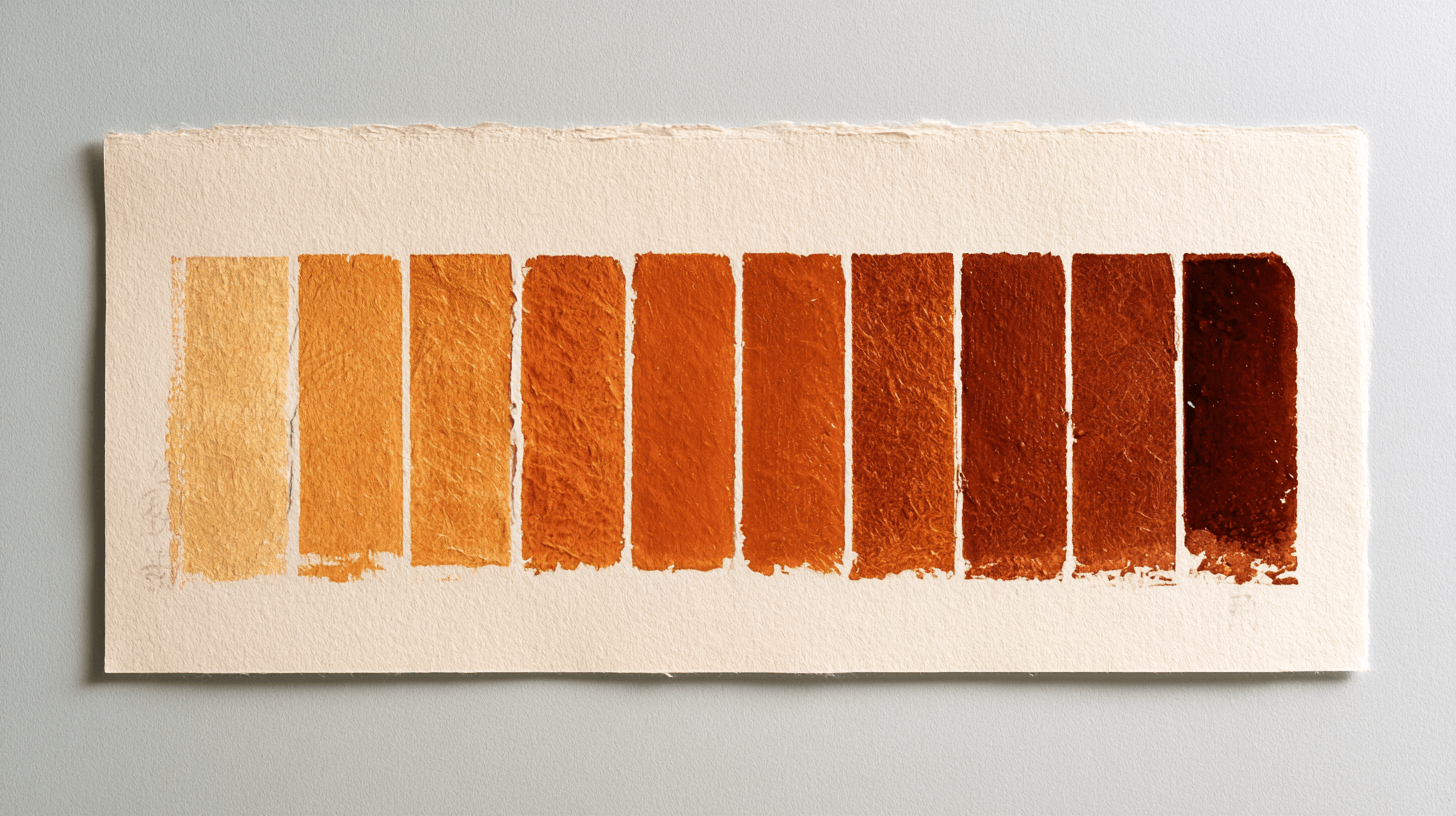
Some bottles of sake bear the mark of koshu, or “aged sake.” It is natural to assume that such a label denotes a spirit matured over many years. Yet, a fundamental question remains: how long must sake age before it earns the designation of koshu?
Under Japan’s Liquor Tax Act, no minimum aging period exists.
The National Tax Agency outlines specific standards through the Standards for Manufacturing Methods and Quality Indication for Sake, establishing clear guidelines for terms such as junmai, ginjo, and honjozo. Yet, the word koshu does not appear within these official texts. Nor does the term “long-term aged sake.”
In essence, neither federal law nor national labeling standards govern the definition of aged sake. Whether a brewery chooses to include koshu on its label remains entirely a matter of internal philosophy and discretion.
The Origins of the Three-Year Threshold
When exploring the world of aged sake, one benchmark recurs consistently: three full years.
This consensus stems from the Long-Term Aged Sake Research Association, an independent industry body established in 1985 that unites artisan breweries across Japan. The association defines jukusei koshu (matured aged sake) as sake crafted without added sugars and aged by the brewery for at least three full years after joso|the traditional pressing stage where the fermented moromi is separated from the sake lees.
This standard remains a self-imposed industry guideline rather than a legal requirement. Breweries operating outside the association bear no obligation to observe this three-year threshold.
Where the National Tax Agency does intervene is in blended vintages. If a producer chooses to disclose an aging period for a blend of different ages, the label must state the age of the youngest component. The regulation seeks not to categorize the spirit, but to guarantee truth in labeling.
The Precision of Okinawan Awamori
Across the Japanese archipelago, another traditional spirit shares the same two characters for koshu.
In Okinawa, aged awamori|known locally as kusu|operates under a far more stringent framework. Governed by the Fair Competition Code Concerning the Labeling of Awamori, approved by the Japan Fair Trade Commission, the designation koshu requires that 100 percent of the bottle’s contents be aged for a minimum of three years.
This benchmark reflects a significant tightening of standards. Prior to revisions taking effect in August 2015, awamori could be designated as koshu if merely half the blend met the three-year mark. Today, the code demands absolute uniformity.
While sake and awamori share the exact same characters|古酒|one represents an individual brewery’s discretion, while the other reflects an officially approved labeling code.
Chemistry and Time: The Internal Metamorphosis
Though formal definitions may be flexible, the physical transformation within the bottle is remarkably precise.
Research from Japan’s National Research Institute of Brewing sheds light on the chemical evolution of maturing sake. Among the most striking changes is color intensity. When measuring optical density over time, researchers observed a correlation coefficient of +0.97 between color intensity and storage duration|indicating a near-perfect statistical alignment as the liquid gradually darkens.
This visual deepening is primarily driven by the Maillard reaction, a complex interaction between sugars and amino acids that generates rich amber tones alongside distinct aromatic compounds.
Concurrently, fresh aromas recede. Volatile fruit-forward esters characteristic of ginjo sake, such as ethyl caproate and isoamyl acetate, diminish gracefully over time. Acidity also shifts: malic and citric acids decline, while acetic acid and other organic acids increase.
These transformations are distinct from both saccharification and fermentation. They represent a quiet, post-brewing evolution, dictated entirely by time, temperature, and environment.
Molecules of Memory: The Sherry Parallel
Connoisseurs often note that aged sake evokes the nuances of Oloroso sherry or aged Chinese laojiu.
This sensory connection is rooted in organic chemistry. Studies identify sotolon as the key aromatic compound shaping mature sake. At minute concentrations below 2 parts per billion (ppb), sotolon imparts classic sake notes. Between 3 and 6 ppb, the profile shifts noticeably toward the dry, nutty nuance of sherry. Beyond 7 ppb, it matures into hineka|the prized, complex aroma of fully aged koshu.
Because sotolon is also a defining aromatic molecule in traditional sherry, this resemblance is no coincidence; it is the shared signature of molecular maturation.
Reading Between the Kanji
The variation in aging practices among sake breweries is not merely a consequence of loose regulation; it reflects a conscious choice of craft. Where one artisan releases a koshu after three years, another may quietly mature it in the cellar for two decades.
The distinction lies in what the label promises. On a bottle of Okinawan awamori, the characters 古酒 guarantee a strict three-year minimum. On a bottle of sake, those same characters serve as an invitation to look deeper|to discover the individual craft, time, and philosophy resting inside the glass.
This article examines the labelling standards and chemistry of aged Japanese sake and Okinawan awamori, for informational purposes only, and does not aim to promote or encourage the consumption of alcohol. / บทความนี้จัดทำขึ้นเพื่อพิจารณามาตรฐานการแสดงฉลากและองค์ประกอบทางเคมีของสาเกบ่มและอาวาโมริบ่มของโอกินาวา เพื่อเป็นข้อมูลความรู้เท่านั้น มิได้มีเจตนาเพื่อส่งเสริมหรือโฆษณาเครื่องดื่มแอลกอฮอล์ สำหรับผู้มีอายุ 20 ปีขึ้นไป โปรดดื่มอย่างรับผิดชอบ
Related Articles
“Pressed Before Time” / “Will Aged Sake Unveil a New Dimension of Japanese Sake in 2026?” / “From the “Awamori Fungus” to the “Ryukyu Fungus”: A New Name for Black Koji and New Directions for Awamori Distilleries” / “A Journey Restored”
Discover the culture behind every bottle
We share brewery stories, tasting notes and the craft of koji & fermentation | for educational and cultural purposes only.
เราถ่ายทอดเรื่องราวจากผู้ผลิต บันทึกรสชาติ และศาสตร์แห่งโคจิและการหมัก | เพื่อการศึกษาและวัฒนธรรมเท่านั้น