

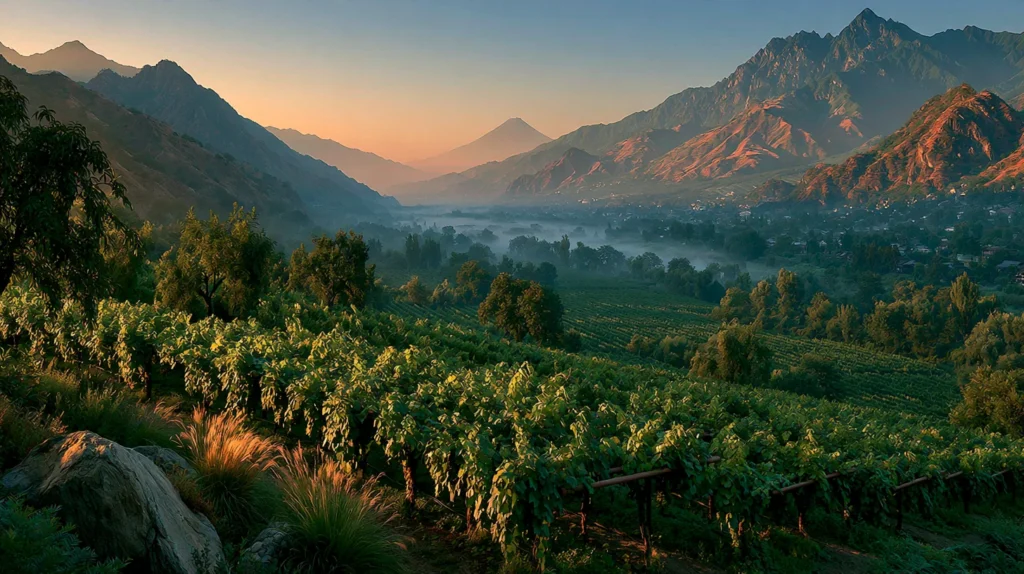
The Evolution of Koshu: A Narrative Refined by Katsunuma’s Winemakers
Koshu is a white grape celebrated for its delicate, understated aromas. When fermented conventionally at low temperatures in stainless steel tanks, it historically yielded a pale, crisp wine where acidity overshadowed the nuance of flavor. The turning point that lent this gentle variety its profound depth was the embrace of sur lie aging. For decades, winemakers in Katsunuma, Yamanashi, have quietly refined this method, intertwining their craftsmanship with the destiny of Koshu. The international acclaim surrounding Japanese wine over the past decade is rooted not in marketing alone, but in these fundamental, patient evolutions within the cellar.
The Nuance of Sur Lie Aging
Sur lie is a traditional technique where wine rests in contact with its lees—the residual yeast sediment—for several months following fermentation. Long a hallmark of France’s Loire Valley for Muscadet, this patient interaction allows the yeast cells to break down naturally. The process releases amino acids that impart a savory complexity and compounds that endow the wine with a rounder, silkier texture. Sharp acidity mellows into a seamless, textured palate, providing substantive depth through the finish.
Among the pioneers of this approach for Koshu is Marufuji Winery (Rubaiyat Winery) in Katsunuma. Established in 1890, this four-generation family estate stands as one of the region’s historic pillars. Its heritage structures are officially recognized under Japan’s cultural heritage designation celebrating the country’s winemaking history. The name “Rubaiyat,” bestowed by the poet and literary scholar Kōnosuke Hinatsu, evokes the enduring quatrains of the 11th-century Persian poet Omar Khayyam. In an era when the domestic market favored sweet, fortified styles, Marufuji steadfastly focused on dry, terroir-driven expressions from local grapes. This enduring dedication continues to earn them the highest accolades at the Japan Winery Awards. Their signature Rubaiyat Koshu Sur Lie seamlessly weaves aromas of native Japanese citrus and white peach with the textural richness of lees aging, balanced by a vibrant, precise acidity.
The Heritage of the Koshu Grape
Koshu is a variety indigenous to Japan, cultivated around the sun-drenched slopes of Katsunuma for over a millennium. While its genetic lineage traces back to European Vitis vinifera, its journey along the Silk Road introduced crosses with wild East Asian vines, manifesting in the grape’s distinctive, translucent pinkish-gray skin.
A remarkable characteristic of Koshu wine is its exceptionally low iron content, preventing the harsh, metallic notes that often arise when wine encounters seafood. This natural chemistry underpins its seamless compatibility with Japanese gastronomy. In 2010, Koshu achieved official recognition from the International Organisation of Vine and Wine (OIV), granting it the right to be labeled by name in global markets. This structural milestone paved the way for critical acclaim; notable milestones include pioneering accolades at major UK competitions in 2014, culminating in grand honors for the varietal in 2024.
Katsunuma Jyozo: Purity and Devotion
Katsunuma Jyozo represents another chapter of singular devotion to the grape. Founded in 1937 amidst the region’s historic silk industry, the winery is now guided by third-generation vintner Yuji Aruga. His philosophy remains uncompromising: “Even if it is only one barrel, make it the very best.” To capture the essence of the terroir, the estate manages yields meticulously through advanced trellising, while embracing low-intervention practices including whole-cluster fermentation, indigenous yeasts, and vinification in clay amphorae.
Their iconic expression, Aruga Branca Clareza, eschews oak entirely. Following fermentation in stainless steel, the wine rests on its lees for several months in enamel-lined tanks to preserve its pristine clarity. The result is a dry, nuanced wine defined by aromas of fresh citrus and pear, balanced by an energetic acidity. The palate concludes with a delicate saline note and that whisper of pleasant bitterness inherent to Koshu. The 2023 vintage, awarded a Silver Medal (92 points) at the International Wine Challenge (IWC), exemplifies how profound a wine can be when crafted with restraint.
A Resonant Narrative for Bangkok
While Japanese wine currently occupies a niche within Bangkok’s fine-dining landscape, the cultural foundation for its appreciation is deeply rooted. The city’s sophisticated palate, already well-versed in the nuances of premium sake and shochu, offers a natural sanctuary for Koshu. The structural harmony of sur lie Koshu—defined by gentle acidity and savory depth—complements the umami-driven profile of contemporary gastronomy. From pristine sashimi to complex, dashi-infused dishes, it serves to enhance rather than overwhelm delicate culinary flavors.
Ultimately, the presence of Japanese wine in Bangkok is measured not by market volume, but by the resonance of its stories. It is a liquid chronicle of terroir and patience. The quiet months Marufuji Winery entrusts to the lees, and the unwavering devotion of Katsunuma Jyozo’s “single barrel” philosophy, are expressions of pure craftsmanship. The true measure of Koshu’s evolution in the region lies not in its status as a transient trend, but in the depth of the narrative shared with those who appreciate its journey.
This article is intended solely to explore the winemaking artistry and cultural heritage of Marufuji Winery, Katsunuma Jozo, and the Japanese Koshu wine tradition, and does not aim to promote or encourage the consumption of alcohol. / บทความนี้จัดทำขึ้นเพื่อนำเสนอข้อมูลเกี่ยวกับศิลปะการทำไวน์และมรดกทางวัฒนธรรมของ Marufuji Winery, Katsunuma Jozo และไวน์โคชูของญี่ปุ่นเท่านั้น มิได้มีเจตนาเพื่อส่งเสริมหรือโฆษณาเครื่องดื่มแอลกอฮอล์ สำหรับผู้มีอายุ 20 ปีขึ้นไป โปรดดื่มอย่างรับผิดชอบ
Related Articles
“Japan as a Wine Country” / “A Gneiss Vineyard Reshaping the Narrative of Muscadet” / “The Shifting Terroir” / “Two Years of Zero Wine Tariffs”
Related Product(s)
RUBAIYAT Koshu Sur Lie / ARUGA BRANCA CLAREZA
Discover the culture behind every bottle
We share brewery stories, tasting notes and the craft of koji & fermentation — for educational and cultural purposes only.
เราถ่ายทอดเรื่องราวจากผู้ผลิต บันทึกรสชาติ และศาสตร์แห่งโคจิและการหมัก — เพื่อการศึกษาและวัฒนธรรมเท่านั้น