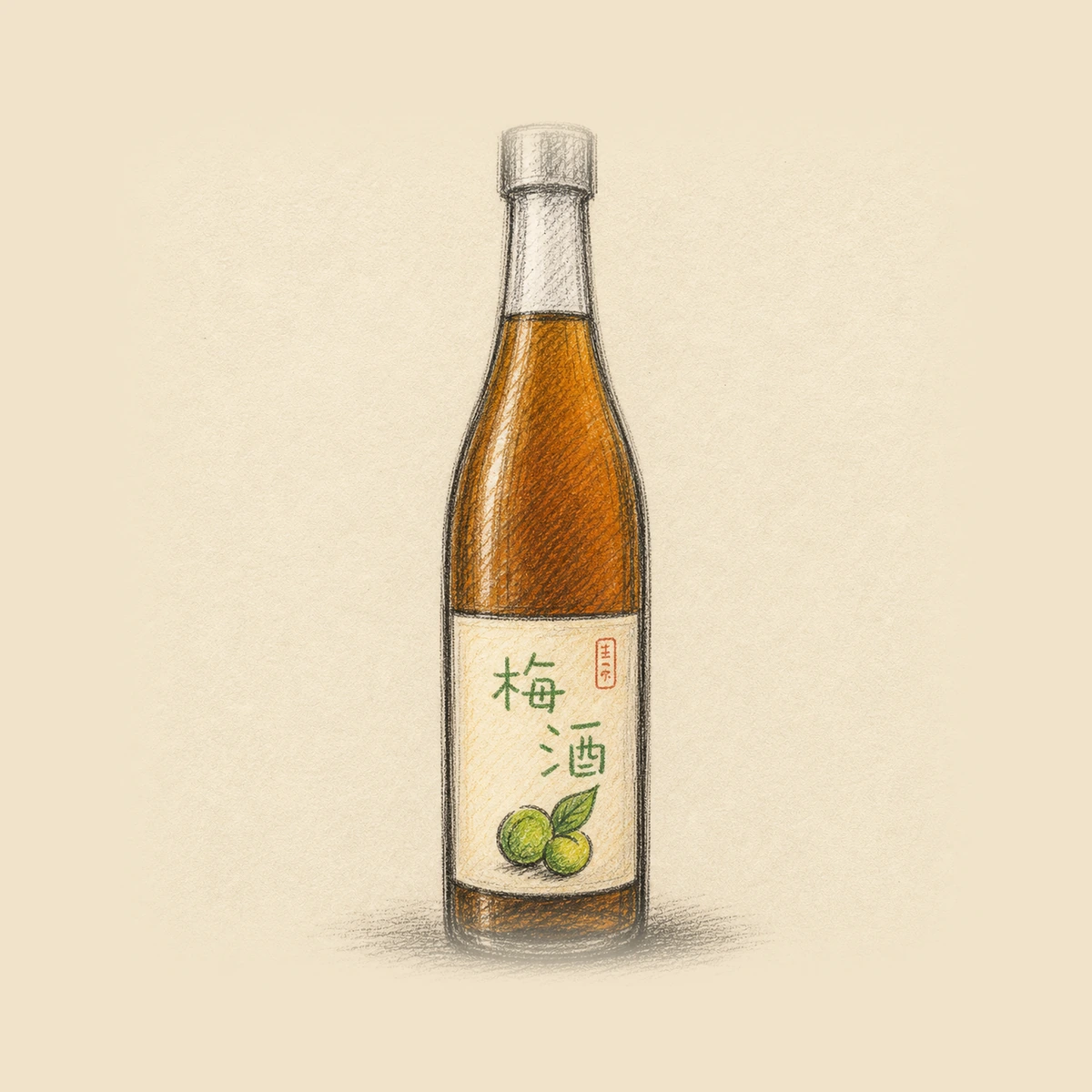
BUNZO Umeshu 11 years old
Ume and rock sugar meet Bunzo, a Kuma rice shochu made by earthen-pot fermentation and atmospheric distillation. A vintage-labelled umeshu with the weight of the spirit still intact.
Thailand · Product information
Product information from Bacchus Global Co., Ltd., based in Bangkok, Thailand. About Bacchus Global
Kuma-shochu-based umeshu
Ume and rock sugar layered onto Bunzo rice shochu
Kinoshita Brewery uses its own Kuma Shochu Bunzo as the base, adding ume and rock sugar. Rather than relying on a nearly neutral continuously distilled spirit, the umeshu keeps the character of rice shochu at its core.
Rice shochu from earthen pots and atmospheric distillation
Across the entire brewery, Kinoshita preserves earthen-pot fermentation and atmospheric distillation. Bunzo’s generous rice character becomes the spine of the liqueur.
Ume and rock sugar, without flavour correction
Ume and rock sugar are added to the Kuma shochu, allowing natural fruit sweetness and acidity to emerge without added flavouring, colouring or acidifiers.
A vintage identity marked by the ume harvest year
The label records the harvest year of the ume, preserving each fruit season as part of the bottle’s identity. At 18% ABV, the spirit carries plum and rice-shochu depth into a long finish.
Fragrant plum with the grounded roundness of rice shochu
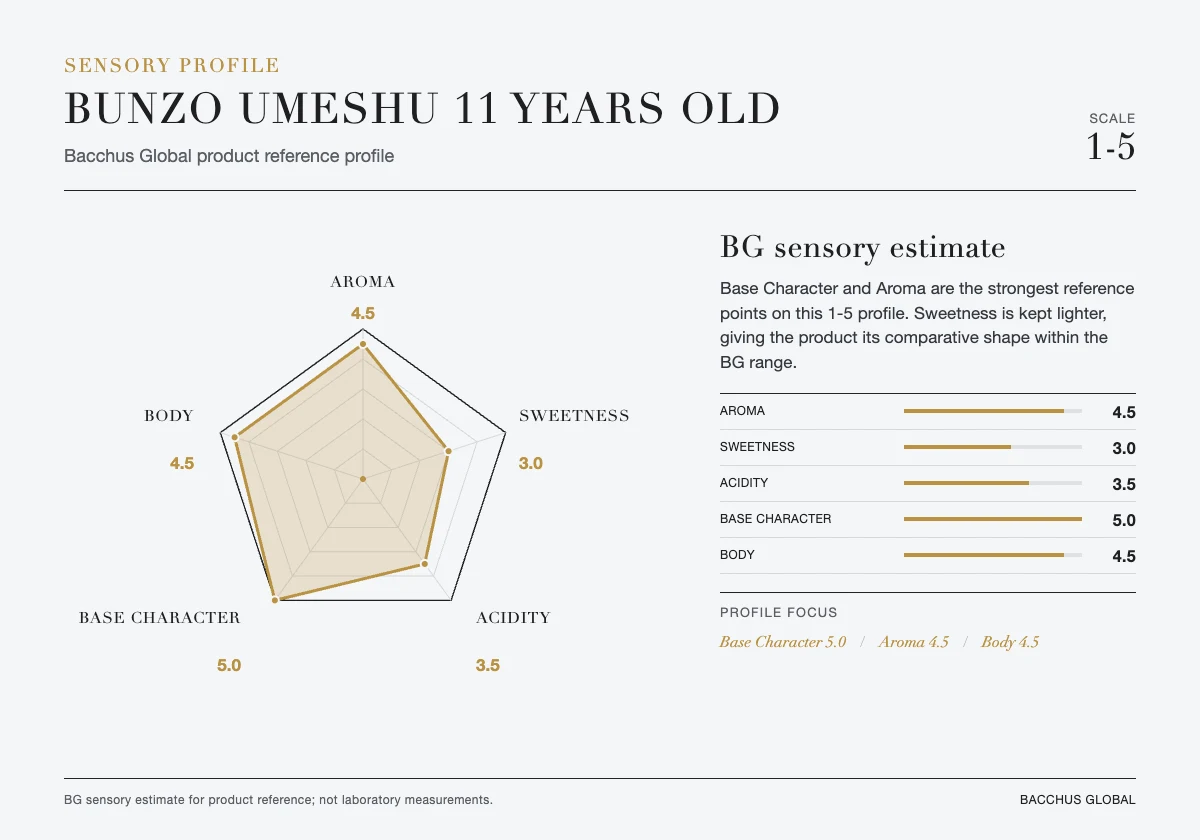
Fresh plum aroma and concentrated sweet-tart fruit meet the full body of atmospherically distilled rice shochu. The 18% structure is firm, yet the palate remains rounded, leaving a calm trace of rice-derived savouriness.
Question 1
Which spirit forms the base?
- Kuma rice shochu Bunzo
- Barley shochu
- Red wine
Read the answer and explanation
Correct answer: A — Kuma rice shochu Bunzo
Kinoshita Brewery uses its Bunzo rice shochu as the base.
Question 2
How is the base shochu made?
- By continuous distillation and cask ageing
- With earthen-pot fermentation and atmospheric distillation
- By fermenting grape juice
Read the answer and explanation
Correct answer: B — With earthen-pot fermentation and atmospheric distillation
The page describes earthen-pot fermentation and atmospheric distillation.
Question 3
What does the vintage on the label record?
- The bottle production year
- The year its cask was made
- The ume harvest year
Read the answer and explanation
Correct answer: C — The ume harvest year
The vintage is the ume harvest year, not necessarily the age of the liqueur.
Four directions guided by rice shochu depth and plum acidity
BUNZO Umeshu 11 years old carries the full-bodied depth of atmospherically distilled rice shochu together with concentrated plum sweetness and acidity. The combinations below are not official pairings presented by the producer, but readings drawn from the recorded taste characteristics.
Acidity is understood to soften the perception of fat, while savoury elements placed side by side can intensify one another. The rice-derived depth and plum acidity of this umeshu draw on both mechanisms, giving it a base that meets dishes from umami-rich preparations to fried food.
Kinoshita Brewery in Kuma, founded in 1862
Kinoshita Brewery was founded in Taragi in 1862, after receiving a licence to brew and sell from the Sagara domain. The founder’s name, Bunzo, also survives in a local Kuma folk song. The small producer continues to make richly expressive rice shochu through earthen-pot fermentation and atmospheric distillation.
Contact Bacchus Global for product documentation and trade information.