Drink
A Gin That Begins with Sweet-Potato Shochu|How Sasshu Gin Is Put Together
Updated 10 November 2026|Originally published 14 January 2024
Sweet-potato shochu appears among the ingredients of a gin. Sasshu Gin, made by Hamada Syuzou in Kagoshima, uses honkaku sweet-potato shochu as its base and fourteen botanical ingredients. Its character is connected not only with a list of citrus and herbs, but also with the spirit made before they are introduced.
Which spirit forms the base? Which parts of the plants are used, and how are their aromas extracted? What is combined at the end? Following the work from ingredients to the finished product makes its structure easier to understand.
Sweet-Potato Shochu as the Starting Point
Hamada Syuzou was founded in 1868 in what is now Ichikikushikino, Kagoshima Prefecture. Honkaku shochu has been central to its business, and honkaku sweet-potato shochu is the base spirit for Sasshu Gin. A base spirit is the distilled alcoholic drink to which aromas are added.
Making sweet-potato shochu involves koji as well as sweet potatoes. Koji is grain, such as rice, on which koji mold has been cultivated. It helps break starch in the ingredients down into the sugar that yeast needs to produce alcohol. Distilling the fermented mash produces shochu.
Koji works at this stage of making the base shochu. Both koji and botanical ingredients appear in the producer’s account because making the underlying spirit and building its aromas are connected parts of the work.
The producer explains that “Sasshu” is another name for Satsuma, the historical region corresponding to western Kagoshima Prefecture today. The connection with place expressed by the name can also be found in the sweet-potato shochu chosen as the base.
Look at the Plant Parts as Well as Their Names
Plant ingredients used to give gin its aroma are called botanicals. Alongside juniper berries, a familiar gin ingredient, Sasshu Gin uses sour pomelo, Japanese mugwort and loquat leaves, among others. The producer states a total of fourteen botanicals.
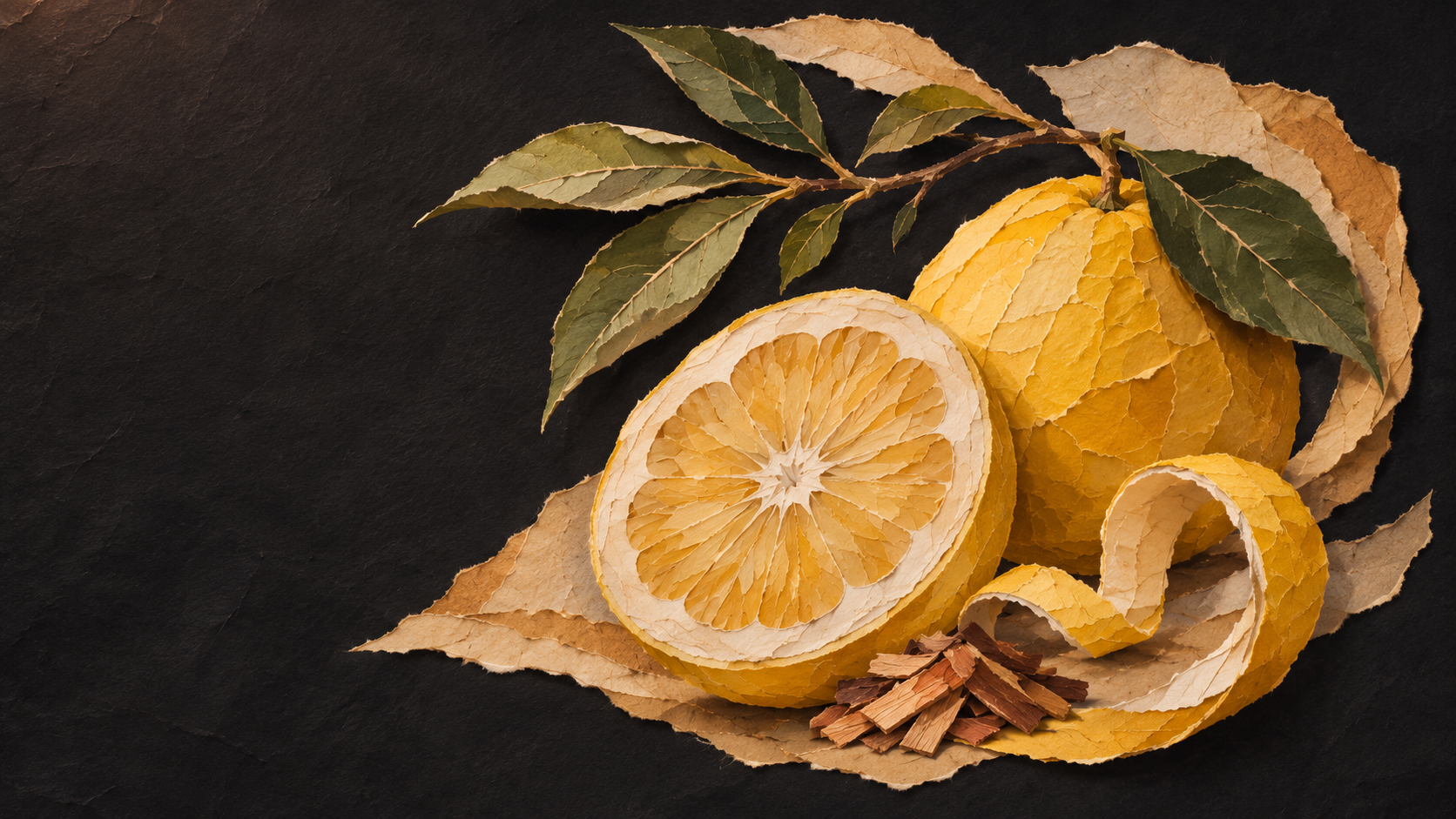
One of the central ingredients is sour pomelo, a citrus specialty of Ichikikushikino. The ingredients list also includes another citrus fruit, shikuwasa. Looking at the individual fruits makes the producer’s choices more concrete than grouping them simply as “citrus.”
Rose petals are listed as a floral ingredient. Sakura chips, meanwhile, are pieces of cherry wood, and the part of the loquat used is its leaf. A plant’s name alone does not establish whether its flowers, fruit, leaves or wood are involved. The list contains different plant parts as well as different plants.
Read in this way, the ingredients reveal petals and wood chips alongside fruit and herbs as sources of aroma. A citrus fruit associated with the region and ingredients familiar in gin have different roles within the same product.
Extracting Aroma and Blending Two Component Spirits
After choosing the ingredients comes the work of extracting their aromas into the spirit. The producer states that it uses vapor infusion to extract the aroma of sour pomelo.
In general, this method brings vapor from heated spirit into contact with botanical material to take up its aromas. Alongside choosing an ingredient, the producer also chooses how to work with it: in this case, extracting aroma through vapor.
For Sasshu Gin, the producer also describes making component spirits by two methods and blending the two to finish the product. Blending means combining spirits made separately. The published account shows that, after selecting the botanicals, there is also work involved in bringing the resulting spirits together. The sources consulted here do not give the detailed process for the other method.
Starting with sweet-potato shochu, selecting fruit, leaves and wood chips, then combining spirits that have taken up their aromas: behind the number fourteen is the work of handling each ingredient. When the name Sasshu Gin appears in Bangkok, its ingredients list offers a route into the processes that follow.
This article explores ingredients, production methods and the regional context of Sasshu Gin. It is intended for readers aged 20 and over and does not promote or encourage alcohol consumption.
บทความนี้นำเสนอข้อมูลเกี่ยวกับวัตถุดิบ วิธีผลิต และบริบทของท้องถิ่นที่เกี่ยวข้องกับ Sasshu Gin สำหรับผู้อ่านอายุ 20 ปีขึ้นไป มิได้มีเจตนาส่งเสริมหรือโฆษณาการบริโภคเครื่องดื่มแอลกอฮอล์
Discover the culture behind every bottle
We share brewery stories, tasting notes and the craft of koji & fermentation | for educational and cultural purposes only.
เราถ่ายทอดเรื่องราวจากผู้ผลิต บันทึกรสชาติ และศาสตร์แห่งโคจิและการหมัก | เพื่อการศึกษาและวัฒนธรรมเท่านั้น
Follow on Instagram Facebook