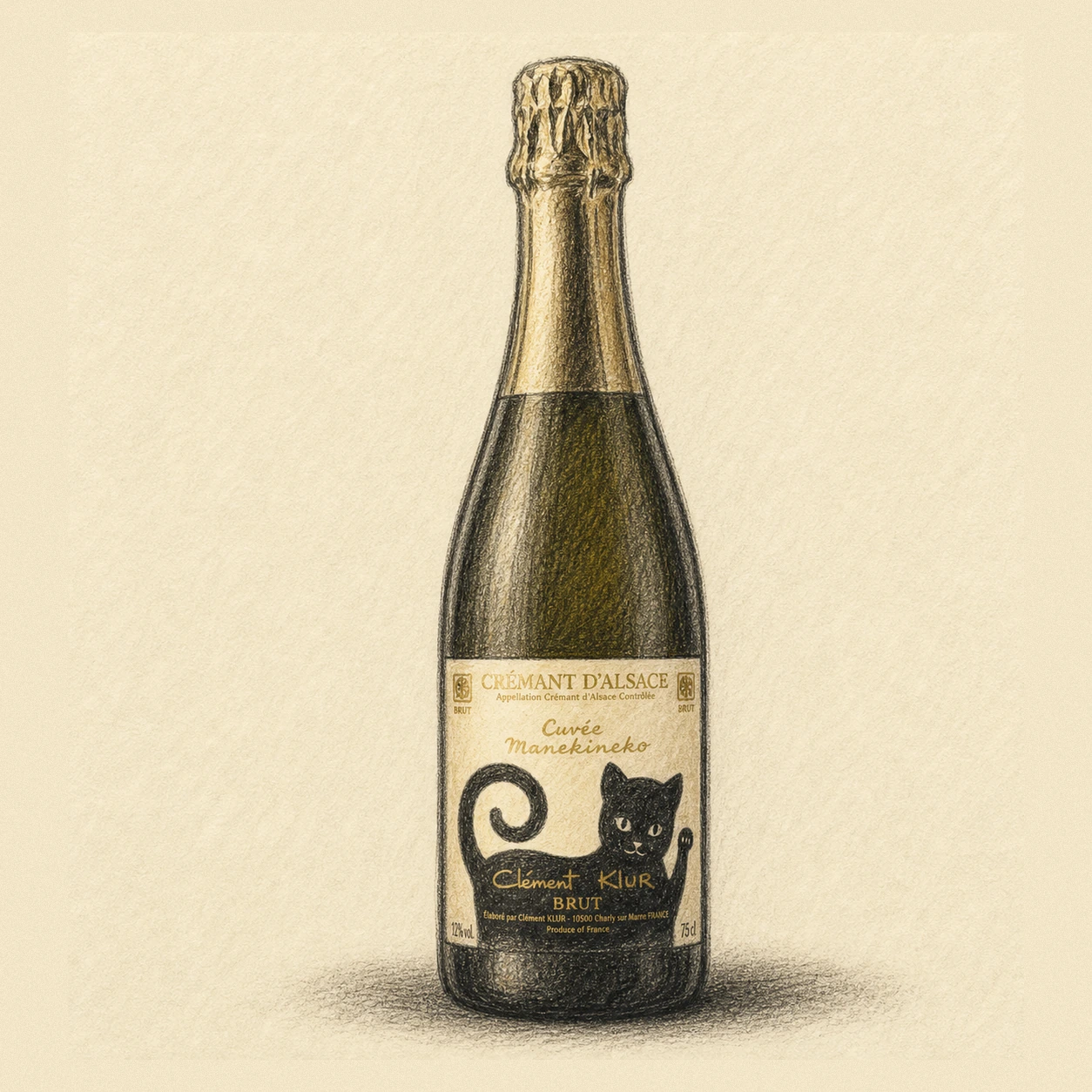
Original bottle illustration — Bacchus Global
AOC Crémant d'Alsace
DOMAINE LÉON HEITZMANNMANEKINEKO Crémant d'Alsace
On a trip to Japan, Alsace winemaker Clément Klur spotted a small beckoning cat in a souvenir shop — and brought the idea home in a glass. That whimsical spark became Manekineko, a Crémant d'Alsace that keeps its Alsatian soul intact while carrying a quiet nod to Japan in every pour.
Thailand · Product information
Product information from Bacchus Global Co., Ltd., based in Bangkok, Thailand. About Bacchus Global
- Wine type
- White sparkling wine, Crémant d'Alsace
- Grape
- White-grape blend
- Appellation
- AOC Crémant d'Alsace
- Origin
- Ammerschwihr, Alsace, France
- Drinking window
- Within about 2–3 years of purchase
- Recommended temperature
- 12°C
- Alcohol
- 12.5%
- Bottle size
- 750 ml
About Manekineko
Manekineko is produced by Domaine Léon Heitzmann in Ammerschwihr, Alsace, the estate that took over Clément Klur's vineyards and cuvées in 2017.
A blend of white grapes, it carries the AOC Crémant d'Alsace designation and is made using the traditional bottle-fermented method.
Taste profile
In the glass
MANEKINEKO CRÉMANT D'ALSACE
Scale1–5
BG wine structure estimate
Comparative profile within the Bacchus Global wine range.
Extended lees aging brings a gentle brioche note, layered with white flowers and the fresh lift of Riesling.
Bright and precise, with lively acidity giving structure to a fine mousse.
Pale gold in the glass, with a steady stream of fine, persistent bubbles.
Before it reaches the glass
Temperature
Serve at around 12°C so the fine bubbles, fruit and gentle lees-aged aromas remain in balance.
Timing
Enjoy within about 2–3 years of purchase, while the fruit and bead remain lively.
Glassware
A flute glass preserves the bubble stream, while a tulip shape gives the aromatics more room to open.
Question 1
What is the appellation?
- AOC Crémant d’Alsace
- AOC Champagne
- AOC Crémant de Bourgogne
Read the answer and explanation
Correct answer: A — AOC Crémant d’Alsace
Answer: AOC Crémant d’Alsace. The linked section gives the source detail.
Read the relevant passageQuestion 2
How are the bubbles produced?
- By injected gas only
- By secondary fermentation in the bottle
- By distillation
Read the answer and explanation
Correct answer: B — By secondary fermentation in the bottle
Answer: By secondary fermentation in the bottle. The linked section gives the source detail.
Read the relevant passageQuestion 3
What inspired the beckoning cat on the label?
- A discovery in the vineyard
- The shape of the still
- A maneki-neko seen by the producer in Japan
Read the answer and explanation
Correct answer: C — A maneki-neko seen by the producer in Japan
Answer: A maneki-neko seen by the producer in Japan. The linked section gives the source detail.
Read the relevant passageAt the table
Manekineko's fine bubbles and bright acidity make it a versatile partner at the table, particularly with dishes that bring salt, fat or gentle spice.
Across cuisines, the wine's role stays consistent: its acidity resets the palate after richness or oil, while its persistent mousse lifts delicate textures rather than competing with them.
Japanese
- Tempura
- Nigiri with white fish
- Scallop sashimi
Why it worksThe wine's acidity cuts cleanly through tempura's oil, while its gentle brioche note echoes the delicate umami of raw fish and shellfish.
Thai
- Miang kham
- Tod man pla (fish cakes)
- Salt-grilled prawns
Why it worksThe lime, ginger and light chili in Thai starters find a fresh counterpoint in the wine's acidity, while the fine bubbles refresh the palate between bites.
Western
- Shrimp carpaccio
- Savory canapés
- Cold chicken terrine
Why it worksSimple, salt-forward starters let the wine's acidity and mousse do the work, brightening each bite without overwhelming it.
From cellar to bottle
Winemaking
Manekineko is made using the traditional method, with a second fermentation in bottle; time spent aging on its lees builds the wine's gentle brioche character.
Product detail
The finished wine carries a dosage of 3g/L and is made from grapes grown on vines with an average age of 40 years.
Where it comes from
Crémant d'Alsace is made using the same bottle-fermentation method as Champagne, giving it genuine structure and finesse at an accessible price point.
Official producer website→Trade information
Contact Bacchus Global for product documentation, availability and trade enquiries.