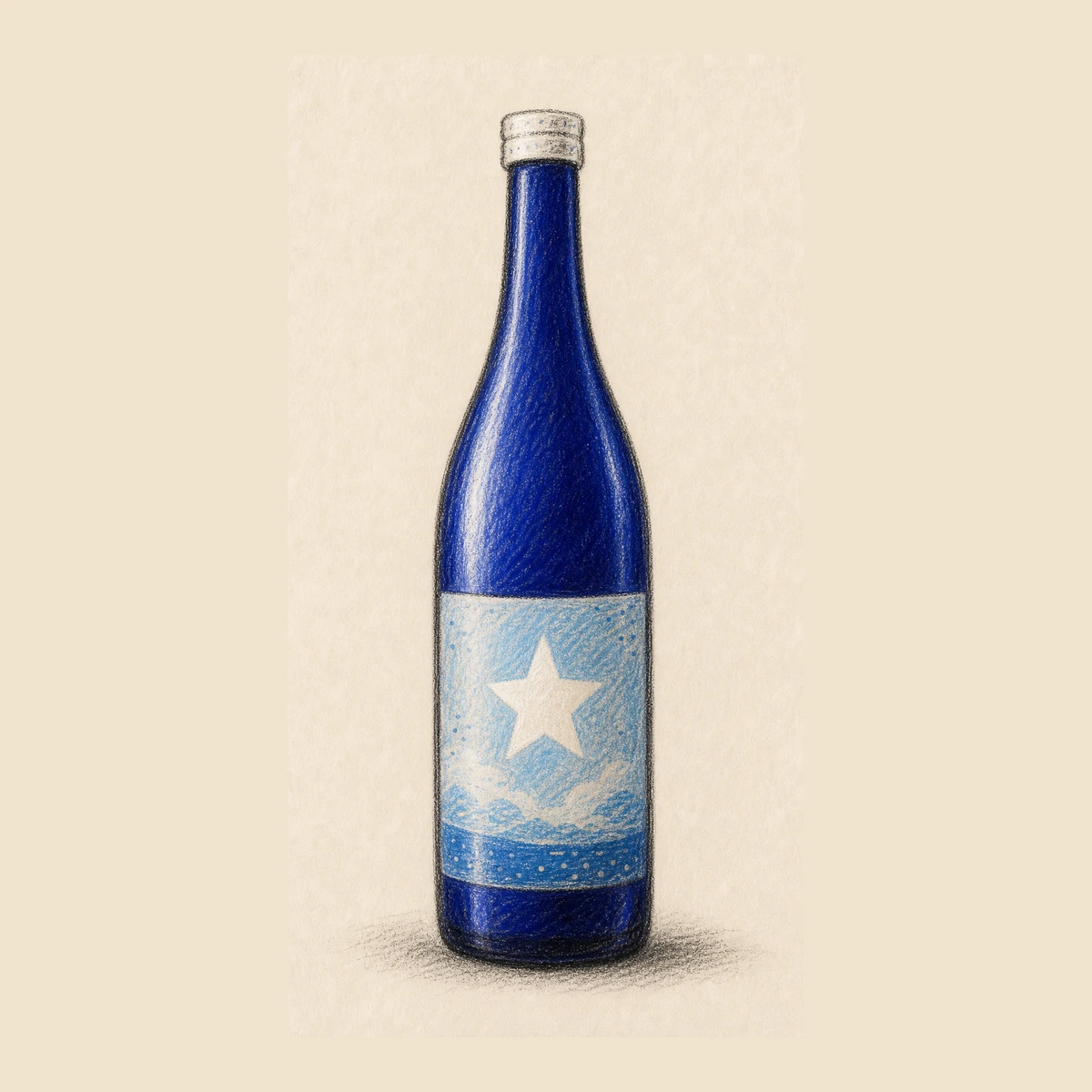
SORABOSHI Umeshu
Umeshu built on Kenjo’s own honkaku shochu, blended with a lactic drink for an opaque, silky expression of sweet and tart plum.
Honkaku-shochu-based umeshu
A white umeshu shaped by two distinct layers
Kenjo begins with umeshu based on its own honkaku shochu, then blends in a lactic drink at a proprietary ratio. The result is deliberately opaque, with a smooth texture that is central to the product’s identity.
A base of house-made honkaku shochu
Kenjo uses its own honkaku shochu as the foundation for the umeshu, giving the soft plum character a clear underlying structure.
A proprietary lactic-drink blend
The lactic component softens the plum’s sweet-tart profile and gives the liqueur its distinctive white colour and creamy texture.
Shake well to restore its smooth texture
Natural settling or separation may occur. A thorough shake before pouring brings the texture back together; this is part of the product’s composition, not a quality fault.
Sweet-tart plum with a gentle lactic lift
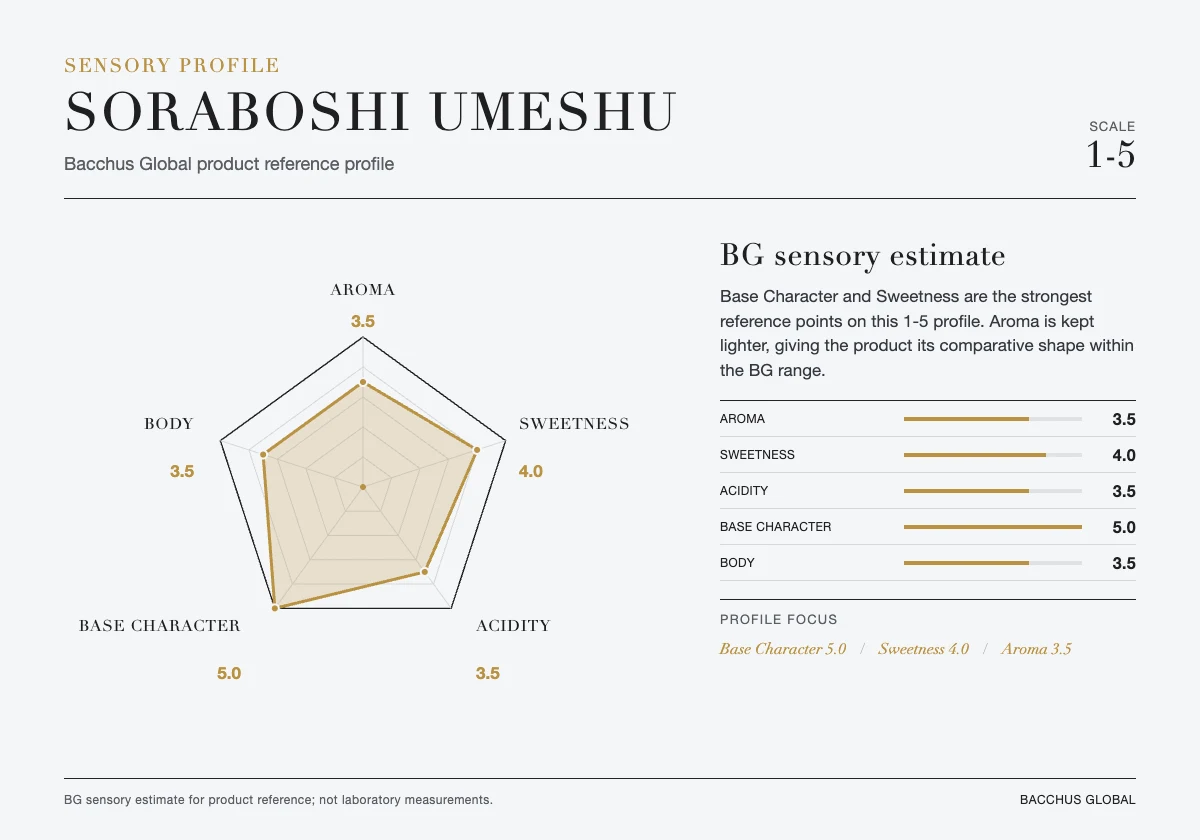
Soft plum aromas meet a fresh lactic note and a faint, natural almond-like nuance. The palate is silky and gently nostalgic, while bright acidity keeps the finish defined rather than heavy.
The gentleness of lactic notes and plum’s sweet-tartness overlapping a nostalgic flavour memory
The food affinities for SORABOSHI are not combinations officially presented by the producer, but a reading drawn from the characteristics recorded on this page. Built around its white, silky texture created by blending a lactic drink into umeshu based on house-made honkaku shochu, a faint almond-like nuance, and its light 8% body, they are organised into four directions.
These suggestions are a hypothesis built on structural cues drawn from food-pairing theory — layering similar textures and acidity, shared-aroma synergy, and matching textural gradation — and are not an official recommendation from the producer.
Kenjo in Tachiarai, Fukuoka
Kenjo began in 1983 with an effort to turn off-grade carrots into shochu rather than waste them. That resourceful approach still informs a portfolio spanning honkaku shochu and liqueurs. SORABOSHI continues the same spirit by using the company’s own shochu as the starting point for an unconventional umeshu.
Contact Bacchus Global for product documentation and trade information.