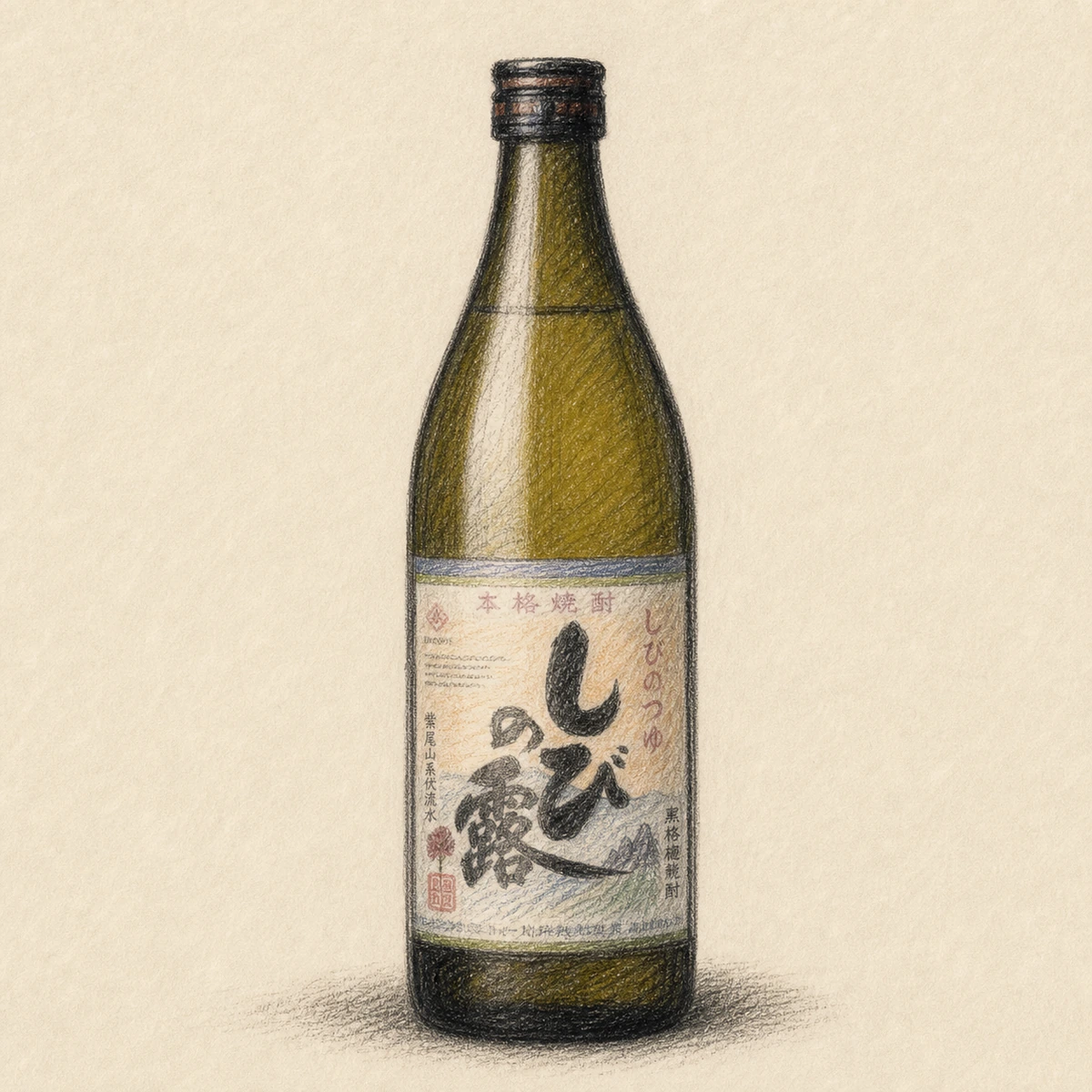
SHIBI no TSUYU
At the foot of Mount Shibi, Jikuya uses the mountain’s groundwater both to make and to adjust this white-koji sweet-potato shochu. Traditional single distillation and restrained filtration leave the work close to the material rather than over-refining it.
Thailand · Product information
Product information from Bacchus Global Co., Ltd., based in Bangkok, Thailand. About Bacchus Global
Sensory profile
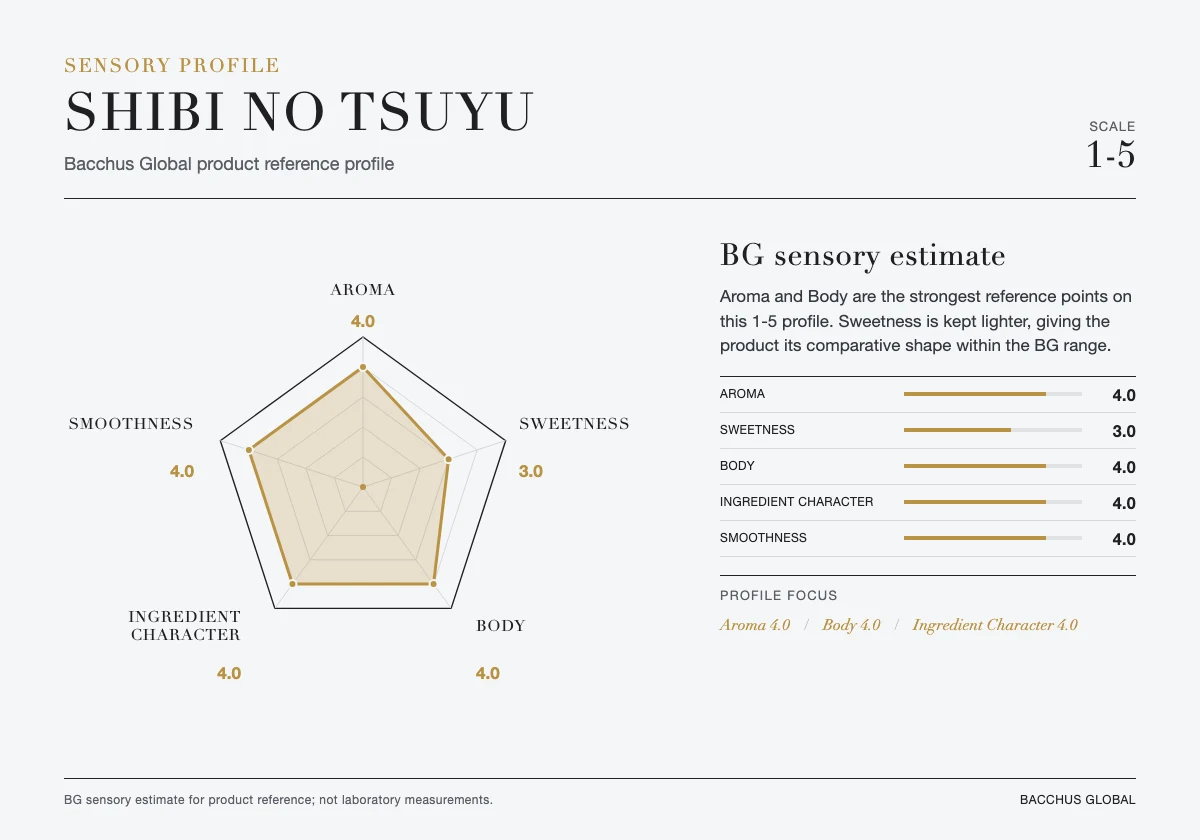
For both making and dilution
Jikuya draws groundwater from the Mount Shibi system, from 146 metres below ground, for both brewing water and dilution water. This shared source gives the making a clear local line from the beginning to the finished bottling.
White koji, traditional still, restrained filtration
SHIBI no TSUYU is built from Kagoshima sweet potato and white rice koji. It is distilled in a traditional single still and filtered lightly, allowing the shochu to retain a fuller sweet-potato character while keeping the finish composed.
Question 1
What kind of spirit is it?
- Honkaku sweet-potato shochu
- Honkaku buckwheat shochu
- Liqueur
Read the answer and explanation
Correct answer: A — Honkaku sweet-potato shochu
The page identifies Kagoshima-grown sweet potato as the main ingredient.
Question 2
Which koji does the page list?
- Black barley koji
- White koji
- Yellow rice koji
Read the answer and explanation
Correct answer: B — White koji
The shochu is described as made with white koji.
Question 3
Where is Mount Shibi groundwater used?
- Only for printing labels
- Only for washing casks
- Both for the mash and for dilution
Read the answer and explanation
Correct answer: C — Both for the mash and for dilution
The same water source is used in making the mash and adjusting the spirit before bottling.
An unpolished character, held to a settled finish
These are not pairings the maker has presented, but readings drawn from the confirmed production facts on record. Starting from what this page states directly — white koji, an old-style single still, light filtration that keeps the ingredient’s own character, and a settled finish — four directions are set out below.
This pairing rationale draws on the following reference books: This page carries little specific description of aroma or taste, so the above is built only from the confirmed production facts — white koji, single distillation, the degree of filtration, the water source, and the ABV. Matching a quiet finish to a quiet dish follows the texture-and-temperature discussion in ロジカルペアリング (Logical Pairing), and the point that distilled spirits barely interfere with a dish’s five base tastes follows Chapter 4 of すし・和食のペアリング法則 (Pairing Principles for Sushi and Japanese Cuisine).
Satsuma, Kagoshima — Jikuya Distillery
Jikuya Distillery was founded in 1910 at the foot of Mount Shibi in Satsuma, Kagoshima. The small house uses the mountain’s groundwater for both brewing and dilution, and continues its white-koji-led approach under fourth-generation brewer Maiko Jikuya.
For current-lot specifications, availability, storage requirements and trade terms, please contact Bacchus Global.