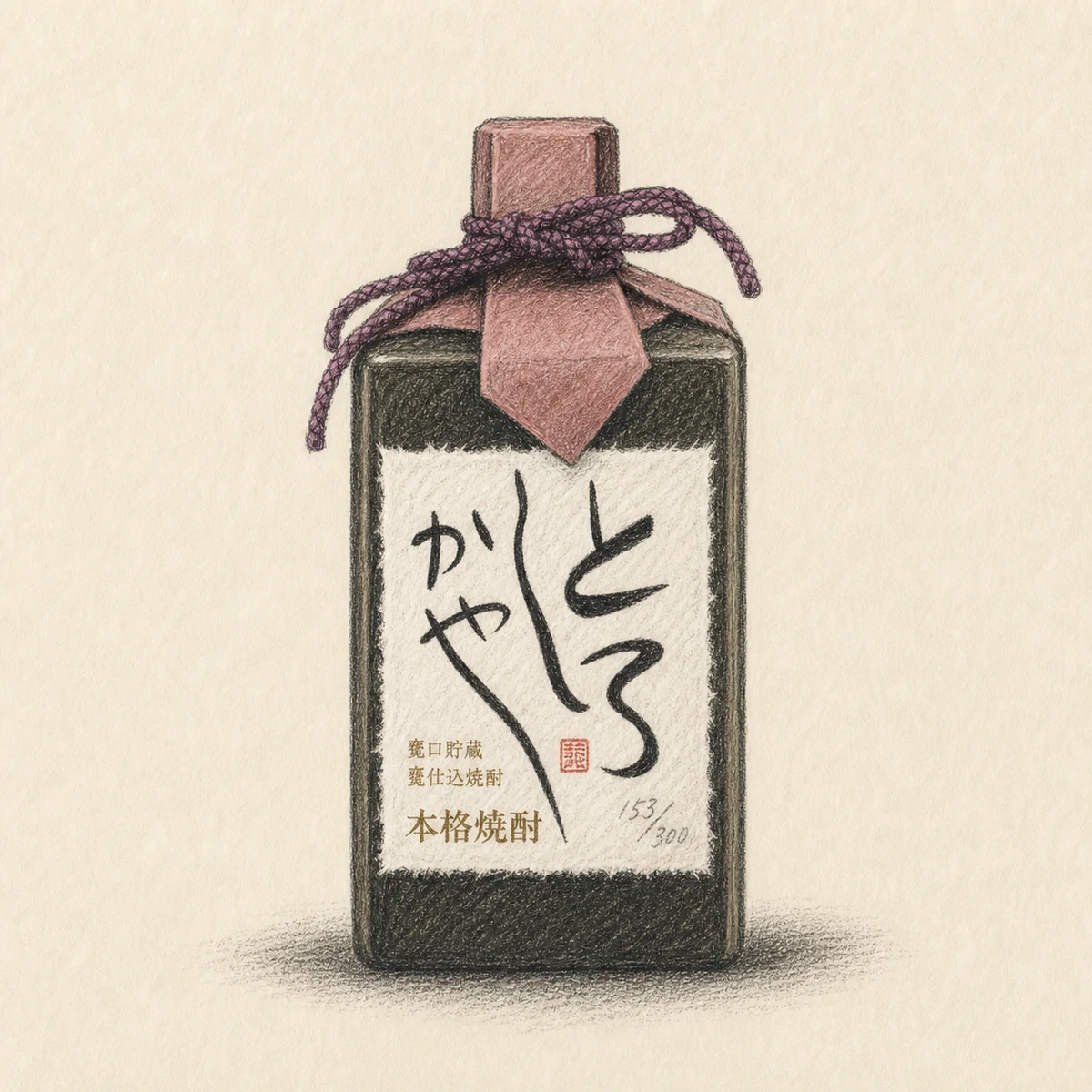
CHOKOSHU TOROSHIKAYA
Seventeen-year aged rice and barley spirits meet thirty-year aged rice spirit in a blend made entirely from old components. Released in an annual quantity of around 300 bottles, it is a study in how a very small allocation can hold a long chronology.
Thailand · Product information
Product information from Bacchus Global Co., Ltd., based in Bangkok, Thailand. About Bacchus Global
Seventeen years beside thirty
CHOKOSHU TOROSHIKAYA is blended from seventeen-year aged rice and barley spirits and thirty-year aged rice spirit. The bottle contains no new spirit. Its small annual allocation of around 300 bottles makes the extended maturation central, rather than incidental.
Precision over borrowed claims
This release brings together long-aged rice and barley spirits, extended cask maturation and a carefully limited annual production.
Question 1
Which two ageing periods are combined?
- 17 and 30 years
- 3 and 5 years
- 8 and 11 years
Read the answer and explanation
Correct answer: A — 17 and 30 years
Answer: 17 and 30 years. The linked section gives the source detail.
Question 2
Does the blend include any new spirit?
- Half is new spirit
- No new spirit is included
- New spirit is always included depending on the year
Read the answer and explanation
Correct answer: B — No new spirit is included
Answer: No new spirit is included. The linked section gives the source detail.
Question 3
What does the page say is undisclosed?
- The ageing periods
- The spirit types
- The ratio of rice to barley
Read the answer and explanation
Correct answer: C — The ratio of rice to barley
Answer: The ratio of rice to barley. The linked section gives the source detail.
A concentrated bottle, layered further
The record for this bottle shows a blend of a seventeen-year rice-and-barley koshu and a thirty-year rice koshu, with no new spirit added, released at roughly three hundred bottles a year. Its ABV is 40%, the highest among the four Rokuchoshi bottles covered here. The page does not state a specific aroma as a confirmed fact, so no aroma note is claimed here. Instead, the four directions below are built around the recorded quality of “concentration” as texture, not aroma. These are not pairings the maker has stated officially; they are a reading of the recorded characteristics.
In approaches that match the weight of a dish to a drink, dishes concentrated through long cooking, or finished with smoke, are said to find balance next to a similarly concentrated spirit. This bottle’s structure — two long periods of aging, seventeen and thirty years, brought together — was used here as the measure for building these directions around concentration. The basis is the recorded quality of “concentration” as texture, not aroma.
Nishiki, Kuma, Kumamoto — Rokuchoshi Distillery
Rokuchoshi Distillery was founded in 1923 in Nishiki, Kuma, Kumamoto. Its expressions begin with the rice-distilling culture protected by the Kuma GI, and its cask programme asks how time can deepen that foundation without obscuring it.
For current-lot specifications, availability, storage requirements and trade terms, please contact Bacchus Global.