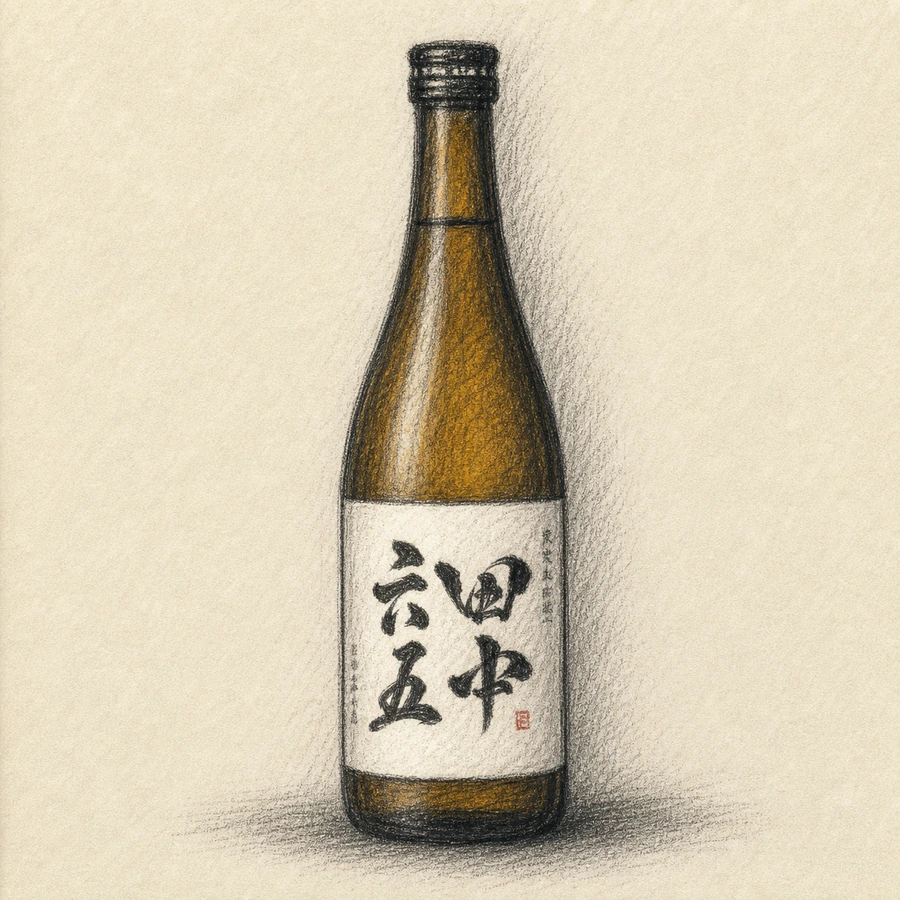
TANAKA ROKUJUGO
Itoshima-grown Yamada Nishiki and Shiraito Falls water, pressed by hane-gi across the brewery’s full output — Shiraito Shuzo’s standard junmai.

A defined expression of the range
TANAKA ROKUJUGO is made from 100% Yamada Nishiki grown in the rice paddies surrounding the brewery in Itoshima, polished to 65%. The brewing water is underground water connected to the scenic Shiraito Falls.
Pressing uses the traditional hane-gi method — the weight of oak beams and stone, applied gradually over time rather than all at once, preserving the rice’s umami while shaping a clean, precise structure. Without leaning toward showiness, this is Shiraito Shuzo’s standard: a sake built to sit quietly alongside the table.
How it tastes
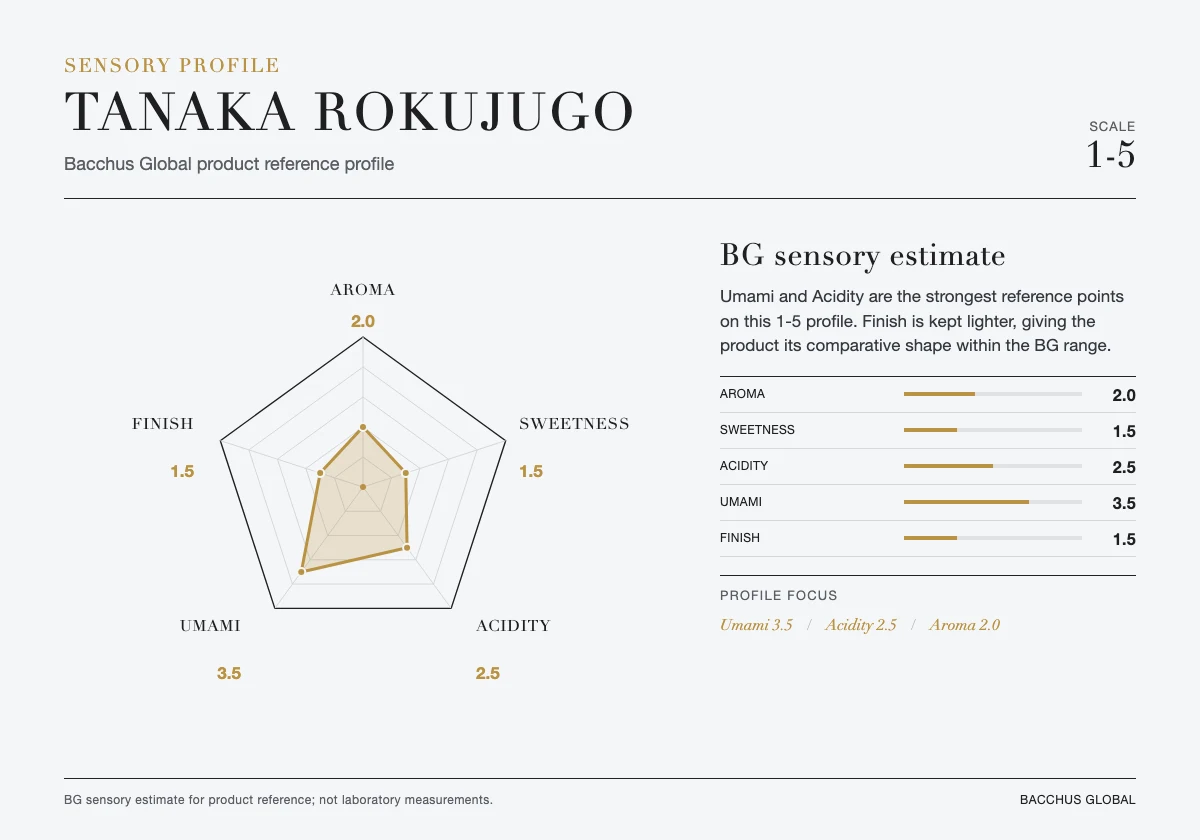
A gentle aroma recalls freshly cooked rice and koji, with a restrained note of banana. Rice umami and acidity spread in easy balance on the palate, with a light bitterness giving it definition; the texture is soft, and the finish cuts clean and precise, without lingering over the food it’s paired with.
The rice and koji aroma stays gentle through a clean, precise finish.
TANAKA ROKUJUGO · Shiraito Shuzo · Fukuoka
Shiraito Shuzo was founded in 1855 in Itoshima City, Fukuoka Prefecture. Built around Itoshima-grown Yamada Nishiki and underground water from Shiraito Falls, every sake the brewery makes is finished using the traditional hane-gi press.
Eighth-generation head Katsunori Tanaka trained at Gochoda Shuzo in Saga and returned home in 2009. The name Tanaka reflects the brewery’s setting amid rice paddies (ta, “paddy field”; naka, “in the middle of”); Rokujugo, “65,” was chosen by taking one point off the 66% polish of Azuma Ichi, the sake his teacher brewed — a quiet tribute. Rather than compete on variety, this bottle reflects Tanaka’s “NormCore” philosophy: refining a standard that doesn’t change over time.
A steel-wire cut that carries fat and umami
The brewery has not stated an official food pairing for this sake. Here we set out four directions drawn from its confirmed structure: the steel-wire-like cut and the firm umami and acidity produced by hane-gi lever pressing and a 65% rice-polishing ratio.
This pairing rationale draws on the following reference book: Motohiro Ogoshi’s Logical Pairing notes that adding acidity to the umami-and-salt balance typical of Japanese cuisine can create a new kind of harmony. This sake’s firm acidity and umami work with a dish in the same way.
Related products
Compare a closely related expression, a contrasting bottle and a reference from the same range.
Interested in listing TANAKA ROKUJUGO at your restaurant or retail venue? Our team can provide information on availability, storage requirements and trade terms.