

Pressed Before Time: The 30-Year Journey of Gengai
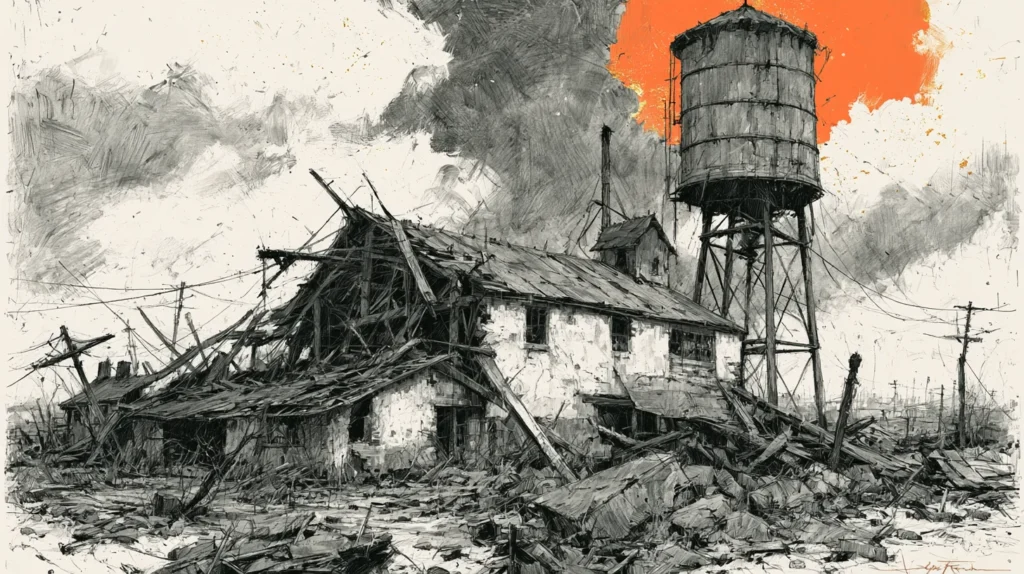
On the morning of January 17, 1995, the Great Hanshin-Awaji Earthquake devastated Kobe. Among the breweries reduced to rubble was Sawanotsuru, a sake maker that had been brewing in the Nada Gogo region since the Edo period. Amid the destruction, however, one fermentation tank remained standing. Gengai, produced by SAKE HUNDRED, traces its origins to that lone surviving tank.
Pressed at a Stage When It Never Should Have Been
In sake brewing, there is a stage that is never meant to be pressed. It is the shubo, or yeast starter—the foundation that drives fermentation. Made from steamed rice, koji, and water, this stage exists solely to cultivate the microorganisms needed for brewing. Under normal circumstances, no sake is extracted from it.
But when the earthquake destroyed the brewery’s equipment, there was no longer any way to complete the brewing process. The only option left was to press the yeast starter exactly as it was.
It was not how sake was supposed to be made. It was an unavoidable decision by brewers who had lost their brewery but refused to let the last remaining batch go to waste.
Acidity That Became Its Backbone
The resulting sake was unlike anything considered typical. It registered a sake meter value of –30 and an acidity of 5.1—far outside the usual range. Its intense acidity and extraordinary richness initially made it unsuitable for commercial release.
Ironically, those very qualities would later prove to be its greatest strength. According to the brewery, the unusually high acidity and abundant extract gave the sake the structure needed to withstand decades of aging.
The sake remained in its original tank at the brewery in Kobe, aging at room temperature. More than twenty-five years passed, and now over thirty. Over time, the sharp acidity softened, and the liquid gradually turned a deep amber.
Its official tasting notes describe layered aromas reminiscent of caramel, dark chocolate, dried fruits, cinnamon, and clove. In the way it was born from an unexpected accident and later came to be celebrated, its story recalls the origins of noble rot wines and ice wines.
Resonance Across the World of Fine Wine
Eventually, its distinctive character earned acclaim well outside traditional sake circles.
Richard Geoffroy, former Chef de Cave of the prestigious Champagne house Dom Pérignon, described Gengai in an official feature, noting that despite its profound maturity, the sake is defined by a delicate balance of lactic acidity, gentle sweetness, and mineral character.
This cross-cultural resonance is further reflected in international competitions dedicated to aged beverages. Gengai earned a Gold Award at France’s Kura Master in 2022, evaluated by leading French sommeliers. It achieved further honors at the International Wine Challenge (IWC), receiving a Gold Medal in 2024 and a Silver Medal in 2026 within the aged sake category.
The sake born in the year of the earthquake has, three decades later, become an internationally acclaimed expression of aged Japanese sake.
The Philosophy within the Name
The name Gengai translates to “beyond reality.”
It is released by Clear Inc., the company behind the luxury sake brand SAKE HUNDRED. Its vintage remains forever 1995. Only its aging continues, growing deeper with each passing year.
While its name speaks of a realm outside the ordinary, its beginning was rooted entirely in reality itself: a brewery in ruins, a single tank left standing, and the people who chose not to abandon it.
More than thirty years have passed. Time transformed the sake born on that morning into something no one could have imagined.
This article is intended solely to explore the brewing history and cultural heritage of Sawanotsuru Brewery and the “SAKE HUNDRED GENGAI” brand, and does not aim to promote or encourage the consumption of alcohol. / บทความนี้จัดทำขึ้นเพื่อนำเสนอข้อมูลเกี่ยวกับประวัติการผลิตและมรดกทางวัฒนธรรมของโรงสาเก Sawanotsuru และแบรนด์ “SAKE HUNDRED GENGAI” เท่านั้น มิได้มีเจตนาเพื่อส่งเสริมหรือโฆษณาเครื่องดื่มแอลกอฮอล์ สำหรับผู้มีอายุ 20 ปีขึ้นไป โปรดดื่มอย่างรับผิดชอบ
Related Articles
“The Philosophy of Bespoke” / “A Sake-Brewing Craft That Turns Amber in a Snow Cellar” / “Time as an Ingredient” / “Will Aged Sake Unveil a New Dimension of Japanese Sake in 2026?” / “Connecting Expertise Without Owning a Brewery”
Related Product(s)
SAKE HUNDRED GENGAI / SAKE HUNDRED RAIHI
Discover the culture behind every bottle
We share brewery stories, tasting notes and the craft of koji & fermentation — for educational and cultural purposes only.
เราถ่ายทอดเรื่องราวจากผู้ผลิต บันทึกรสชาติ และศาสตร์แห่งโคจิและการหมัก — เพื่อการศึกษาและวัฒนธรรมเท่านั้น