Drink
Three meters underground in the tropics
Thai single malt and Japanese whisky
How does place shape whisky-making?
In 1923, construction began on Yamazaki, Japan’s first malt whisky distillery. Suntory describes founder Shinjiro Torii as drawing on Scotch whisky-making while choosing a site with terrain and climate different from Scotland’s.
A century later, the Prakaan distillery in Thailand offers another example of how a local climate can inform decisions about whisky-making.
Prakaan at the World Whiskies Awards
Prakaan Select Cask, a single malt from Prakaan Distillery in Kamphaeng Phet Province, Thailand, was named a Category Winner in the Thai Single Malt, No Age Statement class at the World Whiskies Awards in both 2025 and 2026. The competition’s taste judging uses blind tastings.
Select Cask is part of the Tribura Series, whose name draws on the three layers of Kamphaeng Phet’s historic fortifications. The Japanese distributor describes pineapple and honey notes in Select Cask.
Maturation in a tropical climate
Temperature and humidity influence what happens in the cask during maturation. Suntory cites variation in these conditions at Yamazaki as one feature of its approach to ageing whisky.
In a warm, humid climate, evaporation is one variable to account for. Distillers call the portion lost from a cask through evaporation the angel’s share. The amount depends on conditions such as temperature and humidity.
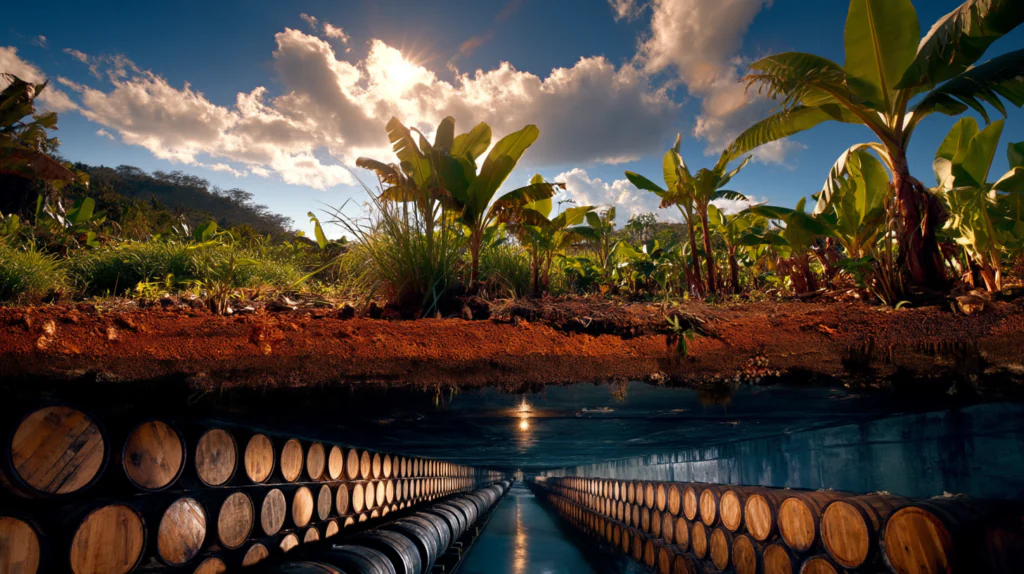
Prakaan uses underground warehouses to manage maturation in the warm, humid climate. According to its Japanese distributor, Sanyo Bussan, the warehouses are set about three metres below ground, with earth banked along the walls.
Prakaan takes its name from a Thai word for a defensive wall or fortification, a reference to the historic wall that once surrounded Kamphaeng Phet.
What an age statement tells us
The World Whiskies Awards lists Prakaan Select Cask as No Age Statement, or NAS. The label does not state the number of years the whisky spent maturing.
The years spent in cask describe elapsed time. Comparing maturation across climates also requires information about the cask and the storage conditions.
Japanese producers also bottle whiskies without an age statement. Nikka, for example, lists Yoichi and Miyagikyo single malts both with and without a stated age.
A Bangkok perspective
For Bangkok’s hospitality sector, the Thai and Japanese examples offer a way to discuss how a spirit is made, from the production site to the conditions in which it matures.
Yamazaki and Prakaan illustrate two responses to local conditions. Suntory points to temperature and humidity variation at Yamazaki, while Prakaan uses underground warehouses to manage maturation in a warm, humid setting.
In Japan, the Japan Spirits & Liqueurs Makers Association established voluntary standards for the use of “Japanese whisky” in 2021. These standards set conditions for its production and labeling.
Warehouse conditions, cask choices and the terms on a label each tell a different part of the story of whisky made in Asia. (Mr. Bacchus)
This article explores the distilling techniques and cultural background of Prakaan Distillery and the Prakaan brand. It is intended for readers aged 20 and over and does not promote alcoholic beverages or encourage their consumption. Please drink responsibly.
Discover the culture behind every bottle
We share brewery stories, tasting notes and the craft of koji & fermentation | for educational and cultural purposes only.
เราถ่ายทอดเรื่องราวจากผู้ผลิต บันทึกรสชาติ และศาสตร์แห่งโคจิและการหมัก | เพื่อการศึกษาและวัฒนธรรมเท่านั้น
Follow on Instagram FacebookRelated Articles
“The Quiet Dedication Behind Ichiro’s Malt Double Distilleries” / “Preserving 400 Casks” / “From 27 to Over 140” / “Defining “Authentic Japanese Whisky””