Drink
From 27 to Over 140
The “Second Generation” of Japanese Whisky Is Quietly Filling Casks Across Japan
In 2021, when the Japan Spirits & Liqueurs Makers Association (JSLMA) announced its voluntary standards for Japanese whisky, there were roughly 27 operating distilleries in the country. Just five years later, in 2026, that number has surpassed 140. This rapid proliferation is exceptional by global standards. Yet, this figure does not signify a mere “bubble.” Rather, it signals a quiet tectonic shift unfolding across Japan, as distillers in diverse regions seek to capture the distinct character of their land and their own philosophies within casks.
A New Map Drawn by the 2021 Standards
The voluntary standards enacted in 2021 marked the first time a formal definition of Japanese whisky was clearly articulated. It must use water sourced in Japan, be saccharified, fermented, and distilled domestically, and be aged in wooden casks for at least three years. While these requirements might initially appear as barriers to entry, they ultimately provided clarity. By delineating the exact conditions required to label a product as Japanese whisky, the standards offered a precise “map” for new artisans. This clarity helped accelerate participation from industries previously unassociated with whisky making.
From Sake Breweries, Foundry Towns, and Electronics Manufacturers
Among this second generation of distilleries are many ventures from sectors with no prior connection to whisky. A notable example is Hakkaisan Brewery, a distinguished sake producer from Minamiuonuma, Niigata, now advancing whisky production in both Niigata and Hokkaido. Founded in 1922 and renowned for its sake “Hakkaisan,” the company established the Fukazawahara Distillery in 2005, where it began producing rice-based grain whisky alongside rice shochu. Then in 2021, it opened the Niseko Distillery in Hokkaido, now in full operation.
In Niigata, their Uonuma whisky aims to reflect the region’s famed spring water|“Raiden-sama no Shimizu” from Mount Hakkai|along with over a century of expertise in fermentation and distillation, expressed as rice-derived grain spirit. In Hokkaido, the Niseko Distillery utilizes ultra-soft water from the Mount Yotei watershed and the region’s cool climate, operating pot stills crafted by Forsyths of Scotland as it quietly continues to produce single malt. Bottlings from both sites have yet to make a major appearance on the market. The spirit rests silently in casks, in a period of quiet maturation before its debut on the world stage. Still, the very act of a sake brewery extending over a century of working with rice and water into the time-bound craft of whisky aging vividly outlines the narrative of this second generation.
Another remarkable case is the Saburomaru Distillery in Toyama Prefecture, a rare distillery that restarted its whisky-making operations in 2017 after originally beginning in 1952. Its cast-metal pot still “ZEMON,” developed using the foundry techniques of Takaoka|a city celebrated for metal casting|is one of a kind in the world, born from a profound connection with local industry. Even more unconventional is the Yoshida Denzai Distillery, operated by an electronics manufacturer. It is Japan’s first distillery dedicated exclusively to craft grain whisky, specializing in small-batch production using 100% Hokkaido-grown corn. By focusing solely on grain whisky|the foundational element of blended whisky|it adopts a sophisticated strategy informed by a deep understanding of Scotland’s industrial heritage.
Chichibu Proved the Value of Ten Years
At the origin of this wave stands the Chichibu Distillery. Founded in 2007 in Chichibu City, Saitama Prefecture, by Ichiro Akuto, the distillery began with small-scale batches of just a few hundred liters. As of 2026, each release of its 10-year-aged single malt naturally draws the attention of collectors worldwide. Chichibu illuminated a crucial truth: crafting world-class whisky does not rely solely on the immense scale of major producers, but rather on the intricate harmony between local climate and the distiller’s unique vision.
Located about 100 kilometers northwest of Tokyo, the Chichibu Basin experiences significant temperature differences between summer and winter. These fluctuations naturally accelerate the maturation process compared to Scotland. What might have been considered a challenge was instead transformed into a defining characteristic.
This quiet success has instilled deep confidence in subsequent distillers|that they, too, can create whisky firmly rooted in their own terroir. Komoro Distillery in Komoro City, Nagano Prefecture, is scheduled to begin bottle sales by the end of 2026, drawing industry anticipation regarding how its high-altitude environment, at 800 meters above sea level, will shape the character of its spirit.
Time in the Cask Never Stops
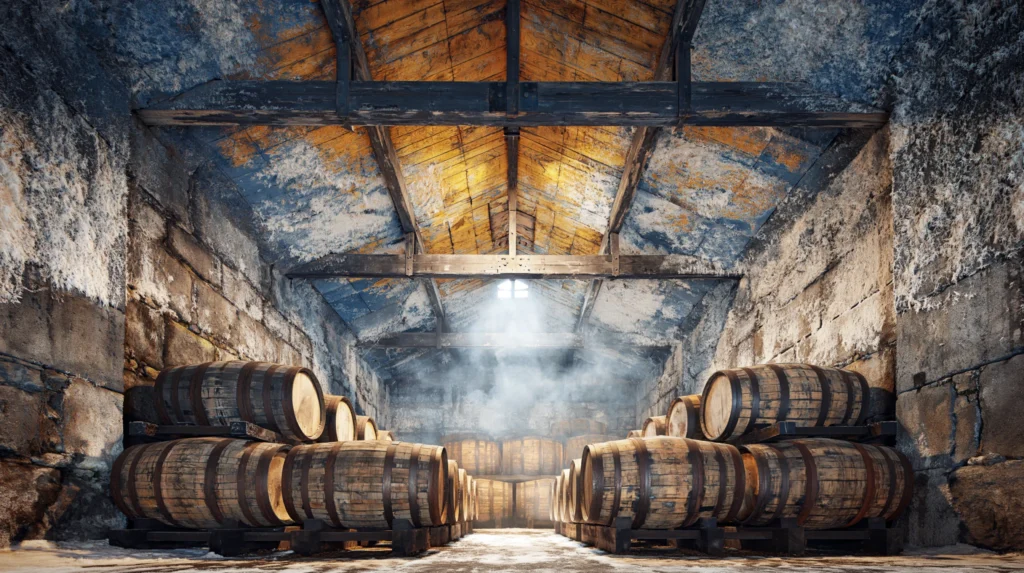
Of the more than 140 distilleries now in operation, only a fraction have reached the stage where they can bottle their own matured whisky. In many cases, the spirit they have produced lies quietly aging in casks. What we are witnessing in 2026 is not the culmination, but the beginning. Whisky is never truly complete at the moment of distillation. It is only after years resting in the cask that the essence of the terroir and the quiet dedication of the maker are fully realized in liquid form.
In March 2026, the “Japanese Craft Whisky Festa 2026,” held in Ebisu, Tokyo, attracted not only whisky enthusiasts but also admirers of sake and shochu, alongside bartenders and restaurateurs. The second generation of Japanese whisky is naturally expanding beyond traditional audiences, gracefully interweaving with Japan’s broader culinary and drinking culture.
When a glass of Japanese whisky is served at a bar overseas, beyond the rim of that glass lives the spring water of Uonuma, the cool air of Niseko, the pulse of Takaoka’s metal casting, the dramatic temperature shifts of the Chichibu Basin, and the philosophies of more than a hundred distilleries|many still undiscovered|each breathing within their own casks of time. From 27 to over 140: behind this number lie more than 140 distinct artisans, each deeply rooted in their land and guided by an unwavering philosophy. (Mr. Bacchus)
This article is intended solely to explore the distillation techniques and cultural heritage of the second-generation Japanese craft whisky distilleries, and does not aim to promote or encourage the consumption of alcohol. / บทความนี้จัดทำขึ้นเพื่อนำเสนอข้อมูลเกี่ยวกับเทคนิคการกลั่นและมรดกทางวัฒนธรรมของโรงกลั่นวิสกี้คราฟต์ญี่ปุ่นรุ่นที่สองเท่านั้น มิได้มีเจตนาเพื่อส่งเสริมหรือโฆษณาเครื่องดื่มแอลกอฮอล์ สำหรับผู้มีอายุ 20 ปีขึ้นไป โปรดดื่มอย่างรับผิดชอบ
Discover the culture behind every bottle
We share brewery stories, tasting notes and the craft of koji & fermentation | for educational and cultural purposes only.
เราถ่ายทอดเรื่องราวจากผู้ผลิต บันทึกรสชาติ และศาสตร์แห่งโคจิและการหมัก | เพื่อการศึกษาและวัฒนธรรมเท่านั้น
Follow on Instagram FacebookRelated Articles
“The Quiet Dedication Behind Ichiro’s Malt Double Distilleries” / “Preserving 400 Casks” / “Three meters underground in the tropics” / “Defining “Authentic Japanese Whisky”” / “Three Hurdles a Bottle of Whisky Must Clear Before It Reaches Bangkok”