Stories Behind the Bottle
Patrick Baudouin: The Long Return to Chenin
In 1990, Patrick Baudouin returned to Anjou. What awaited him was not a finished estate.
There was an old family cellar, a few rented vines still in production, and hillside parcels that had become overgrown. Rebuilding would take more than reopening a door. It would require deciding what the estate should no longer do—and, eventually, what it should become.
What Remained in 1990
The family story had begun around 1920, when Baudouin’s great-grandparents, Maria Juby and Louis Juby, inherited vineyard slopes at Les Bruandières and established an estate.
Patrick Baudouin did not move directly into that inheritance. Before returning, he spent twelve years in factory work and a period selling books in Paris. When he came back in 1990, he used the old cellar, the remaining vines and the neglected slopes as the basis of a refounded domaine.
The important inheritance was not scale. It was the chance to begin again in the same place.
Rebuilding by Subtraction
The rebuilding proceeded through a series of limits.
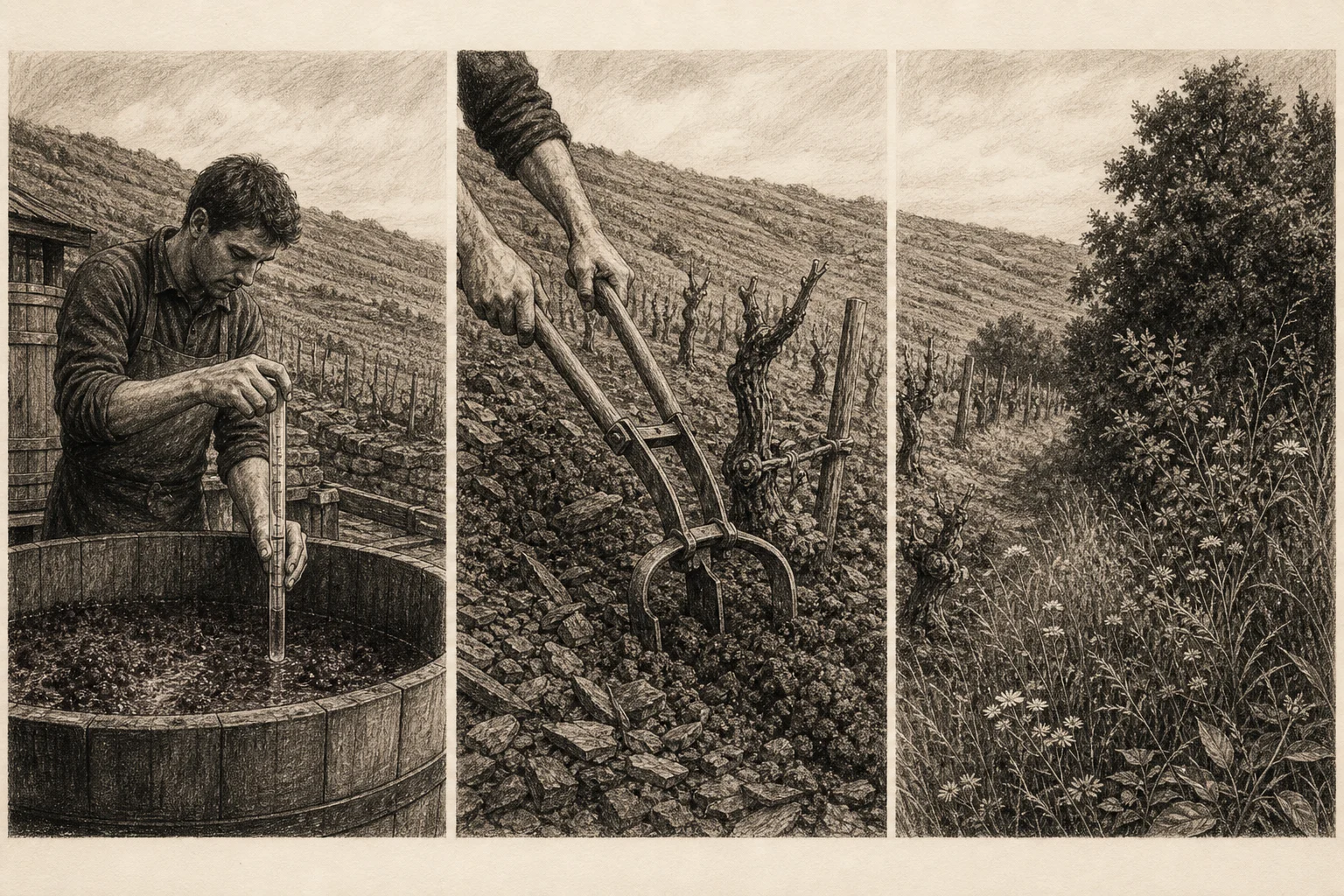
In 1994, Baudouin stopped chaptalisation, the addition of sugar before or during fermentation to raise potential alcohol. In 1997, the estate resumed working its soils and began withdrawing from herbicides. Synthetic pesticides were stopped in 2001, and organic certification followed.
Each decision removed a tool that could make vineyard or cellar work easier to control. Together, they shifted attention back to the condition of the vines, the dark schist-based soils of Anjou Noir and the differences among hillside sites.
This was not a return to an untouched past. It was a modern programme of choosing which interventions the estate would accept.
Chenin Became More Than a Variety
For Baudouin, rebuilding the domaine and defending Chenin became connected work.
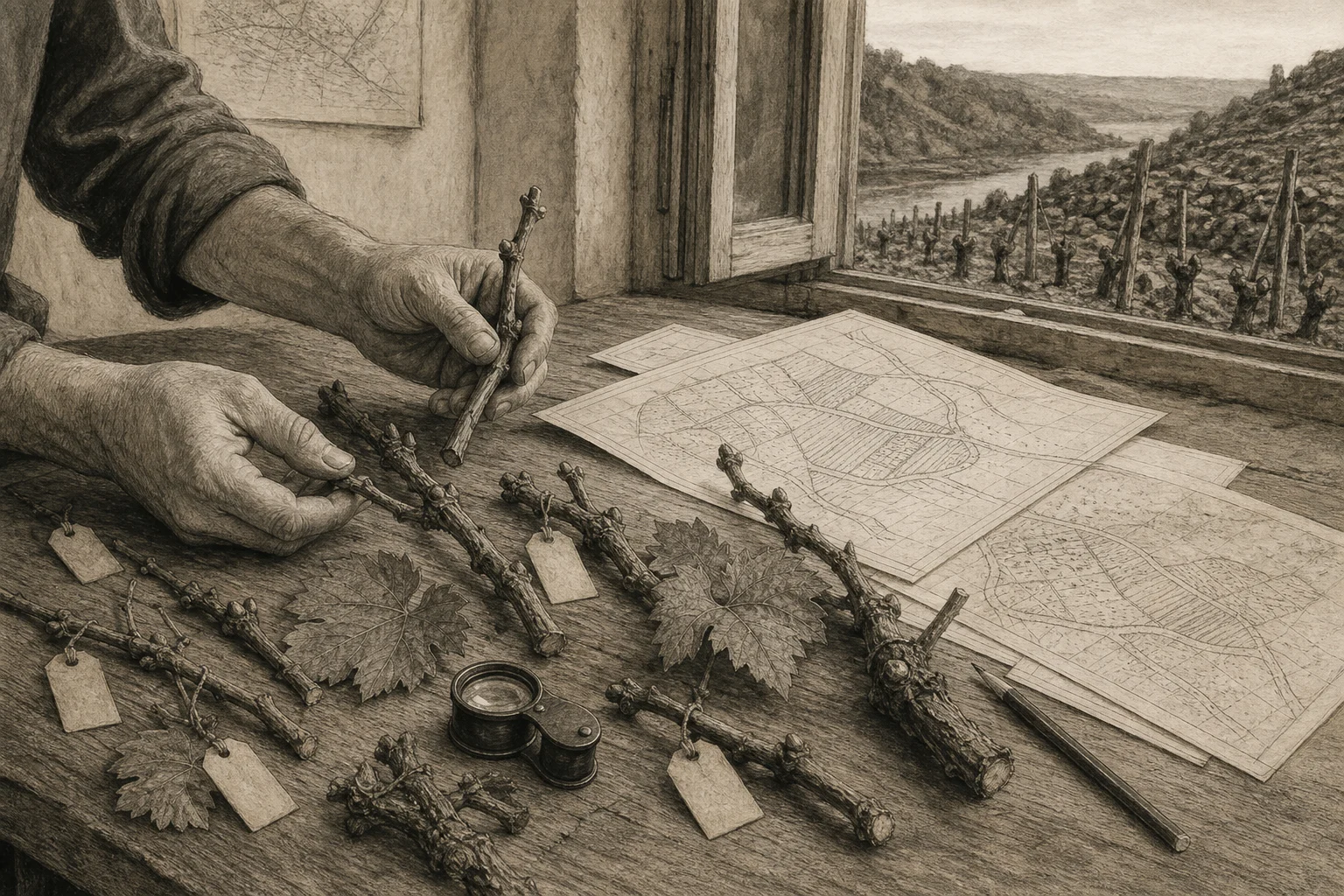
The estate undertook long-term study of Chenin, developed massal selections from existing vines and supported a conservatory for the variety. Beyond the domaine, Baudouin helped create spaces where growers and researchers could compare experience, including the 2015 Chenin study day and the organisations that followed it, Académie du Chenin and Fan de Chenin.
By 2022, the producing estate had become exclusively Chenin. At the 2026 handover, it comprised twelve hectares across Anjou, Coteaux du Layon, Quarts de Chaume and Savennières.
The narrowing of the vineyard was also an expansion of purpose: one variety, studied across several places and forms.
Two Bottles, Two Chapters

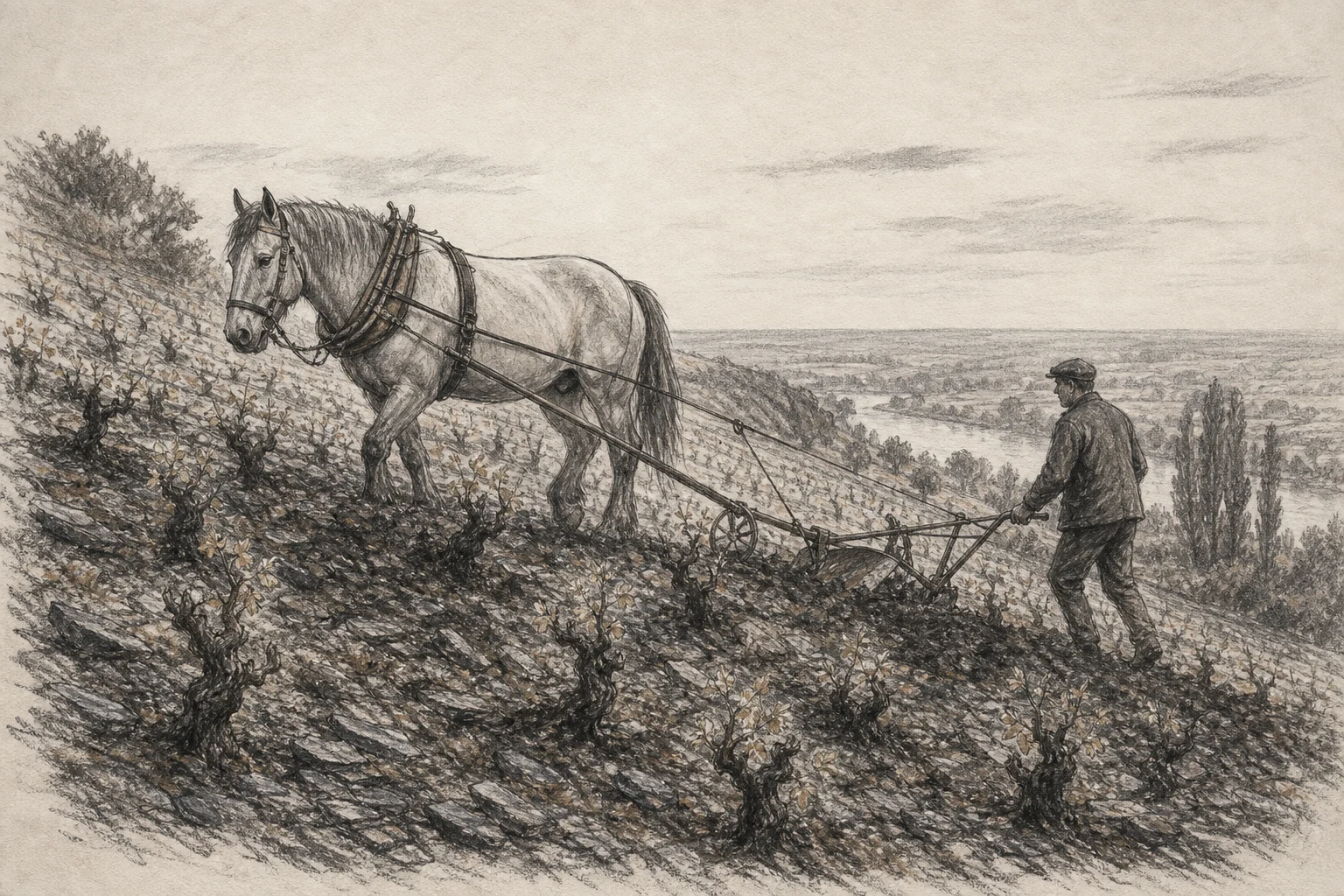
Le Cornillard 2020 belongs to the Chenin-centred chapter. The producer records a 1.92-hectare, southeast-facing parcel on old schist, planted with vines averaging 50 to 70 years. The parcel has been worked by horse since autumn 2016. The vintage produced 4,600 bottles.
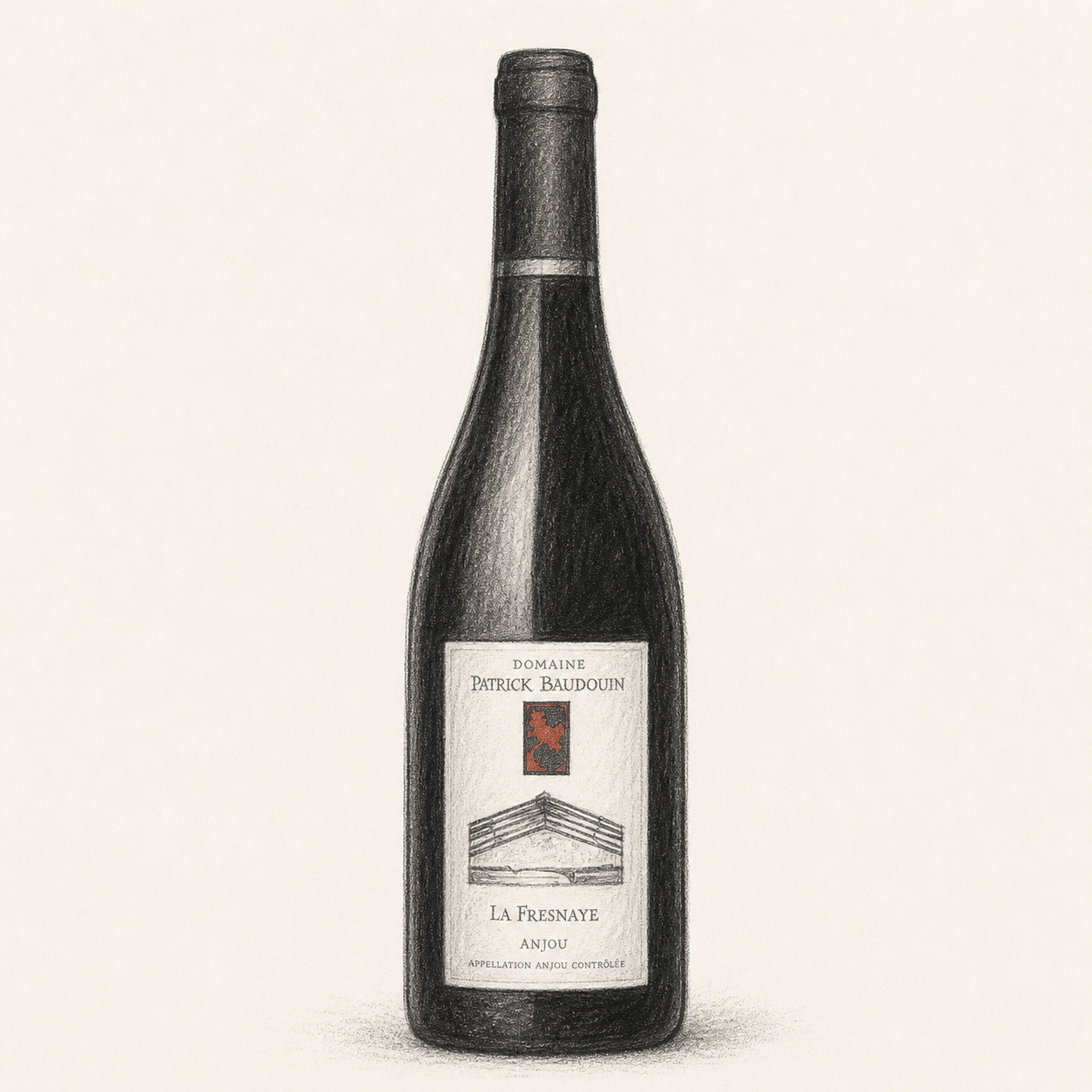
La Fresnaye Rouge 2019 records an earlier chapter. It was made from Cabernet Franc from a one-hectare parcel with vines averaging 60 years, on old schist crossed by a narrow band of Devonian limestone. The vintage produced 2,525 bottles.
Placed together, the two bottles do not describe the same present portfolio. They show the direction of change: a domaine that once included red varieties and later concentrated its producing vineyard entirely on Chenin.
The Return Became a Handover
In February 2026, at the age of 74, Patrick Baudouin transferred the estate to Anatole de La Brosse.
The domaine is keeping the Patrick Baudouin name. The existing team is expected to continue the work, while Baudouin remains involved during the transition. Announced plans include investment in the cellar and renewed planting on hillside parcels.
The long return that began in 1990 therefore does not end with ownership held indefinitely. It ends with another deliberate limit: choosing how the work can continue without erasing the path that made it possible.
This article presents the history, production decisions and cultural context of Domaine Patrick Baudouin for educational purposes. It is not intended to advertise alcoholic beverages or encourage their purchase or consumption. It is intended for readers aged 20 and over.
บทความนี้นำเสนอประวัติ แนวคิดด้านการผลิต และบริบททางวัฒนธรรมของ Domaine Patrick Baudouin เพื่อการศึกษาเท่านั้น มิได้มีวัตถุประสงค์เพื่อโฆษณา หรือส่งเสริมการซื้อหรือการบริโภคเครื่องดื่มแอลกอฮอล์ บทความนี้จัดทำขึ้นสำหรับผู้อ่านอายุ 20 ปีขึ้นไป
Discover the culture behind every bottle
We share brewery stories, tasting notes and the craft of koji & fermentation — for educational and cultural purposes only.
เราถ่ายทอดเรื่องราวจากผู้ผลิต บันทึกรสชาติ และศาสตร์แห่งโคจิและการหมัก — เพื่อการศึกษาและวัฒนธรรมเท่านั้น
Follow on Instagram Facebook