
Drink
When a Brewery’s Work Extends to the Rice Fields | Shichiken and Sake’s Move Toward a “Domaine” Model
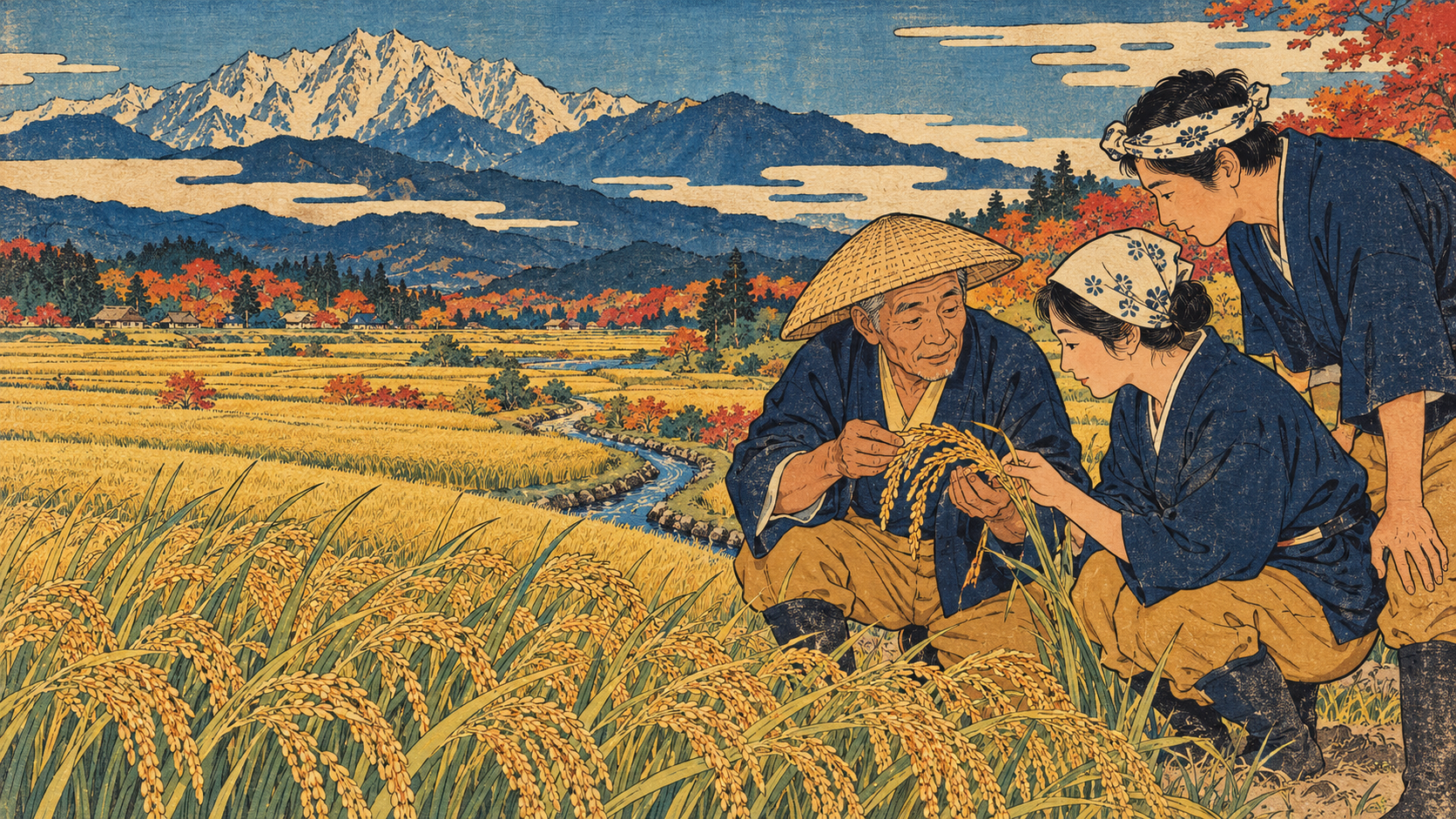
Rice appears on a sake’s list of ingredients. Trace who grew that rice, and the brewery’s work begins to look different. Beyond selecting and purchasing rice, some breweries manage fields and harvest the crop, taking part in sake production from that stage onward.
This movement is described as sake’s shift toward a “domaine” model, drawing a comparison with wine producers who both grow grapes and make wine. It involves more than adding a place name to a product: it means taking on the work of growing the raw ingredients there.
Local Knowledge Supporting Shichiken’s Rice Growing
Yamanashi Meijo, which brews Shichiken in Hokuto, Yamanashi Prefecture, is one example. According to an October 2026 report, the company grew the sake rice variety Yumesansui in fields it leased from an agricultural development corporation and managed itself. The area was 135 ares, equivalent to 1.35 hectares. It harvested 6 tonnes and plans to expand cultivation to 4.5 hectares in 2027.
Behind the initiative were the aging of farmers and the challenge of securing a stable supply of sake rice. Two newly hired employees in their twenties reportedly undertook the cultivation with guidance from local farmers.
Shichiken’s rice growing did not begin in 2026. The brewery’s history records that it established an agricultural corporation in 1999, formed a producer group with local farmers, and began cultivating rice for sake. The recent report should be read in the context of that history.
The cultivation in brewery-managed fields described in the recent report is also supported by local farmers’ knowledge. The phrase “growing its own rice” can suggest a self-contained operation. Yet the practical work of young employees learning from farmers reveals cooperation with the local community.
Tracing a Shared Water Source Through the Fields and the Brewery
The reporting explains that both the water used to grow rice in these fields and Shichiken’s brewing water originate in water flowing underground from Mount Kaikoma. Water from the mountain nurtures the rice and is also used in brewing. This connection can be traced through the fields and the brewery.
However, a shared water source alone does not determine the aroma or flavor of the finished sake. How far should the rice be polished? How should koji and yeast be used, and how should fermentation proceed? The producer’s decisions continue beyond the rice fields.
Nagayama Honke Shuzojo in Ube, Yamaguchi Prefecture, explains that its “Junmai Daiginjo Domaine Taka” uses Yamada Nishiki rice grown by its staff within 5 kilometers of the brewery. Here, where the rice was grown and who grew it are explicitly connected to a product.
The rice-growing initiative at Shichiken described in the recent report should be read separately from a statement that a particular product uses rice grown by the brewery. Knowing about the brewery’s initiative does not establish that all existing Shichiken products have switched to rice harvested that year.
The Difference Between “Locally Grown” and “Rice We Grow Ourselves”
Purchasing rice from local farmers, cultivating it with contract farmers, and managing fields directly are all ways of engaging with the land. But the work and responsibilities involved differ.
When a brewery grows its own rice, decisions during cultivation and the work leading up to harvest become part of its role. At the same time, there is value in a division of labor in which farmers and brewers each contribute their expertise. The word “domaine” alone cannot determine which approach produces better sake.
This distinction also offers a starting point when explaining sake’s background in Bangkok. Alongside describing a sake as “an expression of its land,” explain who grew the rice and the extent of the brewery’s involvement in cultivation. Checking the rice used in each product also makes it possible to distinguish the brewery’s overall approach from the information about the particular bottle in front of you.
Beyond the rice variety’s name are fields and the people who tend them. Shichiken’s initiative conveys more than an expanded vocabulary for talking about place. How can the work of growing rice continue together with the local community so that sake can continue to be made? That question is extending the brewery’s work into the rice fields.
This article explores sake production and rice cultivation for educational and cultural purposes. It does not promote the purchase or consumption of alcohol. Intended for readers aged 20 and over.
บทความนี้นำเสนอเรื่องการผลิตสาเกและการปลูกข้าวเพื่อการศึกษาและวัฒนธรรม ไม่ได้มีเจตนาส่งเสริมการซื้อหรือการบริโภคเครื่องดื่มแอลกอฮอล์ สำหรับผู้อ่านอายุ 20 ปีขึ้นไป
Discover the culture behind every bottle
We share brewery stories, tasting notes and the craft of koji & fermentation | for educational and cultural purposes only.
เราถ่ายทอดเรื่องราวจากผู้ผลิต บันทึกรสชาติ และศาสตร์แห่งโคจิและการหมัก | เพื่อการศึกษาและวัฒนธรรมเท่านั้น
Follow on Instagram Facebook
