
Drink
Keeping Each Dish’s Character Intact|Sake and Cross-Cultural Pairing
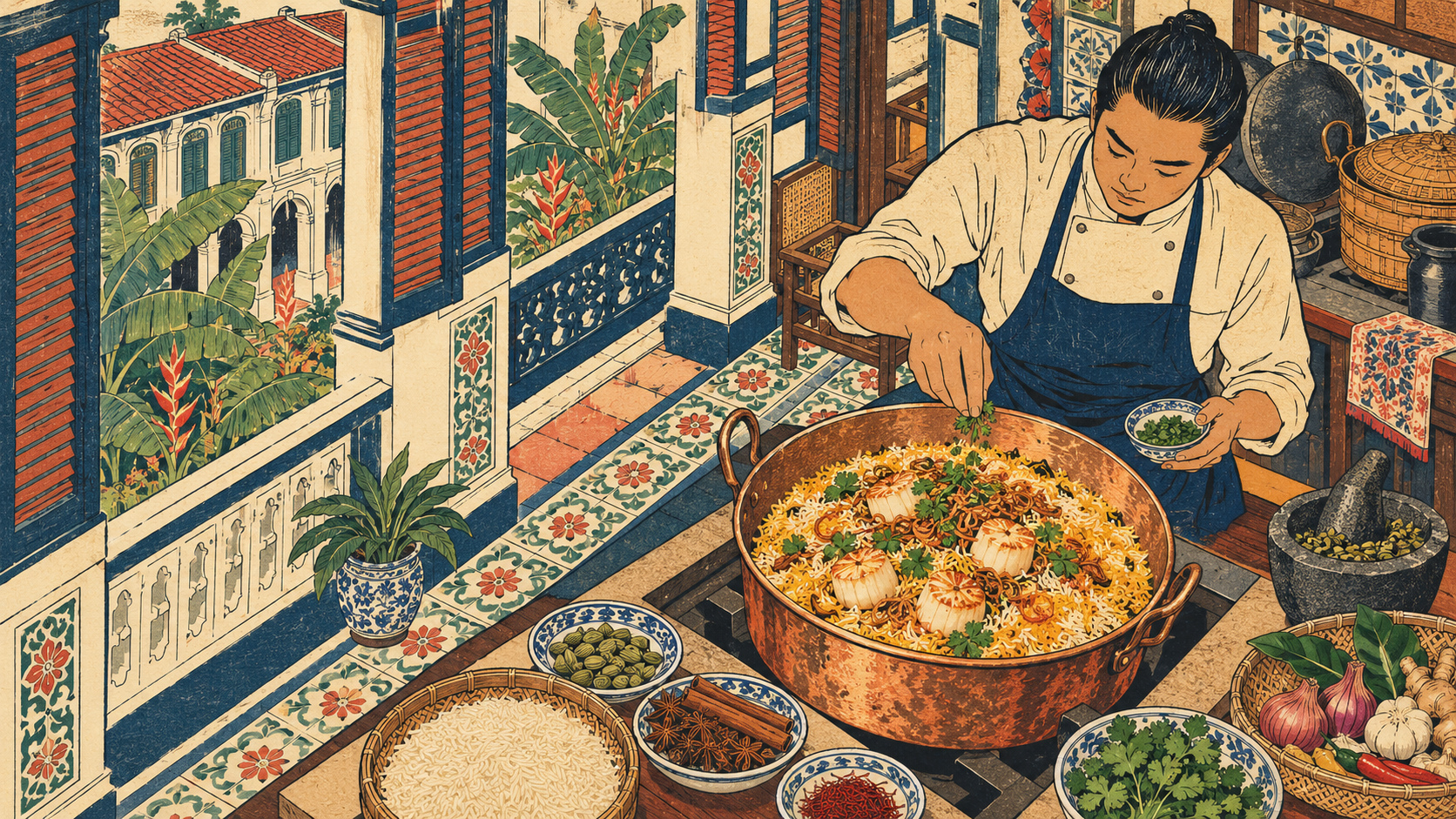
Scallop sashimi and scallop biryani. Even with the same ingredient, the considerations involved in pairing a dish with sake can change. A dish in which rice is cooked with spices has layers of aroma and texture that cannot be explained by the seafood’s characteristics alone.
Cross-cultural pairing brings together food and drink from different culinary traditions. Its appeal lies in more than an unexpected combination of countries. Understanding how a dish is made and which characteristics define it can reveal points of connection with sake.
When Scallops Become Biryani
In March and August 2026, industry events in Singapore introduced pairings of sake with cuisines other than Japanese. A report dated September 3 on the August 31 event featured a biryani made with Japanese rice, scallops and dried scallops from Hokkaido, and Sri Lankan spices. It was paired with two sake labels: a tokubetsu honjozo and a junmai ginjo.
Using Japanese ingredients does not make a dish Japanese. Looking at the cooking process, which brings spices together with rice and seafood, shows why asking only “What sake goes with scallops?” is not enough.
One useful perspective is to consider the overall “weight” of the dish. This means neither portion size nor literal weight, but the sense of richness created by fats, sauces and flavor intensity. A strong spice aroma does not necessarily mean a rich mouthfeel. Separating aromatic intensity from the weight of a dish helps avoid prematurely deciding that “a dish with spices needs a powerful sake.”
For sake, too, expressive aromas and intense flavor are different things. Does either the food or the sake dominate the finish? This question offers a basis for comparison across culinary traditions.
Considering Two Pairings for One Dish
The same event presented yellowtail ceviche with wholegrain mustard and horseradish alongside a sake with fruity aromas and another aged in cedar casks.
One dish, two sakes with different characteristics. The organizer’s suggestions cannot be taken as proof that these pairings work for everyone. They may, however, be viewed as an example of how the choice of sake can change depending on which characteristics of the dish receive attention.
For example, is the aim to connect the fish’s soft texture with the sake’s mouthfeel, or to layer the sake’s aromas over those of the condiments? These are possible directions to explore based on the example, rather than findings from an evaluation of the actual pairings.
Some approaches bring similar characteristics together; others introduce variation through differences. Deciding first what to examine takes the discussion a step beyond simply saying that a pairing works or does not work. Did the dish’s characteristics become easier to perceive, or did the sake’s aroma become too prominent? The intention behind the pairing should be compared with what was actually experienced.
Before Making the Dish More Japanese
When pairing sake with Thai food in Bangkok, the first conversation with the chef should concern the characteristics of the dish that they want to preserve. Is it the aroma of herbs, the acidity of a sauce, or the toasted aromas of stir-fried ingredients?
Before reducing the spices to accommodate sake, start with the dish as it is. Understand its characteristics, consider what relationship to create with its aromas and mouthfeel, and look for sake candidates accordingly. Changing the dish remains an option, but making it Japanese in style is not a prerequisite.
For sake, too, the choice should go beyond a production category such as “junmai ginjo goes with this dish.” It also requires examining the characteristics of the particular label in front of you. A dish’s country of origin and a sake’s category offer clues to their background, but cannot fully explain the reasoning behind a pairing.
Understanding the cooking that turns scallops into biryani is a starting point for considering what it means to serve sake alongside that dish. Cross-cultural pairing is also an opportunity to learn about another cuisine, preserving cultural differences while looking for connections in aroma and mouthfeel. Through this attention to detail, sake can find a place alongside dishes from other culinary traditions.
This article discusses cross-cultural food pairing for educational and cultural purposes. It does not promote the purchase or consumption of alcohol. Intended for readers aged 20 and over.
บทความนี้นำเสนอเรื่องการจับคู่อาหารกับเครื่องดื่มข้ามวัฒนธรรมเพื่อการศึกษาและวัฒนธรรม ไม่ได้มีเจตนาส่งเสริมการซื้อหรือการบริโภคเครื่องดื่มแอลกอฮอล์ สำหรับผู้อ่านอายุ 20 ปีขึ้นไป
Discover the culture behind every bottle
We share brewery stories, tasting notes and the craft of koji & fermentation | for educational and cultural purposes only.
เราถ่ายทอดเรื่องราวจากผู้ผลิต บันทึกรสชาติ และศาสตร์แห่งโคจิและการหมัก | เพื่อการศึกษาและวัฒนธรรมเท่านั้น
Follow on Instagram Facebook
