
Drink
Is Amazake a Winter Drink?|From Seasonal Festivals to Year-Round Shelves, and to a Clear Bottle
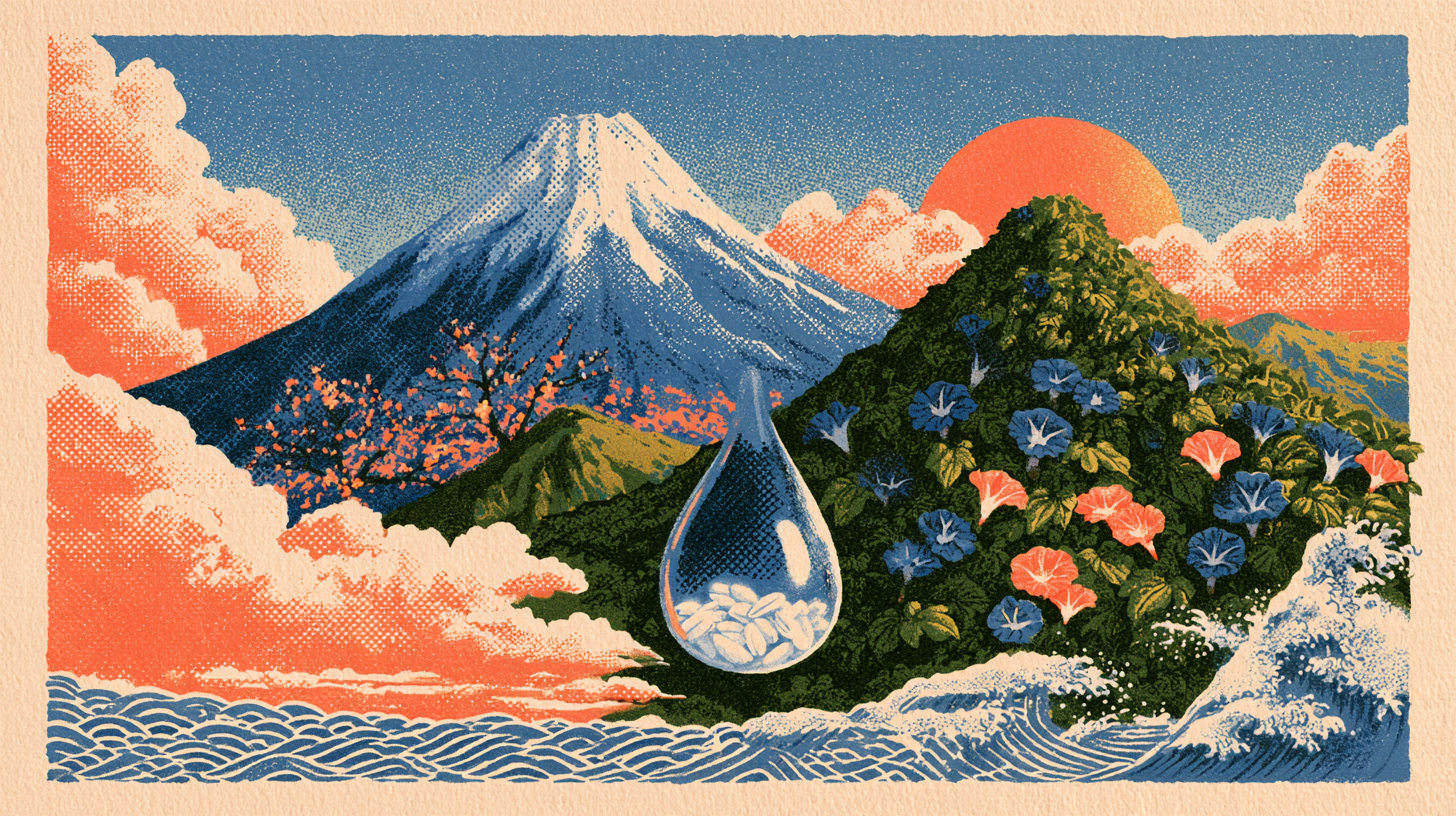
Mention amazake, and many people picture a shrine courtyard at New Year or the Doll Festival in early spring. In haiku, however, amazake is a seasonal word for summer. On the streets of Edo, amazake sellers made their rounds in the hot months. Seen across its long history, the image of amazake as a winter festival drink is relatively new.
Today, amazake is once again moving beyond a single season. According to an estimate by a Japanese research firm, as reported in the press, domestic amazake sales in 2025 reached about 14.7 billion yen. More telling than the size is the shape of the sales: to the peak that once gathered in winter and early spring, a second peak in summer has been added.
Telling the Two Kinds of Amazake Apart
To understand this shift, it helps first to know that there are two kinds of amazake.
One is sake kasu amazake. It is made by dissolving sake kasu, the lees left after sake is pressed, in hot water and adding sweetness with sugar or other ingredients. Because sake kasu retains some alcohol, sake kasu amazake may also contain alcohol, depending on the product and recipe.
The other is rice koji amazake. Rice koji is steamed rice on which koji mold has been grown. When steamed rice and rice koji are combined and kept warm, enzymes produced by the koji mold convert the starch in the rice into sugar. The sweetness comes from this saccharification, not from added sugar. Because this process involves no alcoholic fermentation by yeast, no alcohol is produced. The examples of the year-round shift and overseas expansion in this article also center on rice koji amazake.
A Summer Peak Joins the Winter Peak
Rice koji amazake drew renewed attention in the 2010s. Koji-based seasonings, beginning with shio koji, spread into home kitchens, and interest grew in the question of what koji actually is. Amazake was reconsidered in that wave, and by 2017 the market was reported to have grown to about four times its size a few years earlier.
Over time, the habit of serving it chilled spread. Once the assumption that amazake is a warm drink for winter festivals fell away, it began to sell in summer as well. Sales came to form two peaks, one in winter and one in summer. Amazake, once a summer seasonal word, could be said to have returned to summer.
Not a Festival Food, but a Koji Beverage
This movement is not limited to Japan. Rice koji amazake from a sake brewery in Niigata found a place on the shelves of a grocery store in New York and was introduced in store. A company born from a university in Utsunomiya sent rice koji amazake flavored with black sesame and ginger to the United States, where it is stocked in supermarkets in Silicon Valley.
In both cases, amazake has been separated from Japan's annual festivals and placed on overseas shelves as a beverage born from the work of koji. The path resembles the one taken by miso and soy sauce, which entered kitchens abroad as cooking ingredients.
Amazake Without the Cloudiness|KOJI CLEAR
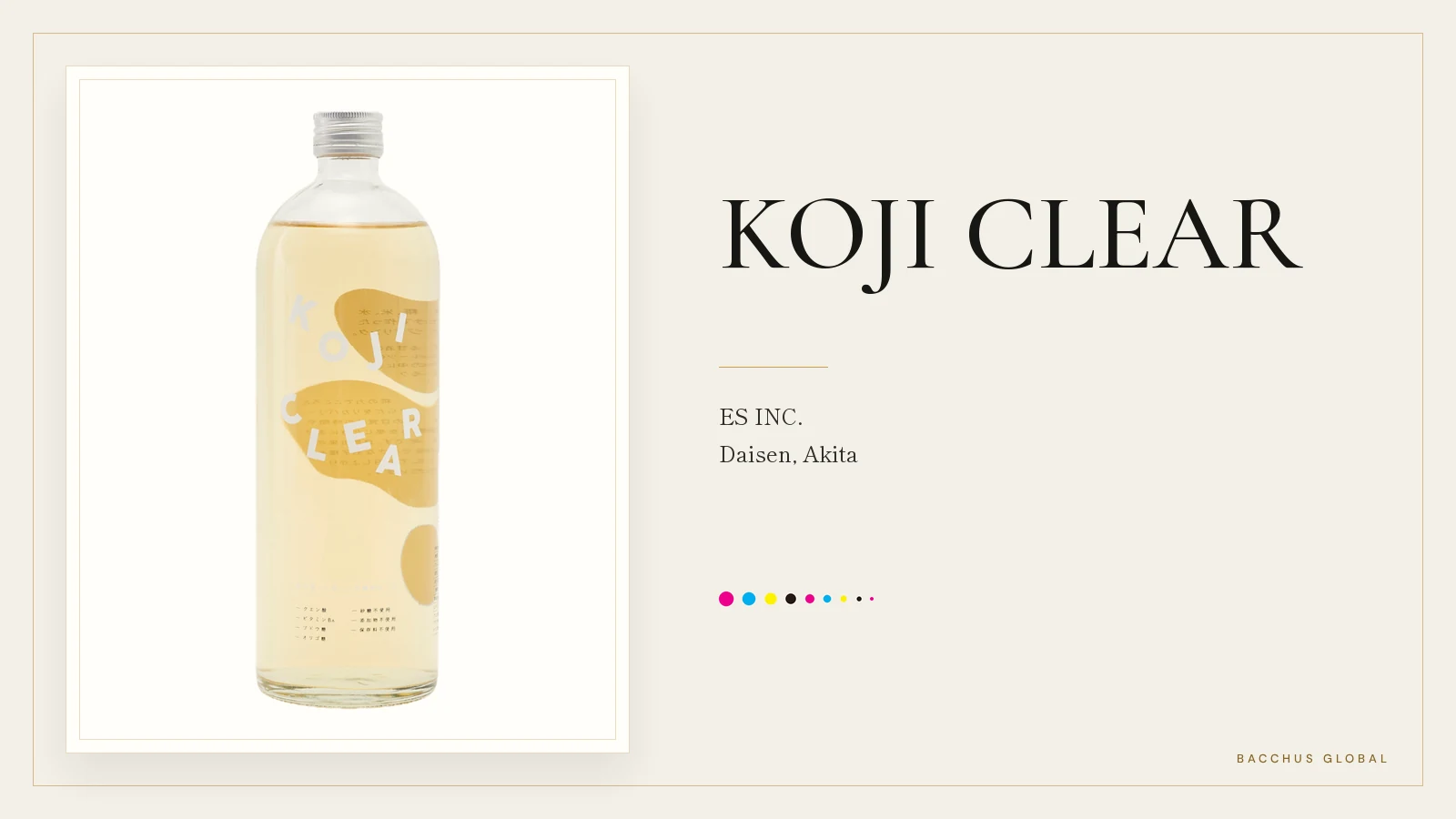
One example extends this idea of a koji beverage to appearance itself: KOJI CLEAR, made by Es Inc. in Daisen, Akita Prefecture.
Amazake is assumed to be cloudy and white. KOJI CLEAR is as clear as water. The head of Es Inc. was born into a family of sake retailers in Akita, worked at a space development company, and returned home in 2020. As sake consumption in Japan continued to decline, he chose not to focus on sake itself, but to carry forward koji, which has long supported sake brewing, in the form of a non-alcoholic beverage.
It is made from only three ingredients, rice koji, rice and water, with no added sugar or preservatives. Two kinds of rice koji are used in combination: "Ame Koji" (yellow koji), patented by Akita Prefecture, and white koji, used in shochu making. The citric acid produced by the white koji mold adds acidity to the sweetness. Production is handled by a local sake brewing company, which filters the saccharified rice liquid until it is clear. The company states that it has obtained a patent for this method.
Containing no alcohol, KOJI CLEAR is classified as a soft drink, not an alcoholic beverage. In 2022 it also received vegan certification from The Vegan Society in the United Kingdom.
Explaining Amazake in Bangkok
In Bangkok's food and beverage scene, a wider range of beverages for guests who do not choose alcohol is increasingly called for. In that context, amazake has too many distinctions to be summed up simply as "a sweet Japanese drink."
The first is the ingredients: is it made from sake kasu or from rice koji? The second is alcohol: sake kasu amazake may retain alcohol, while rice koji amazake involves no alcoholic fermentation by yeast. The third is appearance: is it cloudy or clear? Cloudiness, however, reflects production choices such as filtration, and on its own it does not indicate whether alcohol is present. When these three are explained separately, amazake becomes an entry point to Japan's koji fermentation culture. The amazake of winter festivals, the summer seasonal word, and the clear bottle are all called by the same name: amazake.
This article explains the two kinds of amazake and how they have changed with the seasons, using factual information on Es Inc. and KOJI CLEAR as an example. It is intended for educational and cultural information and does not aim to promote or encourage the purchase or consumption of alcohol. Intended for readers aged 20 and over.
บทความนี้จัดทำขึ้นเพื่ออธิบายอามาซาเกะสองชนิดและการเปลี่ยนแปลงตามฤดูกาล โดยใช้ข้อมูลข้อเท็จจริงของ Es Inc. และ KOJI CLEAR เป็นตัวอย่าง เพื่อการศึกษาและวัฒนธรรมเท่านั้น มิได้มีเจตนาเพื่อส่งเสริมการซื้อหรือการบริโภคเครื่องดื่มแอลกอฮอล์ สำหรับผู้อ่านอายุ 20 ปีขึ้นไป
Discover the culture behind every bottle
We share brewery stories, tasting notes and the craft of koji & fermentation — for educational and cultural purposes only.
เราถ่ายทอดเรื่องราวจากผู้ผลิต บันทึกรสชาติ และศาสตร์แห่งโคจิและการหมัก — เพื่อการศึกษาและวัฒนธรรมเท่านั้น
Follow on Instagram Facebook
