
Drink
What Does “Japanese” in Japanese Whisky Refer To?|Where the Grain Is Grown and the Spirit Is Made
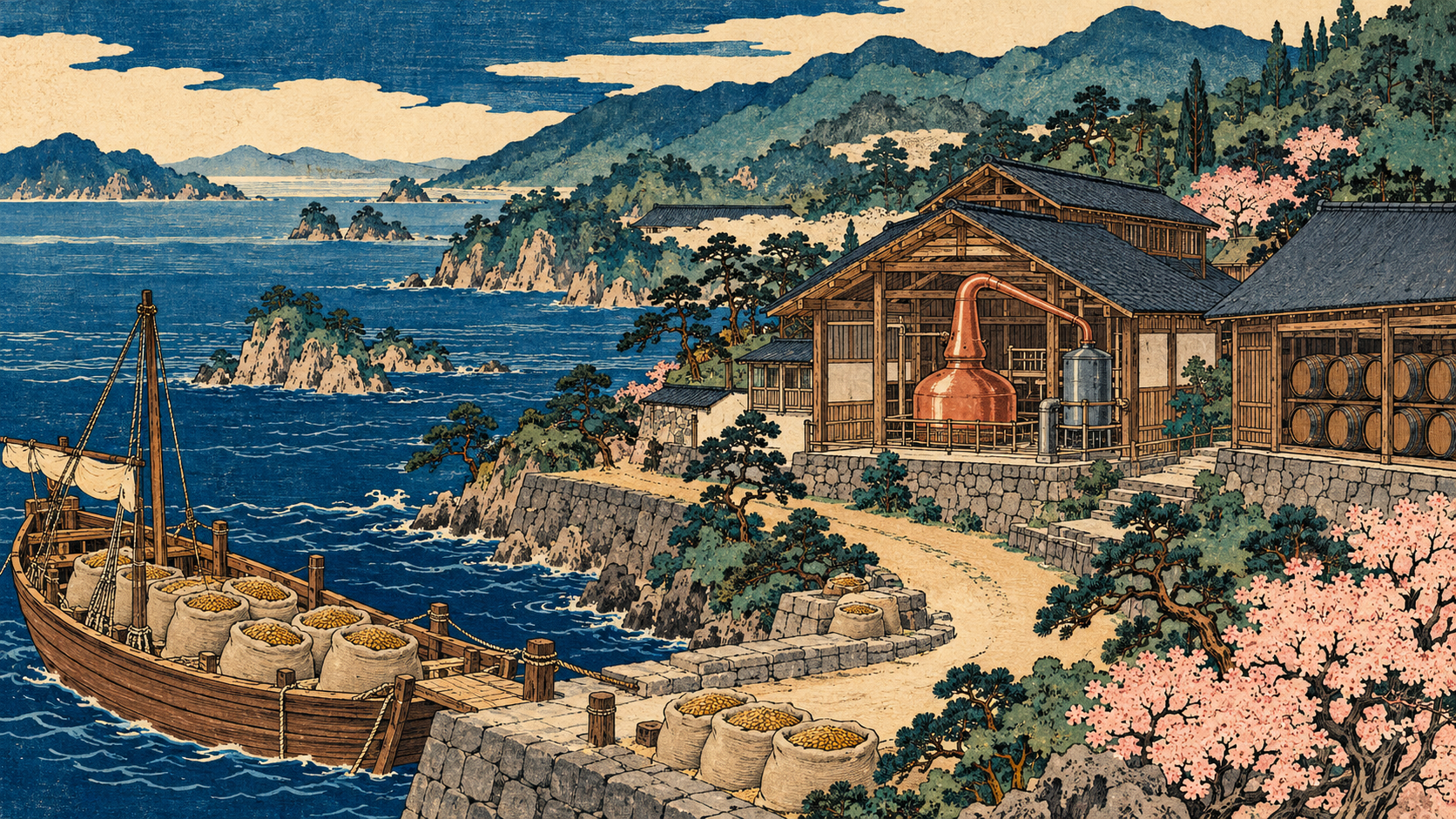
Is a whisky bearing a Japanese place name necessarily distilled in Japan? Many people may read the label that way. Yet the brand’s location, the origin of the grain and the place of distillation are separate pieces of information.
An article on whisky origin labeling published by a Japanese news website on October 27, 2026, offers an opportunity to consider these distinctions. To understand the phrase “Japanese whisky,” we need to look at the processes behind the name.
Imported Grain and Spirit Produced Overseas Are Different
The first distinction to make is between importing grain and importing spirit that has already been distilled. Both arrive from overseas, but they enter Japan at different stages of production.
The voluntary standards of the Japan Spirits & Liqueurs Makers Association limit the raw ingredients for Japanese whisky to malted grain, other grains and water. Malted grain is required, and the water must be collected in Japan. However, the standards do not require the malted grain or other grains to be grown in Japan. Using grain grown overseas does not, by itself, place a whisky outside the standards.
What matters is where those ingredients are turned into alcohol. The standards require saccharification, fermentation and distillation to take place at a distillery in Japan. Saccharification converts starch into sugar; during fermentation, yeast converts that sugar into alcohol. The distillate must have an alcohol content below 95%.
Whisky made using spirit distilled overseas does not qualify as Japanese whisky under these voluntary standards, even if it is matured or bottled in Japan. “Producing whisky in Japan from imported grain” and “completing production in Japan using imported spirit” are two approaches that should be explained separately.
The Requirement to Mature and Bottle in Japan
The requirements continue after distillation. The spirit must be placed in wooden casks with a capacity of no more than 700 liters and matured in Japan for at least three years. Bottling must also take place in Japan, with an alcohol content of at least 40% at that point. A whisky’s connection with Japan is not determined solely by where its label is finally applied.
These voluntary standards took effect in April 2021, and the transition period for labeling existing products ended in March 2024. They are industry rules covering products sold by association members in Japan and overseas, and should be understood separately from laws and regulations established by the government.
In a document published in December 2025, Japan’s National Tax Agency stated that it would consider a geographical indication (GI) designation for Japanese whisky, alongside general production, quality and labeling standards for whisky. The document outlined matters under consideration at the time; it did not announce that these measures had been established. The operation of the voluntary standards and the development of a legal framework should be understood separately.
Togouchi: Reading the Producer’s Description
As a concrete example, let us look at “TOGOUCHI Whisky,” featured on Bacchus Global’s product page. Here, we are considering the specifications described on that page following the product’s September 2023 renewal. The Hiroshima-based producer, Sakurao Brewery and Distillery, explains that it blends and bottles only malt and grain whiskies distilled and stored at Sakurao Distillery.
For this product, “blended” indicates that malt whisky and grain whisky have been combined. The word alone does not tell us whether whisky produced overseas is included. Reading the producer’s explanation of the component whiskies makes the relationship between the name and the production process more concrete.
Even within the same brand, the composition of the whisky can vary by product and release period. We should avoid applying the description of a current product to every bottle released in the past.
When introducing whisky on a menu in Bangkok, distinguishing between “a product from a Japanese company” and “whisky distilled and matured in Japan” changes what even a brief description conveys. Explaining origin is separate from assessing aroma and flavor. Clarifying where the spirit comes from is not intended to rank domestic and foreign products as better or worse.
The land where the grain grew and the land where the spirit was made. Tracing that distinction reveals the production steps, from saccharification to bottling, behind the word “Japanese.”
This article explains Japanese whisky labeling and the distinction between grain origin and whisky production for educational purposes. It does not promote the purchase or consumption of alcohol. Intended for readers aged 20 and over.
บทความนี้อธิบายการแสดงฉลากวิสกี้ญี่ปุ่นและความแตกต่างระหว่างแหล่งกำเนิดธัญพืชกับสถานที่ผลิตวิสกี้เพื่อการศึกษา มิได้มีเจตนาส่งเสริมการซื้อหรือการบริโภคเครื่องดื่มแอลกอฮอล์ สำหรับผู้อ่านอายุ 20 ปีขึ้นไป
Discover the culture behind every bottle
We share brewery stories, tasting notes and the craft of koji & fermentation | for educational and cultural purposes only.
เราถ่ายทอดเรื่องราวจากผู้ผลิต บันทึกรสชาติ และศาสตร์แห่งโคจิและการหมัก | เพื่อการศึกษาและวัฒนธรรมเท่านั้น
Follow on Instagram Facebook
