Getting Started
Bacchus Journal|Exploring Japanese Sake Through Ingredients, Culture, and Craft
Bacchus Journal, published by Bacchus Global, is an editorial series exploring Japanese sake and traditional spirits through three perspectives: ingredients, culture, and the people behind the craft. It introduces the histories of breweries and distilleries, the workings of koji and fermentation, and regional food cultures in accessible language.
For those beginning to learn about Japanese beverages, terms such as ginjo, koji, and distillation soon become part of the conversation. The journal explains these concepts clearly and looks at the work of the producers behind them. It aims to offer a useful starting point both for readers discovering Japanese sake and for hospitality professionals explaining these beverages to guests.
Sake-Making as a Living Cultural Tradition
In December 2024, the traditional knowledge and skills of sake-making using koji mold in Japan were inscribed on UNESCO’s Representative List of the Intangible Cultural Heritage of Humanity. These techniques have been passed down in the production of sake, shochu, awamori, and mirin, developing in response to the climates and natural surroundings of different regions.
This craft is supported by farmers who grow the raw materials and by people who preserve brewing skills within the breweries. The water used in production also offers insight into a brewery’s relationship with its region. Sake-making connects with local occasions such as festivals and weddings. Bacchus Journal explores these connections through the work of individual breweries and regional history.
Three Perspectives: Ingredients, Culture, and People
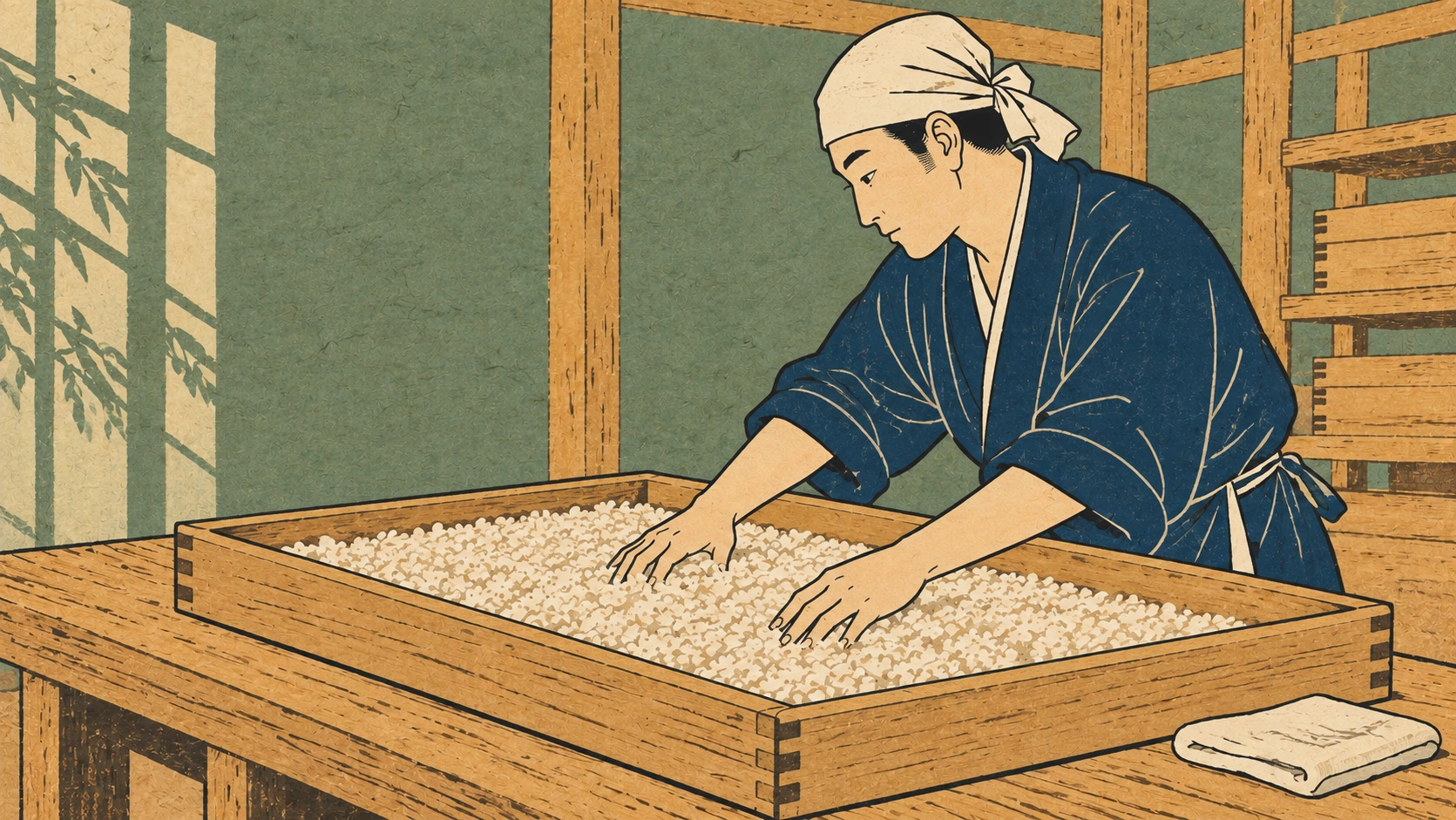
The first perspective centers on ingredients. What processes turn rice or barley into sake or spirits? Koji, for example, is made by cultivating a microorganism called koji mold on steamed rice, barley, or other grains. Enzymes produced by the mold break starch down into sugars. Yeast, a different microorganism, produces alcohol from those sugars. Following these processes helps the journal explain the relationship between raw materials and production methods.
The second perspective examines culture rooted in place. The journal considers where a brewery’s water comes from, its relationships with farmers, and the region’s food traditions. At Yamanashi Meijo, maker of Shichiken in Hakushu, Yamanashi Prefecture, natural water from Mount Kaikomagatake in the Southern Alps and rice cultivation with local farmers offer a starting point for understanding its craft. When introducing a region, the journal also looks at the practices people have sustained there.
The third perspective focuses on the people behind the craft. Toji (master brewers) and kurabito (brewery workers) assess the condition of ingredients and koji as they guide production. How much water should the rice absorb? How should the koji’s temperature be maintained? By examining everyday decisions and efforts to pass skills to the next generation, the journal connects a brewery’s history with its work today.
For example, BG’s feature based on a written interview with Yamanishi of Kishu Honjo Umeyoshi describes how he decides when to harvest ume by checking the fruit’s color, gloss, softness to the touch, and aroma. Following these everyday decisions helps readers connect the ingredients with the producer’s approach.
Following an Award to the Story Behind It
The journal’s launch announcement also highlights an award for Shichiken’s sparkling sake, Hoshi no Kagayaki. Produced by Yamanashi Meijo, it received the President’s Prize at the Kura Master 2026 Japanese Sake Competition in France.
An award announcement can spark interest in a sake and its producer. From there, the journal explores the ingredients used, the place where the sake is made, and the refinements introduced to its production methods. Alongside the award record, it provides context that helps readers understand the making process.
The articles also discuss descriptions of aroma and flavor. Considering these alongside the ingredients and processes such as fermentation, distillation, and maturation gives readers further clues to the characteristics of individual products.
Building Understanding Through Twice-Monthly English Features
Bacchus Journal plans to publish in English twice a month. Previous articles can be read in the archive, and reference links help readers find more detailed information.
One article introduces an ingredient or production method; the next explores another region or producer. Through these individual stories, the journal aims to deepen readers’ understanding of Japanese brewing and distilling traditions.
Related articles
This article introduces Bacchus Global’s journal and its educational coverage of Japanese brewing and distilling traditions, ingredients, and food culture. It is intended for readers aged 20 and over and does not encourage the purchase or consumption of alcoholic beverages.
บทความนี้แนะนำวารสารออนไลน์ของ Bacchus Global และเนื้อหาเพื่อการเรียนรู้เกี่ยวกับประเพณีการผลิตเครื่องดื่มแอลกอฮอล์ของญี่ปุ่น วัตถุดิบ และวัฒนธรรมอาหาร สำหรับผู้อ่านอายุ 20 ปีขึ้นไป มิได้มีวัตถุประสงค์เพื่อส่งเสริมการซื้อหรือการบริโภคเครื่องดื่มแอลกอฮอล์
Discover the culture behind every bottle
We share brewery stories, tasting notes and the craft of koji & fermentation — for educational and cultural purposes only.
เราถ่ายทอดเรื่องราวจากผู้ผลิต บันทึกรสชาติ และศาสตร์แห่งโคจิและการหมัก — เพื่อการศึกษาและวัฒนธรรมเท่านั้น
Follow on Instagram Facebook